


Samsung is bringing medical-grade sleep apnea risk screening to a device small enough to wear on a finger. The Galaxy Ring can now identify signs of potentially serious breathing disruptions during sleep using just two nights of monitoring. The FDA-cleared feature is already available in the United States, introducing a new way to screen for a common sleep disorder without wearing a smartwatch overnight.
FDA-cleared sleep apnea detection comes to the Galaxy Ring
Samsung has confirmed that its upgraded sleep apnea detection feature is available on the Galaxy Ring and compatible Galaxy Watch models in the United States. The updated technology received clearance from the U.S. Food and Drug Administration (FDA) in July 2026, followed by approval from South Korea’s Ministry of Food and Drug Safety (MFDS) in October
According to the company, this makes the Galaxy Ring the first smart ring to offer FDA-cleared, over-the-counter sleep apnea risk detection. The feature is designed to identify signs of moderate to severe obstructive sleep apnea, a condition involving repeated reductions or interruptions in breathing that can interfere with normal sleep
One of the main advantages of the Samsung Galaxy Ring sleep apnea feature is its form factor. Unlike a smartwatch, the lightweight ring sits on a finger, potentially making overnight monitoring more comfortable for people who prefer not to sleep with a device strapped to their wrist
The monitoring process is relatively straightforward. Users need to record two nights of sleep within a 10-day period, with at least five hours of valid sleep data collected each night. The system then evaluates the recorded signals to identify breathing patterns that may indicate moderate to severe sleep apnea
A new algorithm measures breathing disruptions per hour
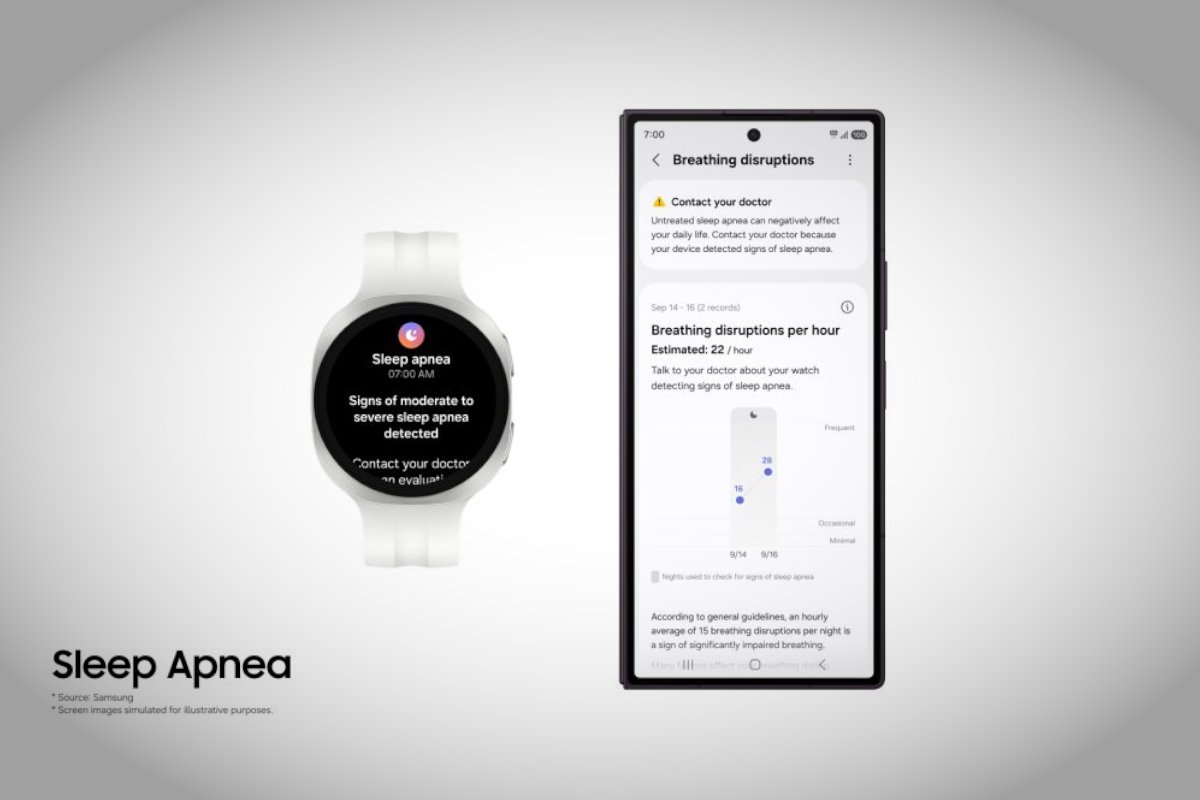
The upgraded feature provides more detailed information than Samsung’s original sleep apnea screening system. Rather than simply assessing whether potentially significant breathing abnormalities are present, the updated algorithm also estimates the number of breathing disruptions detected per hour of sleep
The technology uses information collected by the wearable’s sensors, including blood oxygen measurements and movement data. These signals are processed through Samsung Health Monitor, allowing users to review their results and potentially share relevant findings with a healthcare professional
The distinction between screening and diagnosis remains important. Although the feature has received FDA clearance, it cannot independently diagnose sleep apnea or replace a clinical sleep study. A negative result does not rule out the condition, and users experiencing symptoms such as persistent daytime sleepiness, loud snoring, or interrupted breathing should seek medical advice
Samsung first received FDA De Novo authorization for its original wearable sleep apnea detection technology in February 2024. That version was subsequently introduced on compatible Galaxy Watch devices in the United States. The latest update expands the technology to a smart ring while providing more detailed information about nighttime respiratory disturbances
For cyclists and other endurance athletes, tracking breathing disruptions during sleep may offer additional information when evaluating recovery and overall sleep health. Sleep apnea can contribute to fragmented sleep, daytime fatigue, and reduced alertness, although wearable screening results alone cannot establish whether the condition is affecting athletic performance
U.S. availability and compatible Samsung devices
In the United States, Samsung identifies the Galaxy Ring and Galaxy Watch9 running Wear OS 7.0 or later as supported devices for the upgraded feature. Compatibility with the Galaxy Watch7 and Galaxy Watch8 is expected to expand through future software updates. The feature requires the Samsung Health Monitor app and a compatible Galaxy smartphone
Samsung also specifies that the screening tool is intended for adults aged 18 and older who have not previously been diagnosed with sleep apnea. It is designed for occasional, on-demand screening rather than continuous medical monitoring, and its results should not be used to make treatment decisions without consulting a qualified healthcare professional
