


A Pathway to Wellness: Exploring Trails as Lifelines for Mental Health
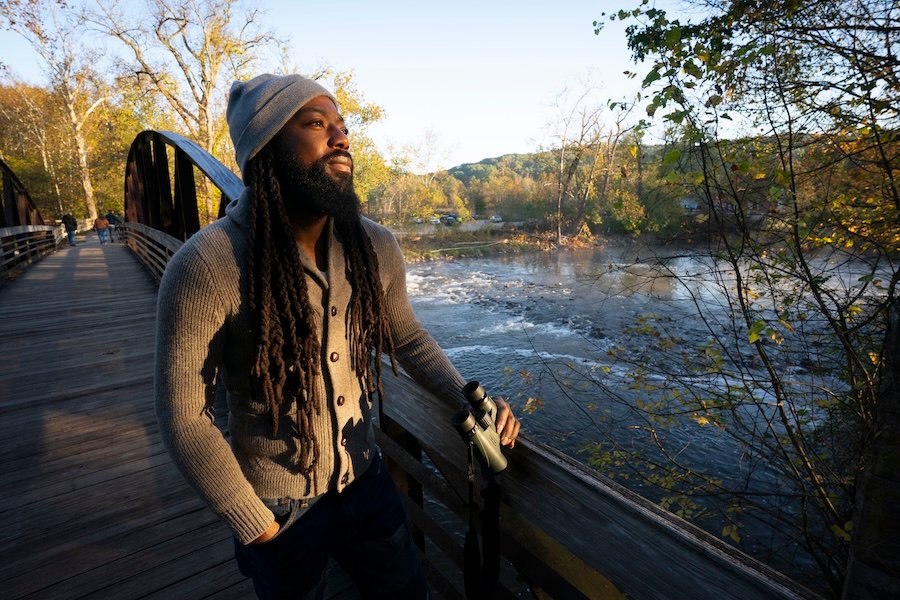
Through their proximity to awe-inducing natural splendor, their conduciveness to movement, their ability to bring people together and myriad more reasons, trails offer access to a wealth of quantifiable mental health benefits, said Jamie Siebrase, author of the book “Trail Therapy: Finding Wholeness in Nature.”
“I do think that a really interesting aspect of ‘trail therapy’ in general is how broad and translatable it is,” said Siebrase, a trained naturalist and outdoor journalist (read a recent article by Siebrase about trails and mental wellness on the TrailBlog). She said that people seeking to address their mental health challenges through professional care, medication and/ or exercise—jogging, walking, strength training and yoga have all been found to help treat depression, with results being proportional to the intensity of the activity—could find compounding benefits by combining their treatment with trail therapy. It may sound clinical but actually has no right or wrong method by Siebrase’s definition: “movement through a natural setting with the goal of improving emotional well-being.” It has helped her immensely.
“I had a lot of problems with addiction, and I’ve had other mental health challenges, especially when I was younger, with depression and postpartum depression,” she said. A Colorado resident, she knew that the time she spent in nature made her feel better. She wanted to know more about why. She read fellow Colorado author Florence Williams’ pop science bestseller, “The Nature Fix: Why Nature Makes Us Happier, Healthier and More Creative.” And Siebrase began digging into studies herself, while also working with Dr. Stacy Beller Stryer, chief health officer of Park Rx America—an organization that advocates for increased nature-rich space accessible to all—to develop a nature prescription: a doctor’s recommendation to spend time outdoors to help with both mental and physical wellness. Siebrase still follows hers.
“I try to get out at least three to five times a week … for at least 30 minutes of walking or jogging, where I’m not listening to anything and am just tuning in [to the natural environment],” said Siebrase, adding that rail-trails are nearly “the perfect solution” for people seeking to reap the restorative benefits of time outdoors
For Columbia, Missouri, resident Joe Jefferies, that rings true. With his work helping people through substance use recovery, his dual-degree master’s program, his board positions and generally just being, in his words, a “busy human,” he usually can foresee a particularly stressful day in his week. It’s on those days he ensures he carves out time for a longish bike ride on the city’s MKT Nature and Fitness Trail and connecting cross-state Katy Trail State Park.
“It is the one opportunity that I sometimes feel I have to just let it all melt away,” said Jefferies, a certified peer support specialist with Centerstone, a nonprofit behavioral healthcare provider. “All I can focus on is riding and keeping going, and that is a huge gift for me.”
In his work, Jefferies relates his experiences addressing his own recovery from substance use disorder to help others in treatment. In school, he is focused on how communities can build resilience to political, natural and social disasters through improved green space and urban planning, including trail projects
For people who feel stuck in place in their lives, even a small walk or getting to a trail is a way to interrupt that “stuckness” and start a different pattern of behavior, affirmed Jefferies
— Jessica Turner, President, Outdoor Recreation Roundtable
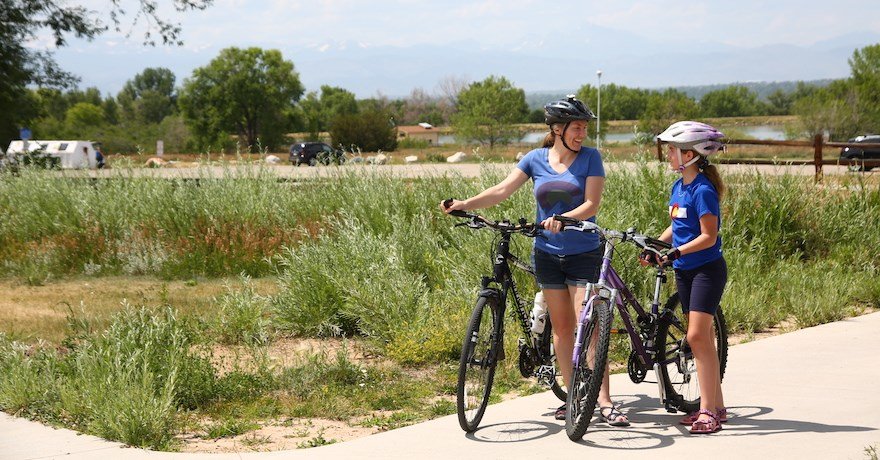
The collective mental, physical and environmental health benefits of outdoor exposure are found to be critically important and a motivator for initiatives focused on proximity to parks and trails by many outdoor institutions and researchers. This includes the Trust for Public Land, whose top recommendation in a 2023 report, “The Power of Parks to Promote Health,” was to ensure that everyone live within 10 minutes of a park or green space.
Jefferies can attest to this. Before he moved to Columbia near the 240-mile Katy Trail, he lived in a rural community roughly half an hour from any trailhead. “I never even thought about picking up a bike and getting out there because there just wasn’t a space [nearby] to do it,” he stated. “Having [a trail] so near, whether it’s a Hall of Famer like we’ve got, or just [a smaller loop] you can go to, it’s huge. It’s having that space that’s separated and that feels safe. If you don’t have access, you don’t have the option and the choice.”
With proximity being a driver of use, a wide body of research supports the many ways that trails and the outdoors can impact mental health and well-being. In a meta-analysis of studies on outdoor exposure published in 2024 in the International Journal of Mental Health Nursing, it was found that even in 10 minutes spent outside, “we begin to feel better, improving symptoms such as anxiety, depression, cognitive function, stress, and other issues,” wrote lead researcher Joanna Bettmann Schaefer, a professor at the University of Utah, in a 2026 article.
The study affirmed that, “given these findings, healthcare practitioners should consider recommending nature exposure to patients to improve mental health symptoms in most cases.”
Time spent in green spaces is linked to lowering cortisol levels, the primary stress-regulating hormones produced by our adrenal glands, according to a 2018 Health & Placejournal review of 43 studies centered around the topic. Additionally, a Kaiser Permanente study of 20,000+ adults published in 2022 found that less time spent outdoors during the pandemic was linked with higher rates of depression and anxiety. The results suggested that “physical activity and time outdoors is associated with better mental health.”
Research also affirms the role trails specifically can play as vital lifelines for mental health. For example: A 2017 study published in the International Journal of Environmental Research and Public Health of 1,299 trail users and 288 nonusers surveyed near eight Indiana trails found that trail users reported experiencing lower levels of anger, sadness and worry every day compared with nonusers. Similarly, a 2025 survey report based on users of The Bentway trail in Toronto, titled “Rx for Social Connection,” found that using the trail made 62% of respondents feel mentally healthier, and 71% of respondents reported enhanced meaningful connections in the space’s shared public seating—making the 1.1-mile trail a vital barrier breaker in a city where 43% of respondents said they didn’t know their neighbors. The report calls for investments in public spaces and the people who create programming in them as “the critical social infrastructure we need to find both daily joy and the resilience to weather the storms ahead.”
Trails, through their frequent proximity to natural beauty and presence in many communities, lend themselves to two things Nia Howard, co-host of Centerstone’s “Be Well Besties” podcast, appreciates for self-care, both personally and as a qualified mental health professional and certified wellness practitioner. One is developing a routine—and Howard, herself an occasional half-marathoner, always establishes a routine with a goal for herself. “Not every run is as good as the last, but I still feel really good when I complete it,” said Howard.
But “you don’t have to be a marathoner to benefit from a routine centered on nature and movement,” she affirmed. She encourages clients to build routines from achievable steps, sometimes starting with simply stepping outside and then moving into taking a walk, run or ride. That sense of achievement, coupled with the mental health benefits of time spent outdoors, can be transformative
The other benefit, said Howard, is a kind of thinking termed soft fascination. Somewhat a cousin of meditation, soft fascination is something you’ve probably experienced if you’ve, for example, lost track of time gazing at ocean waves
Fellow counselor and podcast co-host Bailey Pyle agreed, herself appreciating the “100,000-foot perspective hiking and biking in nature can provide.” She continued, “Awe is my favorite emotion to feel, because it is that connection to something bigger than ourselves.”
Pyle notes nature’s ability to help regulate emotions, which she observed when she was a school-based counselor working with young people struggling with anger. During sessions, she took clients for walks using wearable technology to compare how their heart rates changed, often lowering after a few minutes of being outside. The lower numbers, the data, resonated. “There are things you can do through movement, through talking … through getting outside that help regulate those things that feel out of control,” said Pyle.
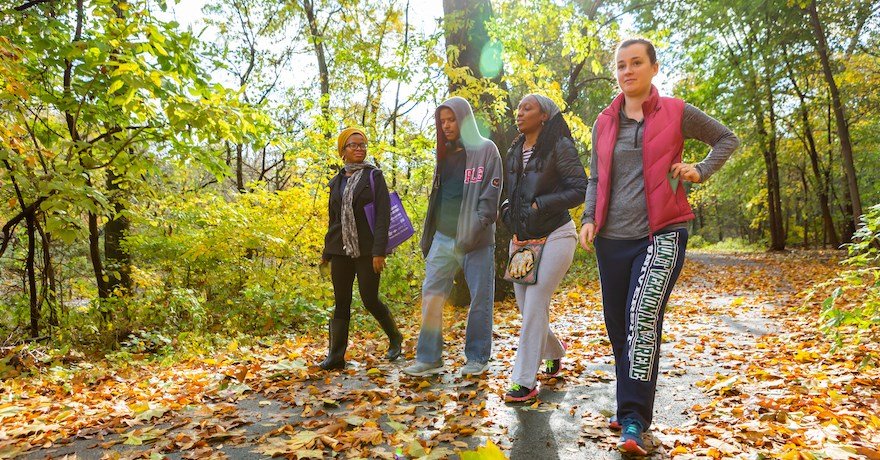
For Jessica Turner, president of the Outdoor Recreation Roundtable (ORR), trails serve as a reset for her and her family at the end of each week. “I’m on a walk right now in my neighborhood because I need trees and daylight,” the Baltimore resident said. “I need to get my energy. It’s personal to me, not something I’m doing because the data shows me, or I’m told to do it. It’s a part of my life that grounds me.” But, said Turner, “I do know that many people who haven’t had this as part of their life do need the data.”
In June, Turner wrote an op-ed for USA Today arguing that the data shows that Americans need to invest in outdoor spaces to address the healthcare crises—both physical and mental—facing the country. “Decades of research,” she wrote, “show that time spent outside can deliver health outcomes that no indoor or clinical intervention can fully replicate.”
Turner worked for the U.S. Department of Interior and the Outdoor Industry Association before becoming president of ORR, which is a coalition of organizations and businesses working to expand access to outdoor spaces and advocate for policies recognizing outdoor recreation as a driver of health, community well-being and economic growth. Through each of those roles, Turner said she came to value the outdoor recreation economy as part of a solution for the country’s biggest challenges— rural development, job creation, climate change and health, the focus of much of ORR’s current work.
In early May of 2026, during a forum on health and outdoor recreation that brought together political, health and outdoor industry leaders as part of a push to make outdoor recreation access a public health catalyst, ORR announced that it was launching the Rural Outdoor Recreation and Health Grant Program, designed to fund local projects “connecting outdoor recreation with preventive health, mental well-being, and social connection in rural America, demonstrating what community-based outdoor health investment can look like at scale.”
Then on May 11, a policy statement from the American Academy of Pediatrics recommended that recess should be part of every school day, K through 12, in order to “reestablish mental equilibrium and focus, a need of every student.”
“We know that outdoor access and time in nature is more than a ‘nice to have,’” said Erin Allaman, director of learning and evaluation and co-director of research with the Children & Nature Network. “Children and their families need regular access to the benefits of nature—through recreation, which strengthens family connections; greener neighborhoods, which improve childhood health and learning outcomes; and nature-based play, which improves physical health.”
At a time when children are diagnosed with depression and anxiety at significantly higher rates, said Allaman, research shows that time spent in nature is invaluable. Children who spend even an hour a day outdoors lower their risk of experiencing mental health issues by 50%. “Regular time in nature reduces the risk of behavioral health conditions and improves overall mental, physical and social well-being,” Allaman said.
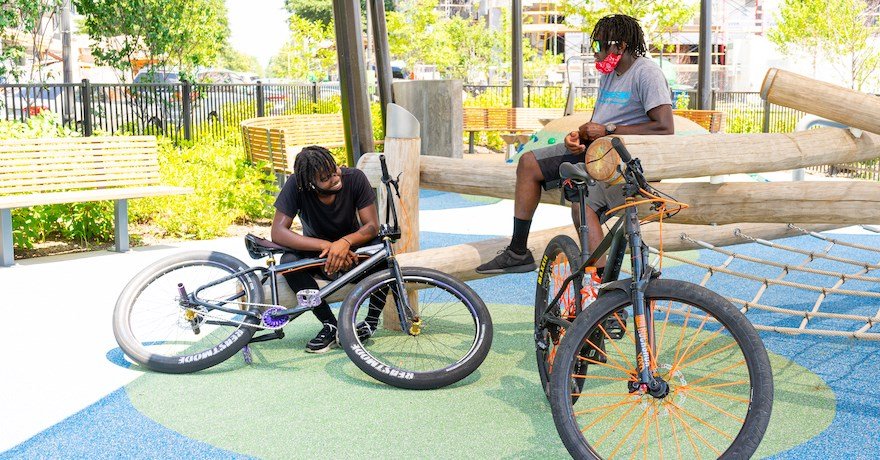
As ORR has ramped up its initiative to direct investment into outdoor access as an upstream public health effort, Turner said she values trails and other outdoor spaces as connection spaces. “That’s when you meet your neighbors,” she said. “That’s when your kids play in the playground and learn how to solve problems and how to face fear and how to take risks. That’s when you realize, data shows you—even if you’re alone—that you feel less lonely when you’re outside because you feel connected to the greater world around you. You think, ‘Oh wow, what’s out there?’ Or, ‘Gosh, there are so many people in this world; maybe I’m not alone.’”
In then U.S. Surgeon General Vivek Murthy’s 2023 advisory report, “Our Epidemic of Loneliness and Isolation,” he noted research showing that, in terms of the mortality risks associated with experiencing it, loneliness is about as bad for you as smoking up to 15 cigarettes a day and worse for you than obesity or physical inactivity
At a time when 2 out of 5 Americans report a disinterest in connecting with others with differing beliefs, trails can serve as an invaluable bridge to build stronger social ties, said Aaron Hurst, founder and CEO of the U.S. Chamber of Connection
“We know people who have social connections have much longer lifespans; they have much better health outcomes,” he said. “They’re much less likely to go to the emergency room. Across the board, you’re just seeing very positive social outcomes.”
The chamber’s mission is to build stronger communities in the face of modern challenges—think suburban sprawl, car culture, screen time, artificial intelligence, remote work and longer hours doing it, a lack of places where people from different backgrounds congregate. Bringing back welcoming committees, organizing monthly meetups and building support for third spaces where people meet in real life, and measuring the impact of it all to build more advocacy and generate more infrastructure support, are among the paths forward, Hurst said. The chamber looks at this through six “points of connection”: neighborhood contacts, communities of identity, meaningful one-on-one interactions, third places, communities of play and community service.
Trails can be key community connection points, Hurst said, and it’s a reason his nonprofit advocates for developing and maintaining trail infrastructure in the cities and communities that have joined the chamber. In a hosted by Rails to Trails Conservancy, he said trails offer something of a shared public living room for adults seeking to be active together, vital for the mere 30% of adults who are in a regular community of play—think a bike club, board-game night or softball league.
“We as adults need play in our lives,” he said, and surveys conducted by the chamber underscore it. Ninety-three percent of those who said they had a community of play in their lives reported having social support versus 65% among those who didn’t. When asked about life satisfaction, 70% of those who said they had communities of play reported feeling satisfied versus 40% among those who didn’t. Over 4 out of 5 adults in communities of play said they’d be willing to connect across differences versus just 32% among those who weren’t.
“If we can just get 5, 10, 15, 20% more people to be part of communities of play and make that accessible … that would literally change society,” he said
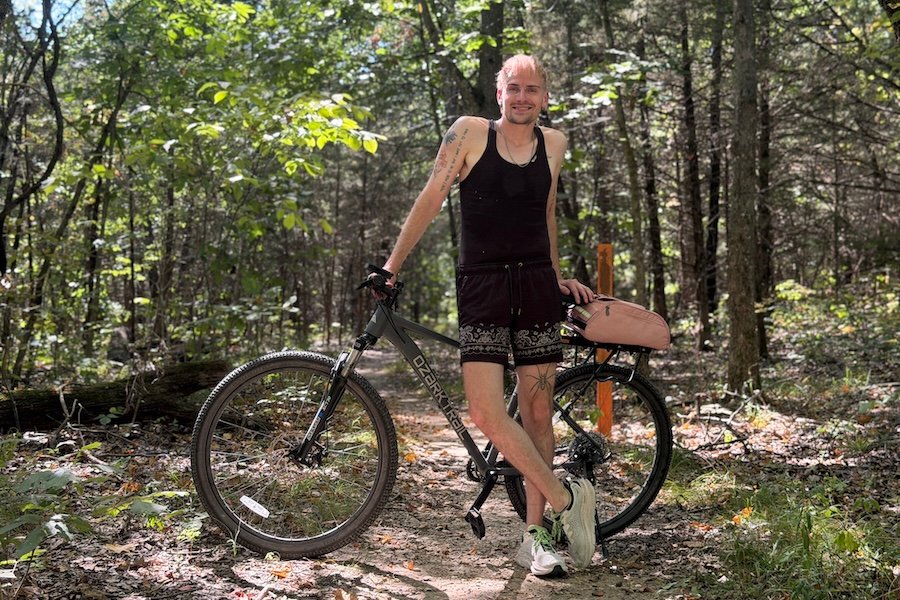
For Jefferies, the Katy Trail has become a vehicle to reinforce within him that he can “do hard things.” On his rides—which are solo, stress-relieving endeavors—he thinks about the support that got him from his lowest personal points to where he is now
The first bike Jefferies got was out of necessity following a car crash, a DWI citation and a recognition that he needed to change his life. He realized he really liked riding. And as he moved forward with his sobriety, he found what became his career
During his time in treatment, he quickly understood how many staff were also living in recovery. Peer support helped him feel less alone on his own journey, and that thought—the knowledge that he wasn’t alone—helped propel him this summer when he went on a 24-mile solo ride on the Katy, his longest to date. The rides are pathways to self-discovery for Jefferies in the outdoors—away from the computer screen.
He’s not alone. A study published in the December 2021 International Journal of Wilderness surveyed 166 people encountered across nine trailheads in the Bob Marshall Wilderness Complex in Montana, asking what they sought to gain during a solitary experience in the wilderness. Introspection was among four goals that rose to the top
Midway through his ride, Jefferies stopped at a covered trailhead with a 988 Suicide & Crisis Support poster affixed to it and recorded a video that was shared on Centerstone’s social media. “I can live a life in recovery,” he said. “I can lead a team of peers at one of the nation’s largest behavioral health-care agencies. I can ride a bike 24 miles roundtrip on a beautiful, sunny, warm Missouri day, and I realize that I can do all of these things for one main reason … I realize that in order to have more good days, I’ve got to have more together [with others].”
A few days later, he had a one-thing-after-another type of stressful day. A bad one. It made him feel like shutting down. Rath.er than collapse, he told himself to get up and go. “I decided I’ve just got to hit the trail,” he said
“I think there’s a gift sometimes,” continued Jefferies. “The farther you go, the farther back you got to ride. So that just forces you to be out for a time, right? … By the end of the ride, quite frankly, sometimes I’m like, ‘Man, I am tired.’ But when I get home, [a challenging] situation seems less severe. It seems less immediate, and I feel a lot more able to handle it because I just proved I could do something else [that was difficult] … without turning to things that are less healthy for me.”
This article will be published in the upcoming Fall 2026 issue of Rails to Trails magazine and has been reposted here in an edited format. Subscribe to read more articles about remarkable trails while also supporting our work
- Tags:Encouraging Trail UseFeatured Magazine ArticlesHealthHealth and WellnessWhy Use Trails?
Donate
Everyone deserves access to safe ways to walk, bike, and be active outdoors
