

Close Menu
HealthJustFineHealthJustFine

    Subscribe to Updates

    Get the latest creative news from FooBar about art, design and business.

    What's Hot

    Frontiers | The impact of hormone replacement therapy on cardiovascular health in postmenopausal women: a narrative review

    June 29, 2026

    Maven Expands Virtual Clinic Nationwide, Integrating GLP-1 and Hormonal Care With Comprehensive Women’s Health

    June 29, 2026

    The Cost of ‘Natural’ Womanhood

    June 29, 2026
    Facebook X (Twitter) Instagram
    HealthJustFineHealthJustFine
    Facebook X (Twitter) Instagram
    • Home
    • General Health News
    • Sleep Health
    • Mental Wellness
    • Fitness & Recovery
    • Health Tech & Wearables
    • More
      • Longevity & Anti-Aging
      • Women’s Hormone Health
      • Gut Health & Microbiome
      • Metabolic Health & Blood Sugar
      • Nutrition & Anti-Inflammatory Foods
    HealthJustFineHealthJustFine
    Home»Gut Health & Microbiome»How an imbalanced gut microbiome worsens chronic kidney disease
    Gut Health & Microbiome

    How an imbalanced gut microbiome worsens chronic kidney disease

    HJFadminBy HJFadminJune 29, 2026No Comments4 Mins Read
    Facebook Twitter Pinterest LinkedIn Tumblr Reddit WhatsApp Email
    How an imbalanced gut microbiome worsens chronic kidney disease
    Share
    Facebook Twitter LinkedIn Pinterest WhatsApp Email

    A destructive feedback loop increases a kidney-damaging toxin; findings point to possible treatment

    (SACRAMENTO)

    Researchers at UC Davis School of Medicine have uncovered how an imbalanced gut microbiome escalates the production of metabolic byproducts by certain gut bacteria. This imbalance drives a feedback loop that worsens chronic kidney disease (CKD) in mice. The scientists identified an investigational drug that might break the destructive cycle. The findings were published in Science

    The team showed that kidney impairment increased nitrate levels in the colon. The nitrates turbocharged Escherichia coli’s (E. coli) production of indole, an organic compound that turns into a harmful waste product — indoxyl sulfate — that further damages the kidneys

    Blocking the production of a single enzyme in the gut — inducible nitric oxide synthase (iNOS) — was capable of stopping this destructive cycle

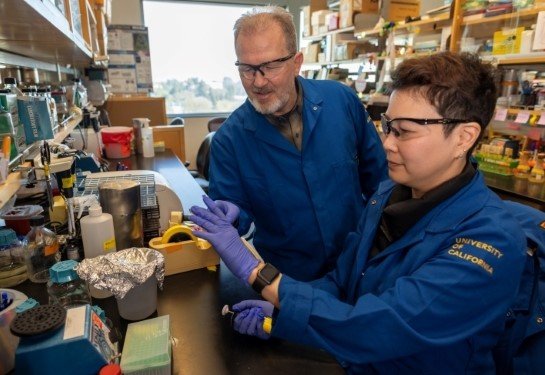
    Andreas Bäumler (left) and Jee-Yon Lee (right) found chronic kidney disease causes specific gut bacteria to release a toxin that worsens kidney damage.

    “Previous research has shown that chronic kidney disease is linked to an elevated fecal abundance of Enterobacteriaceae,” said Jee-Yon Lee, first author of the study and a project scientist in the Department of Medical Microbiology and Immunology

    Enterobacteriaceae is a large family of bacteria that includes both harmless and pathogenic species

    “This study identifies nitrate from the host as a switch that turns common gut bacteria like E. coli into indole producers capable of accelerating chronic kidney disease,” Lee said

    CKD affects about 1 in 7 adults in U.S

    Chronic kidney disease, which is a gradual loss of kidney function, affects about 1 in 7 adults in the U.S., or an estimated 35.5 million Americans. About 1 in 3 people with diabetes and 1 in 5 people with high blood pressure have kidney disease. Globally, about 788 million people were estimated to have CKD in 2023
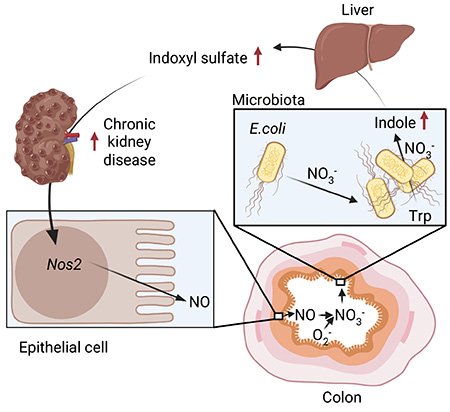
    A biological diagram illustrating how indole from E. coli in the gut contributes to chronic kidney disease.
    In mice, kidney disease increased nitrate levels that boosted E. coli growth and indoxyl sulfate production.

    For people with kidney failure, hemodialysis is a life-saving procedure that removes waste and extra fluids from the blood. But indoxyl sulfate cannot be removed by dialysis because it binds to serum albumin, a common protein in the blood. Higher serum indoxyl sulfate levels are associated with more severe chronic kidney disease

    “By identifying the driver responsible for an increase of Enterobacteriaceae during chronic kidney disease, and by demonstrating the importance of these bacteria for indole production and disease progression, our research points to iNOS as a potential target for intervention strategies,” said Andreas Bäumler, distinguished professor in the Department of Medical Microbiology and Immunology, and senior author of the paper.

    Methods and possible therapy

    The researchers tested specific strains of E. coli in mice. They also tested fecal samples from people with and without CKD

    In mice, they found:

    • Kidney dysfunction caused an increased transcription of Nos2 (the gene responsible for creating iNOS) in the colon’s mucous layer.
    • Increased iNOS led to an increase in nitric oxide, which reacted with oxygen radicals to form nitrate.
    • Increased nitrate levels fueled E. coli growth, leading to a higher production of indoxyl sulfate, a kidney toxin, creating the damaging feedback loop.

    In addition to the mouse findings, the researchers found fecal samples from people with CKD showed the same effect seen in the mice. Although fecal samples from people with kidney disease showed higher levels of E. coli, indole production increased only when nitrate was added, compared with healthy controls

    To determine whether reducing iNOS levels could improve outcomes in the mice, researchers tested aminoguanidine, an investigational drug known to inhibit iNOS. Mice given the aminoguanidine showed reduced mucous nitrate, lowered indoxyl sulfate and improved kidney outcomes
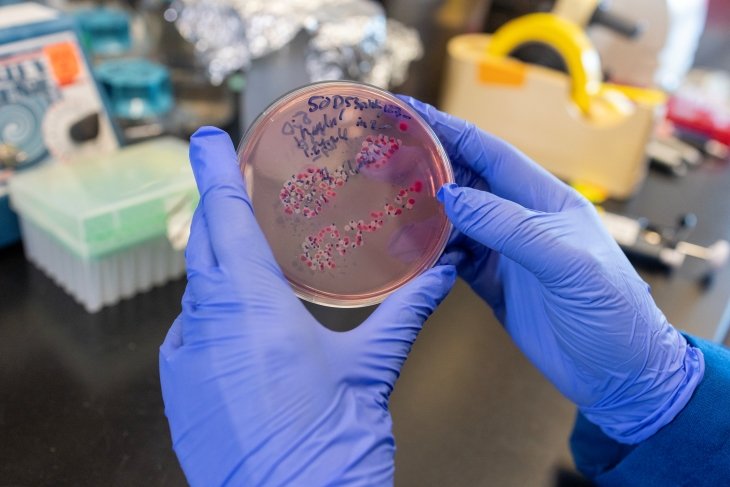
    Gloved hands hold a petri dish with pink culture medium and clusters of bacterial colonies in a laboratory setting.
    In mice, kidney disease increased nitrate levels that boosted E. coli growth and indoxyl sulfate production.

    Limitations and next steps

    Although the results are promising for finding a mechanism to reduce indole sulfate — and potentially improve the progression of kidney disease — the researchers note several limitations
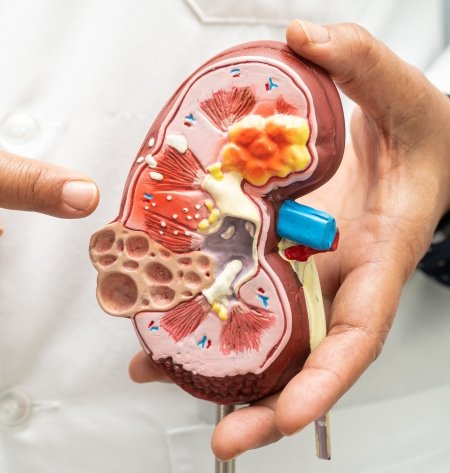
    A person in a white lab coat holds a detailed anatomical model of a human kidney and points to it.
    Kidneys are responsible for filtering waste in the body. Chronic kidney disease affects about 1 in 7 adults in the U.S.

    Although the human gut bacteria mirrored the nitrate‑dependent surge of indole in mice, more studies will be needed to confirm the results in people. Clinical trials are also needed to test whether iNOS inhibitors, or other agonists or inhibitors, could safely lower indoxyl sulfate and improve outcomes in people with CKD

    And finally, they note the gut ecosystem is complex. E. coli is not the only gut bacterium that produces indole, and long‑term suppression of nitrate pathways may carry unknown trade‑offs

    “This study shows that altering the gut environment — not just the microbes themselves — can have profound effects on disease progression,” Bäumler said. “Targeting host pathways that shape microbial metabolism may represent a new way to intervene in chronic kidney disease.”

    A complete list of authors and funders appears in the paper

    • Read the paper
    • Andreas Bäumler Lab
    • UC Davis Department of Medical Microbiology and Immunology
    chronic imbalanced kidney microbiome worsens
    HJFadmin
    • Website

    Related Posts

    How the gut-brain connection influences mood – Harvard Health

    June 29, 2026

    Frontiers | The ethnicity and gut microbiota hypothesis: analyzing multifactorial interactions and their health implications

    June 29, 2026

    Groundbreaking Research Reveals The 50 New Gut Bacteria You Need

    June 28, 2026
    Leave A Reply Cancel Reply

    Don't Miss
    Women's Hormone Health

    Frontiers | The impact of hormone replacement therapy on cardiovascular health in postmenopausal women: a narrative review

    By HJFadminJune 29, 20260

    The impact of hormone replacement therapy on cardiovascular health in postmenopausal women: a narrative review

    Maven Expands Virtual Clinic Nationwide, Integrating GLP-1 and Hormonal Care With Comprehensive Women’s Health

    June 29, 2026

    The Cost of ‘Natural’ Womanhood

    June 29, 2026

    Screen time before age 2 can delay language, disrupt sleep: Landmark study

    June 29, 2026
    Stay In Touch
    • Facebook
    • Twitter
    • Pinterest
    • Instagram
    • YouTube
    • Vimeo
    Our Picks

    Expert shares 6 tips to recover faster and stronger after intense workout sessions- Moneycontrol.com

    June 28, 2026

    These Viral Fitness & Wellness Recovery Products Are Taking Over TikTok Ahead of Prime Day

    June 28, 2026

    Life Time Has Created a Fitness and Recovery Paradise – Muscle & Fitness

    June 28, 2026

    The Movement Twenty Four: New 24-Hour Fitness and Recovery Hub Opens Down South

    June 28, 2026

    Subscribe to Updates

    Get the latest creative news from SmartMag about art & design.

    About Us

    Welcome to HealthJustFine.com, your trusted destination for reliable health news, wellness insights, and evidence-based information that empowers you to live a healthier life.
    Our mission is to make quality health information accessible, easy to understand, and relevant for everyone. We believe that staying informed is the first step toward making better decisions about your health, nutrition, fitness, and overall well-being. That’s why we deliver timely updates on the latest medical research, healthy living trends, preventive care, and wellness innovations from around the world.

    Our Picks

    Frontiers | The impact of hormone replacement therapy on cardiovascular health in postmenopausal women: a narrative review

    June 29, 2026

    Maven Expands Virtual Clinic Nationwide, Integrating GLP-1 and Hormonal Care With Comprehensive Women’s Health

    June 29, 2026

    The Cost of ‘Natural’ Womanhood

    June 29, 2026
    Latest Posts

    Expert shares 6 tips to recover faster and stronger after intense workout sessions- Moneycontrol.com

    June 28, 2026

    These Viral Fitness & Wellness Recovery Products Are Taking Over TikTok Ahead of Prime Day

    June 28, 2026

    Life Time Has Created a Fitness and Recovery Paradise – Muscle & Fitness

    June 28, 2026
    Facebook X (Twitter) Instagram Pinterest
    • About Us
    • Contact Us
    • Terms & Conditions
    • Privacy Policy
    • Disclaimer

    © 2026 healthjustfine.com. All rights reserved. Designed by DD.

    Type above and press Enter to search. Press Esc to cancel.