


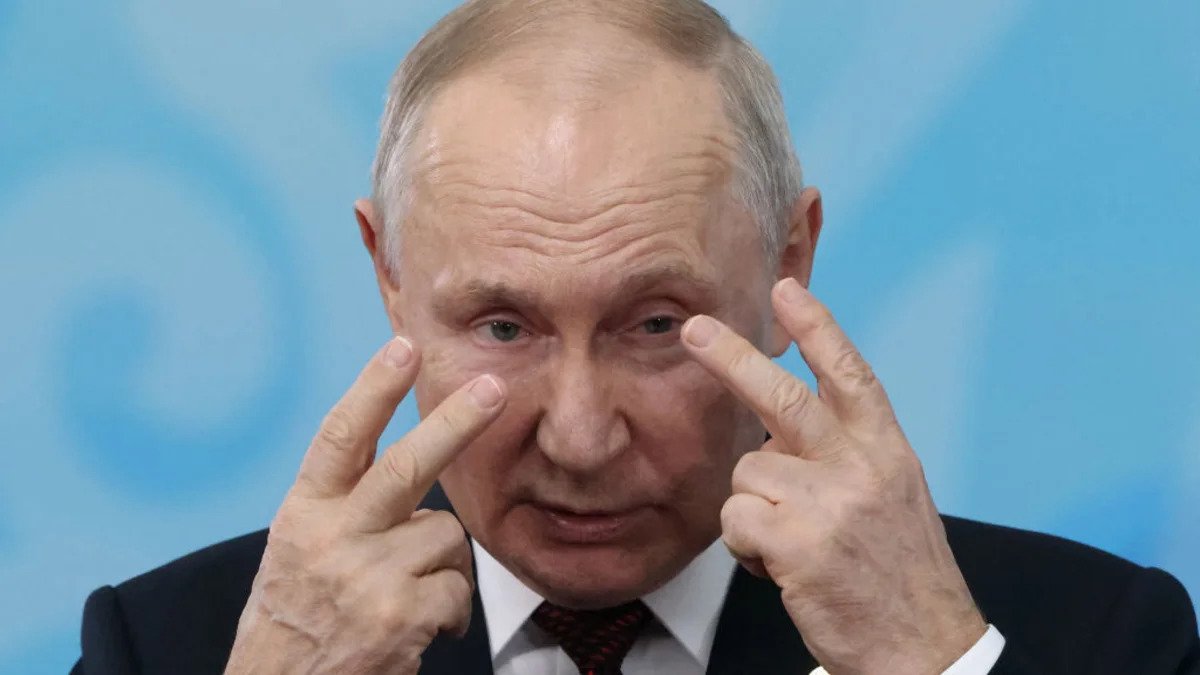
Russia’s president, Vladimir Putin, is part of a long line of billionaires trying to live longer lives — and he’s reportedly willing to put $26 billion toward doing so
Last month, the Russian government announced the latest focus of their “New Technologies for Health Preservation” initiative: A gene therapy treatment the announcement called “a vaccine against aging (1).” The Russian Deputy Science and Higher Education Minister Denis Sekirinsky says the drug blocks the RAGE receptor, adding that, when that receptor is activated, it tells cells to start aging
Here’s how to get rich from rising US property values with as little as $100 — and without the stress of angry tenants
Robert Kiyosaki says this 1 asset will surge 400% in a year and begs investors not to miss this ‘explosion’
Millionaires under 43 are reshaping investing — just 25% of their portfolios are in stocks. Here’s where their money is going
“Blocking this gene, on the contrary, can prolong its youth,” he explained
The New Technologies for Health Preservation Initiative, which was announced in 2024 and enacted in 2025, is designed to forward biotechnology research that slows or stops aging (2). It has a budget of $2 trillion rubles (or, at the time of writing, about $28.1 billion USD)
Here’s what Putin is putting money towards — along with more cost-effective methods anti-aging influencers are incorporating into their regimens
In addition to its forays into gene therapy, Russian state scientists have also researched human organ transplants — something Putin was caught discussing with Chinese President Xi Jinping (3) back in September
His translator told Xi that biotechnology advances could allow people to “transplant human organs continuously, grow younger in age and perhaps even achieve immortality.”
According to Russian scientists, they’ve had some luck with bioprinting human organs, as well as growing human organs inside pigs. But there hasn’t been much peer-reviewed work on the topic published outside of Russia
“If there are no publications then there are no real results, and their statements should probably be taken as aspirations, not to say dreams,” Alexander Ostrovskiy, a Russian scientist who played a key role in developing bioprinting in Russia before leaving the country, told the Wall Street Journal (4). “It’s impossible to do science in isolation.”
Key players in Russia’s longevity project — including Putin himself — have also promoted anti-aging treatments that aren’t as well-founded in scientific research
