


Produced by Vcbeat
Over the past few years, the mainstays of health monitoring wearables have been bands and smartwatches. Over the past year, health monitoring earphones have been flooding into the market
Apple has added heart rate monitoring to AirPods Pro 3, while brands such as Tingzhihui and Edifier have also launched products equipped with heart rate, blood oxygen and other functions. At the same time, domestic and overseas enterprises have started to integrate EEG acquisition capabilities into earphones to manage sleep or stress with the help of monitoring data. Earphones are evolving from consumer electronics for audio playback to new carriers for physiological signal collection.
Consumer-grade health monitoring is extending from the wrist to the ear. Bands and smartwatches have already proven the commercial value of wearables that continuously collect health data. Is the health monitoring earphone just adding a few auxiliary functions to traditional earphones, or opening up new space for the yet-to-be-explored market such as sleep health?
Concentrated Outbreak of Health Monitoring Earphones with Heart Rate and Blood Oxygen Measurement
Consumer electronics brands have introduced sensing technologies such as PPG into the earphone sector, which has become the mainstream technical route for consumer-grade health earphones. Since 2025, such products have been launched to the market in batches
For example, AirPods Pro 3 is equipped with a custom PPG sensor, combined with accelerometer, gyroscope, GPS and other components to realize heart rate tracking and data calculation during exercise. Products including Tingzhihui H3 and SPORT OPEN L also adopt PPG technology, extending their functions to scenarios such as heart rate and blood oxygen monitoring, hearing load monitoring, and stress management.
Among consumer electronics products, smartwatches and bands have long been able to achieve heart rate and blood oxygen monitoring. Why extend these functions to earphones?
Part of the heart rate and blood oxygen monitoring earphones launched in the past two years
The answer first lies in the high-frequency usage attribute of earphones themselves
Users are very likely to wear earphones when listening to music, making calls or doing sports. After adding heart rate monitoring, the same pair of earphones can also undertake data collection and health guidance
For example, the health earphones of Tingzhihui can combine personalized data such as physiological indicators, exercise capacity and exercise load to provide real-time voice broadcast and heart rate warning, so as to dynamically control exercise risks
The heart rate monitoring function of AirPods Pro 3 can be used through the Fitness app on iPhone or compatible third-party apps. In addition to supporting more than 50 sports, it can also play music or podcasts during exercise monitoring
The Sanag Apex Star Ring covers functions such as heart rate tracking and exercise management, bad posture and sedentary reminders, and AI health Q&A
This means that health monitoring functions are becoming part of the original usage scenarios of earphones
In the past, users might wear both earphones and a watch at the same time: the earphones were responsible for music playback and calls, while the watch was responsible for exercise recording and health monitoring. Now, part of the functions can be completed directly by earphones. Especially for sports people, music, calls, heart rate collection and exercise guidance are integrated into one product, reducing the need to wear extra devices.
Earphones also need to solve the problem of wearing stability during exercise. When the contact between the device and the skin changes, the PPG signal will be affected. Therefore, manufacturers start with structural design to improve the contact stability between the sensor and the ear skin
For example, the earphones under Tingzhihui focus on customization, so they use personalized design to make the earphones fit the ear shape of each user, and the PPG sensor fits the target monitoring position as stably as possible. Other non-custom earphones mainly increase stability by adding ear tips of various sizes, using ear-clip design, and adopting sweat-resistant materials
Therefore, earphones equipped with heart rate and blood oxygen monitoring are different from smartwatches, bands and the currently popular smart rings: they do not create a new product category, but integrate the mature health monitoring technology into the earphone devices that users already use very frequently, making them an extended function of earphones
When Earphones Start to Measure Brain Signals, Application Scenarios Expand
Since 2026, another major change has taken place in health monitoring earphones: the monitoring function extends to EEG brain signals
Before that, most of the health monitoring capabilities of earphones reproduced the verified technologies of smart bands, with their advantages mainly reflected in sports scenarios. After the EEG function is implemented in earphones, the products can cover scenarios directly related to brain activities such as sleep, brain fatigue and concentration
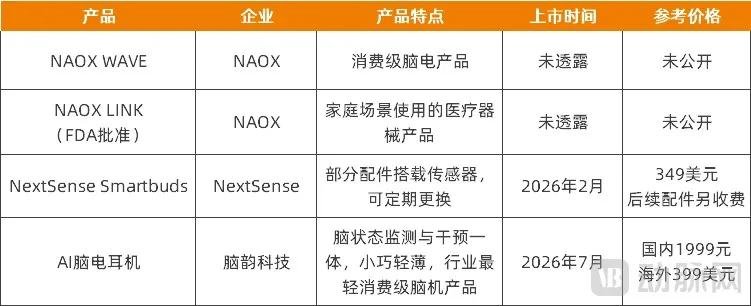
EEG earphones already on the market at home and abroad
Traditional EEG collection relies on head-mounted multi-electrode devices or EEG caps, which can only be used at specified times and specific places, making it difficult to achieve long-term and normalized monitoring
Wang Zhaoyang, founder of BrainRhythm Tech, told vcbeat that both the consumer side and the medical side have growing demand for continuous EEG data collection. Integrating EEG collection into earphones is to solve the pain points of many previous limitations of EEG monitoring with the help of earphones, a high-frequency consumer hardware
In February 2026, US-based NextSense launched the Smartbuds earphone, which is equipped with 6 built-in EEG sensors, mainly collecting EEG activities during sleep to identify the user’s sleep state. French company NAOX exhibited its EEG health earphone at CES2026, among which WAVE combines the EEG collection module, algorithm and wireless earphone to realize the identification and management of brain states such as concentration and relaxation.
Domestic enterprise BrainRhythm Tech launched the in-ear AI EEG earphone, which was first launched on JD in July 2026; in the overseas market, the company reached a cooperation with Best Buy, the North American consumer electronics retail giant, and the product will soon be available on this platform to cover the North American market. This earphone collects EEG signals and can identify different brain states of users such as concentration, relaxation, calmness and activity.
Wang Zhaoyang said that EEG signals directly reflect the neural activities of the brain and are one of the authoritative criteria for sleep stage evaluation in medicine. Not only sleep judgment highly depends on EEG, but also cognitive states such as concentration and brain fatigue can get more objective feedback through EEG signals
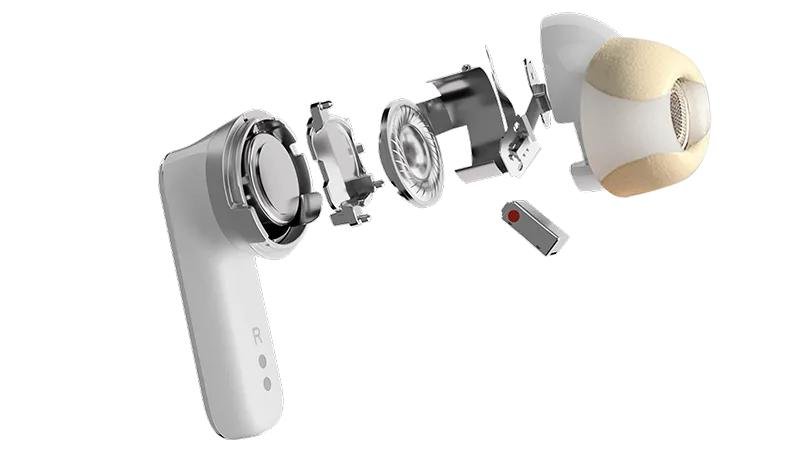
AI EEG earphone of BrainRhythm Tech
Based on this technical advantage, sleep has become the core and most direct application scenario of EEG earphones. EEG provides a native direct signal ect estimation relying on other physiological indicators in the past
More importantly, EEG earphones have both monitoring and intervention functions
NextSense Smartbuds tries to connect passive sleep monitoring and active intervention: it identifies sleep stages such as light sleep, deep sleep and semi-awareness at the millisecond level, and then matches sounds of corresponding frequencies to help users improve deep sleep quality
The AI EEG earphone of BrainRhythm Tech, based on continuously collected data, relies on AI to recommend users with concentration training, stress relief and sleep improvement solutions, combined with meditation and breathing guidance, to help users establish a healthier and more efficient brain rhythm
Thus, EEG earphones form a closed loop of monitoring, feedback, intervention and re-monitoring
At present, the commercialization of EEG earphones is still in the early stage, and it needs to go through market verification in the next step
Do Earphones Compete for the Market of Bands? Three Barriers to Cross First
Health monitoring earphones are emerging in large numbers with clear technical routes, but if they want to replicate the market success of smart bands, they still need to cross three practical barriers
First, can wearing comfort support long-term continuous wear?
Especially for EEG earphones, when used as night sleep monitoring and intervention devices, they need to be worn continuously for 7 to 8 hours or even longer. During this period, users will turn over and sleep on their sides. In addition, there are differences in the size and shape of individual ear canals, which poses high challenges to the wearing experience
To this end, the industry mainly optimizes the long-term wearing experience from multiple dimensions such as structure, material, weight and electrode design
The most critical point is to reduce the volume and weight. For example, BrainRhythm Tech adopts micro design and flexible materials, with a single ear weighing about 6 grams to reduce the foreign body sensation during wearing. The product form also needs to adapt to side sleep and different ear shapes, and optimize the earphone form. For example, in addition to being smaller than ordinary wireless earphones, NextSense Smartbuds is also equipped with ear canal patches and ear wings of different sizes to balance comfort and stability.
Secondly, how to widely build consumer trust?
The PPG technology for monitoring heart rate and blood oxygen is relatively mature. In contrast, EEG earphones face more complex situations
Wang Zhaoyang introduced that the whole chain of EEG monitoring, including micro electrode materials, electrode structure design, chip selection, circuit design and algorithm, requires strong technical capabilities; the earphone audio system will produce electromagnetic interference. Therefore, it is required to complete the full-chain development of EEG monitoring and realize the integration with the audio earphone system under the premise of anti-interference, which requires high comprehensive technical capabilities.
Obtaining medical device certification has become an important development direction of the industry. Smartwatches have provided a referable path. Huawei WATCHD has obtained Class II medical device certification, and its blood pressure measurement has been verified in accordance with medical device standards; some monitoring functions of Apple Watch have also obtained FDA 510(k) clearance. For consumer-grade wearable devices, medical device certification will raise the cost of R&D, verification and compliance, but it can also enhance consumers’ trust in products.
The earphone industry is also exploring in this direction. Another product of NAOX, the LINK earphone, has been approved by the FDA for continuous EEG monitoring in home scenarios, to obtain single-channel electroencephalogram and diagnose diseases accordingly
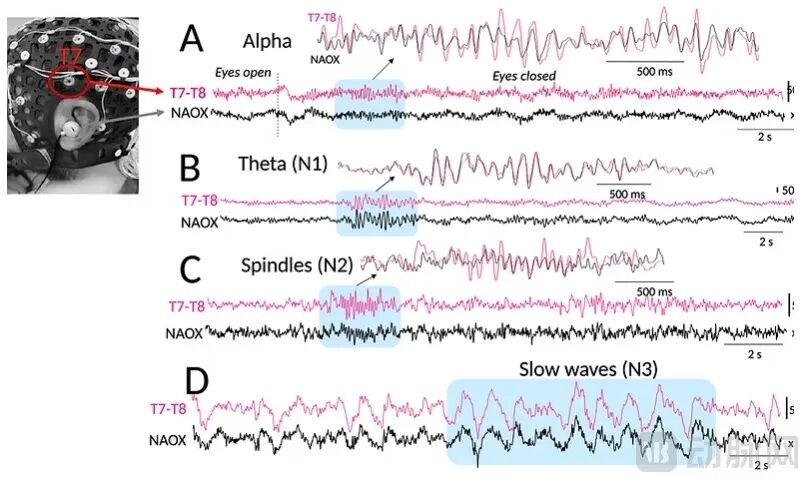
Comparison between the electroencephalogram using NAOX LINK (black line) and the scalp electroencephalogram as the medical gold standard (red line)
Although Smartbuds is a consumer-grade product, NextSense has disclosed relevant clinical research results to the public. BrainRhythm Tech has also planned medical device products, which will further verify the reliability of ear EEG data in serious medical scenarios
Medical scenarios can not only verify the data reliability of intra-ear EEG, but also provide professional endorsement for consumer products
More importantly, can consumers be willing to pay a higher price?
For example, the price of Apple’s AirPods Pro 3 with heart rate monitoring is 1899 yuan, while the new standard AirPods 5 without heart rate monitoring is priced at 999 yuan
Of course, the price difference between the two does not entirely come from the health monitoring function. The gaps in noise cancellation, audio, wearing structure and battery life also affect the pricing. But this is enough to show that health monitoring has become part of the value of high-end earphones, and consumers need to pay extra costs for this added health capability
In addition, the health earphones of Tingzhihui, which feature customization, are priced at thousands of yuan. The official website shows that the SPORT OPEN L is priced at 4500 yuan, and H3 and H3 Pro are as high as 6690 yuan and 7690 yuan respectively
The price threshold for EEG health earphones is not low either. The domestic launch price of BrainRhythm Tech’s in-ear EEG earphone is 1999 yuan; the retail price of NextSense Smartbuds is 349 US dollars, and the ear canal patch and ear wing kit equipped with sensors need to be replaced regularly later (officially recommended to be replaced once a month), which is also a paid item
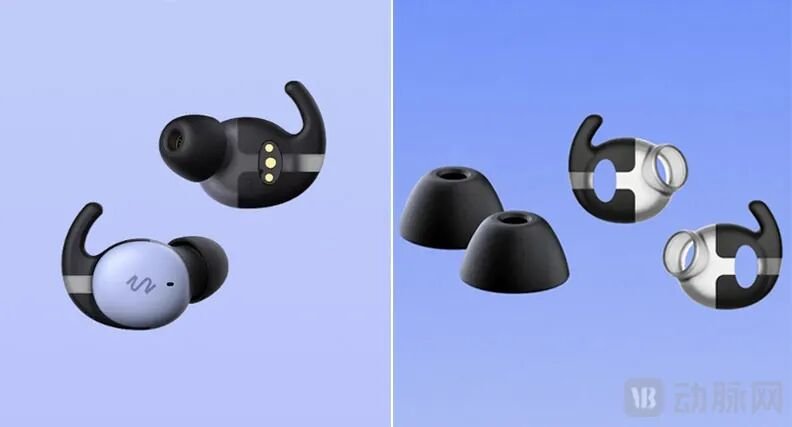
The Smartbuds earphone of US-based NextSense and the accessories that need to be replaced regularly (right)
Faced with the relatively high product pricing, how will consumers choose?
vcbeat randomly checked some user reviews of health earphones on e-commerce platforms. Among the heart rate and blood oxygen monitoring earphones, most of the reviews still focus on the core experience of earphones such as noise cancellation and battery life, and few comments mention the health functions, which indirectly confirms the focus of users. At least functions such as heart rate and blood oxygen monitoring that are easy to be replaced by other devices are not necessarily the most critical factors driving users to make purchases.
Only by equipping earphones with technologies or functions that are difficult to achieve on the wrist or other parts can unique value be better generated
Germany’s KIT’s OpenEarable2.0 shows this trend. It integrates multiple sensors such as microphone, PPG, temperature, IMU and air pressure into the earphone, which can continuously collect multi-dimensional information such as heart rate, respiration, body temperature, blood oxygen, as well as chewing, swallowing and teeth grinding. However, this platform is currently only positioned as a scientific research device.
In addition, Wang Zhaoyang mentioned that the AI EEG earphone users the company is currently in contact with are mainly high-intensity brain users such as high-pressure workplace people, meditation enthusiasts and exam-preparing students. Some of these users hope to observe the changes of brain state before and after use, some hope to relieve stress and improve brain fatigue, and others hope to improve their concentration through EEG training.
This part of real demand, as well as the revealed willingness to pay, also shows that if health monitoring earphones want to achieve larger-scale popularization, they need to take earphones as the data entry, explore the business model combining hardware and data services, that is: The hardware completes the collection of unique physiological data, and then relies on AI to output continuous services such as analysis, training and intervention to support the product pricing.
“Overseas users have a high degree of acceptance of the hardware + subscription model for electronic products, and brain health monitoring earphones can also learn from this idea in the overseas market,” Wang Zhaoyang said
On the whole, health monitoring earphones have undergone preliminary industry verification, which confirms that the ear can be used as a reliable entry for physiological signal collection. However, such products cannot simply copy the development path of smartwatches, and must create differentiated health value for the ear canal scenario. Only by providing data and services that are difficult to obtain from wrist-worn devices can it get rid of the label of an auxiliary function of
