



Published 5:35 am Saturday, September 26, 2026

1/3
Swipe or click to see more
photo by Sarah A. Miller/Tyler Morning Telegraph Former Dallas Cowboys defensive end Greg Ellis speaks Wednesday Aug. 20, 2014 at the East Texas Kick-Off Luncheon held at Harvey Convention Center in Tyler, Texas. The luncheon kicked-off the start of the high school and college football season.
2/3
Swipe or click to see more

3/3
Swipe or click to see more
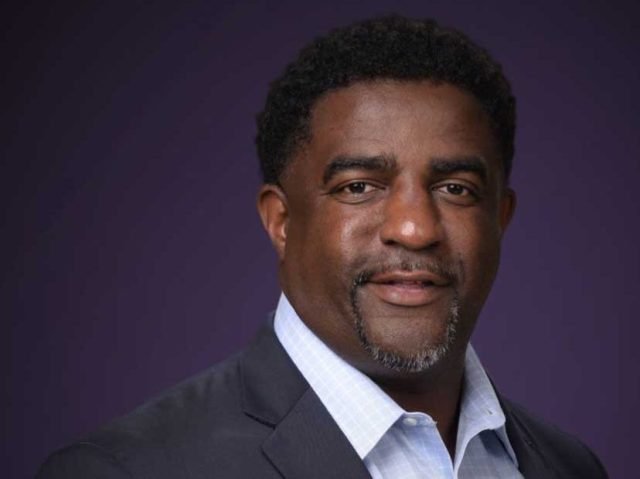
Former Dallas Cowboys defensive end Greg Ellis was named as the head football coach at Texas College on Monday, the school announced.
| Getting your Trinity Audio player ready… |
Former coach and Dallas Cowboys and Oakland Raiders player Greg Ellis visited Tyler on Friday to debut his first free life coach training program and connect with East Texas mental health organizations
With a lifelong passion for mental health, Ellis developed a new mental health and wellness initiative app called “Getting My Help,” which centers on helping people recognize unhealthy patterns early, creating a stepping stone to getting help and mentorship to replace bad habits with healthier alternatives. On Friday, Ellis partnered with East Texas Mental Health Collaborative, the Andrews Center and the Minority Health Initiative of East Texas to host his first training for life coaches interested in being part of the initiative.
In an exclusive interview with the Tyler Morning Telegraph on Friday, Ellis discussed his journey with mental health, passion for advocacy and how he started to roll out his new app
“As the old saying goes, it’s OK to not be OK,” Ellis said. “People need to understand that a mental wellness challenge or mental disorder, doesn’t mean you are weak and if you’re getting help, in my opinion, means that you’re strong — strong enough to admit I want to be better in life and if I get this proper help, I can do better in life.”
A pull toward advocacy
Ellis grew up in North Carolina where he fell in love with football from a young age, going on to play on scholarship for the University of North Carolina at Chapel Hill (UNC)
In his professional career, Ellis played primarily as a defensive end for the Dallas Cowboys from 1998 to 2008, accumulating 77 quarterback sacks among many other statistics, then played for the Oakland Raiders from 2009 to 2010 amassing seven quarterback sacks. He then coached for Texas College in Tyler, Southwestern Assemblies of God University (SAGU) in Waxahachie, and the Dallas Cowboys
Ellis said his interest in mental health advocacy comes from his own journey battling anxiety and perfectionism throughout his life and having a brother diagnosed with schizophrenia
“My anxiety is so bad, that I would always have to walk around with a little towel because I would break out in sweats,” Ellis said. “Since I’ve been using the system I created in the app, I left it in my car because I’m still not 100%, but I’m doing so much better.”
Ellis said throughout his life, people have always felt comfortable confiding in him about things they may be struggling with, which led him to start brainstorming accessible ideas to aid people with their mental health
“For me, you look back over your life and sometimes things start to come together and make sense and you didn’t realize what you were doing,” Ellis said. “In high school and in college, when I knew some people who had some issues going on they would gravitate toward me and I would gravitate toward them to try to help them.”
While coaching for the Cowboys, Ellis said Owner Jerry Jones recognized this natural understanding he possessed
“Jerry told me, ‘Greg, you were the go-between when we had guys on the team that had mental stuff going on. We depended on you,’” Ellis said. “I did not know that’s how they were looking at me and depending on me for that position. I just naturally did it.”
Ellis described his app as a preventative and layered community-based approach to wellness and not a replacement for professional mental-health treatment that aims to give people that accountability and mentorship he was able to offer to players
Core philosophies of the app
The app, which took Ellis years of compiling research and professional psychologist input while working with software developers, follows three main principles
The concepts include Maslow’s hierarchy of needs, which assess the individual’s basic needs, safety, relationships and self-esteem, epigenetics, which is the idea that environmental factors and personal choices can carry on to future generations genetically and learning to replace unhealthy patterns by identifying “misuses” and using coping mechanisms
“We try to help people understand it, normalize it and to realize every single person needs to be doing something for their mental wellness,” Ellis said. “If you don’t get on top of it early, then that’s when it gets bad and when it can get out of control and that’s when it affects the loved ones in your life the most, so I encourage everybody to be doing something to pay attention to their mental wellness and this is why I created the app.”
Ellis said he believes unmet needs can contribute to unhealthy coping patterns and that people need help identifying those areas, even if it’s worrying, poor sleep or perfectionism, and creating a concrete plan on how to take steps to make changes
Once the app is downloaded, a user will begin with a questionnaire designed to identify areas of concern and create personalized modules and goals. The app then guides the user through identifying those issues, helping the individual explore why and when issues occurred and understanding potential consequences. The app suggests solutions based on research that matches the users key issues and tracks progress through daily check-ins in a 49-day progression. All information remains confidential and is for accountability purposes.
The app also has a searchable local refeature that will integrate a feature where users can connect with a certified life coach, through specific training, like on Friday morning
The app is free to download and to search for local mental health reapp’s habit-tracking and live life coach features after the free period expires. The cost of the subscription goes to operating the software needed for those services
“I tell people this isn’t how Greg feels,” Ellis said. “It’s got to be bigger than that because this is people’s lives that we’re talking about and so it’s based off of scientific evidence.”
Ellis said community members can become certified app-based life coaches after completing five online training modules and a 10 questions test after each model in addition to in-person training that is provided before coaches can begin to work with the community
There were 54 participants signed up for Friday’s training from across East Texas, Dallas and Austin and experienced a screening of Ellis’s film on mental health called “My Dear,” expert panel discussion on mental health needs from professionals to voice their concerns especially in rural areas, a comprehensive review of materials from online modules and training for “GMH” life coaches.
“We make sure everyone understands that we are running life coaches, not therapists,” Ellis said. “They follow a script during their sessions and cannot diagnose a person with anything, but they can refer that person to an outside therapist, so it’s that first step.”
Coaching sessions are generally conducted weekly, while users have ongoing access to educational content and their personal tracking tools and coaches can choose to volunteer or change for their services which can be filtered through the app, Ellis said
The app can be adopted for schools, healthcare organizations, businesses and other groups through customized or corporate plans
Ellis said he views collaboration as essential to reaching larger populations and sustaining the initiative, which is why he is hosting the life coach training with East Texas organizations
“It’s not something one person, or one organization can do by themselves,” Ellis said. “I look for those opportunities where we can work together because I love hearing and learning stuff from other people and organizations as well as to what they have going on and their approach to it as well, so it’s very important.”
Ellis said he is launching the life coach training program in Tyler after connecting with Dr. Carolyn Harvey, East Texas health professional, who let him know of the mental health challenges in the area, especially in rural communities
“When I coached here at Texas College I started learning about Tyler and getting into the community,” Ellis said. “I think it’s a beautiful community and a lot of good things are happening here, but I also see a need here as well, so I think this would be an excellent tool to plant here.”
Ellis said many rural residents and people without insurance face additional barriers when trying to find treatment, so this initiative seeks to give people a lower-barrier way to begin talking about their challenges and finding re
“It’s getting the community involved to help each other,” Ellis said. “You’re getting people who are maybe sitting around not doing a lot themselves and you’re giving them a bigger sense of purpose of knowing you are helping somebody, even if you are just talking to them.”
Ellis said his strategy is to establish partnerships in individual communities, train local people and allow those communities to continue to expand the work to create a network of community members who can help people recognize wellness challenges, connect them with recare when necessary
“Success of the training event will be for them to see the vision, understand the importance of the role that they can play in helping people and going through the program and becoming an app-based life coach,” Ellis said. “It’s about strategic partnership and I go to different cities and places to plant the seed of needing to take care of your mental health and find the people that can fertilize that seed in their city and grow it.”
For more information on the “Getting My Help,” app, its features and cost, visit https://gettingmyhelp.com/
