


Tech review sites cover smartphones, smartwatches, laptops, and increasingly AR headsets. What they rarely cover is medical alert wearables, a category quietly evolving into one of the more interesting corners of the wearables market. The reason for the lack of coverage is partly demographic (medical alerts are associated with aging users, and tech reviewers skew younger) and partly inertia (the category has had a boring reputation for decades).
But the last 3-5 years have seen genuine innovation: fall detection algorithms that actually work, multi-constellation GPS in devices that fit on a bracelet, and cellular connectivity reliable enough for life-critical applications. It’s a category worth reviewing on its tech merits, not just its social utility
For tech-savvy Australians evaluating options for an aging parent or planning for themselves, the category deserves a structured comparison. A device like aLife Assure medical alerthandles the GPS-plus-cellular-plus-fall-detection stack that would be a premium smartwatch feature in the fitness segment, with reliability engineering that goes beyond what fitness devices typically offer. Here’s what the category actually looks like when reviewed through the same lens we’d apply to any wearable.
Why Has This Category Been Underreviewed Until Now?
Three reasons mainstream tech coverage hasn’t engaged with medical alert wearables
Demographic mismatch with reviewers.Tech reviewers are typically under 45; primary medical alert users are typically over 70. The reviewer doesn’t use the product daily, and the primary audience isn’t reading tech review sites
Product evolution was slow.For decades, medical alerts were basic pendant-plus-base-station systems. Meaningful innovation only accelerated post-2015 with cellular-native devices and GPS-enabled wearables
Industry marketing patterns are different.Medical alert companies market through AARP-style channels, TV advertising, and health-provider referrals rather than tech blog outreach. Reviewers didn’t get samples; the category stayed invisible in that media ecosystem
Perceived boring-ness.The form factor is conservative (pendants, bracelets, belt clips), and the use case is emotional rather than aspirational. Neither factor wins coverage from tech blogs focused on flagship launches
The result is a coverage gap.Consumers evaluating these devices mostly read marketing copy and reviewer-less affiliate roundups. A structured tech review is hard to find. The same audience that reads aGoogle Pixel 9 Pro XL long-term reviewwould benefit from equivalent depth applied to wearables outside the usual smartphone-and-smartwatch categories
What Technical Specs Matter Most in a Medical Alert Wearable?
The review framework that applies to other wearables also applies here, adjusted for the specific use case
GPS/GNSS support.Multi-constellation chips (GPS + GLONASS + Galileo + BeiDou) outperform GPS-only chips substantially, especially in dense urban environments or indoor fringe areas. Look for the full constellation list
Cellular network support.4G LTE-M and NB-IoT are current best for low-power wearables; older 2G/3G fallbacks are being decommissioned globally. Devices relying on retired networks will stop working. Verify current network compatibility
Fall detection accuracy.This is the headline feature. Good devices use multiple sensors (accelerometer, gyroscope, altimeter, sometimes pressure sensor) and ML-based fall classification. Bad devices use simple accelerometer thresholds and produce false alarms. Ask specific questions about false-positive rates
Battery life in real use.“Up to 5 days” usually means aggressive standby power management with minimal GPS pings. Ask about battery life with typical fall detection and location-tracking use. Two-day real-world runtime is the practical benchmark
Waterproofing.Shower use requires IPX7 or better. IPX4 only handles light splashes. Many users shower with the device; verify the rating
Charging mechanism.Magnetic puck chargers (like the Apple Watch) are more reliable than pin-contact chargers that corrode over time. Cable charging beats proprietary dock charging for longevity
Form factor, weight and comfort.Pendants and bracelets are worn 24/7; weight and strap comfort matter more than on a fitness wearable used for workouts
Two-way audio quality.When the emergency button is pressed, the device opens voice communication with the monitoring centre. Audio quality varies widely; test-call functionality tells you what to expect
How Does Medical Alert Compare to Smartwatch Fall Detection?
Apple Watch and some Samsung watches now include fall detection. How does a dedicated medical alert compare?
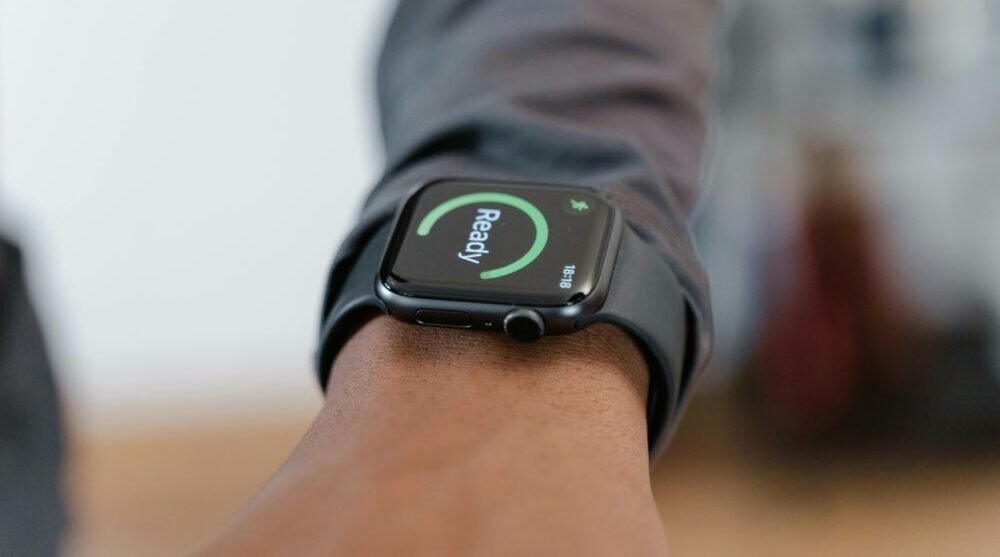
Apple Watch fall detection.Surprisingly good fall-detection algorithm; auto-calls emergency services after no response; requires iPhone pairing or cellular Apple Watch; battery life is measured in hours, not days; form factor can be harder for arthritic hands
Dedicated medical alert.Built for the use case; typically better battery life; simpler interface with fewer false-press opportunities; professional monitoring centre instead of auto-calling 911; works independently of any phone; typical wear profile (pendant, bracelet) built for 24/7
Hybrid approach.Some families pair an Apple Watch with a dedicated medical alert. The smartwatch provides general fall detection; the medical alert provides 24/7 monitoring with professional operators. Over-engineered for some households; ideal for others
Cost structure differs.An Apple Watch has a higher upfront cost with no monitoring subscription; a medical alert has a lower hardware cost with monthly monitoring. Total cost of ownership depends on expected duration and feature needs
What Does the Monitoring-Service Side Actually Look Like?
The service layer differentiates medical alert from generic wearables
Trained operators.Monitoring centres staff trained operators 24/7. When an emergency signal arrives, they assess (medical vs. fall vs. user confusion vs. accidental button) and respond appropriately
Multi-tier dispatch.Operators can call family, call local emergency services, call designated caregivers, or all three, depending on the assessed severity. This is harder than it sounds; professional services do it well
Language support.Premium services support multiple languages at the operator level. In a multicultural country like Australia, this matters
Integration with local emergency services.Operators coordinate with 000 (Australia) or 911 (US/Canada) dispatchers with specialised protocols. This goes beyond what a smartwatch auto-call can do
User data security.Monitoring services handle sensitive location and health data. Security practices around this vary widely; legitimate providers have concrete frameworks
Health infrastructure contextis tracked by organisations like theWorld Health Organisation’s aging and health reress
What Are the Review Criteria Tech Reviewers Should Apply?
If the category were properly reviewed like other tech, the criteria would be:
- Set up experience.Out-of-box to working: how many minutes? Is app pairing required? Can a non-technical user get it working on their own?
- Daily wear.How does it feel at 3 AM when you’ve worn it all day? Does the strap irritate? Does the weight disappear or nag?
- Battery life in real use.Not marketing spec; actual charge cycle tracking over a week.
- False alarm handling.How many false fall alerts in a week? How easy to cancel?
- Emergency response time.Test call to a monitoring centre: how long until a voice answers?
- Network reliability.Over a month, how many signal-related failures or signal-weak moments?
- Customer support responsiveness.When you have a question, how fast and how helpful is the response?
- Documentation quality.Does the manual/app teach or obfuscate? Reviewers who appreciate clear communication in budget-tier devices, as inthe Oppo A58 mid-tier smartphone review, will recognise the same criteria applied to medical alert wearables.
- Update cadence.How often does the device get firmware updates? For how many years can you expect support?
The global tech standards infrastructure that devices interact with is maintained by bodies such as the International Telecommunication Union, whose frameworks govern wireless spectrum, interoperability, and device certification across countries
What to Remember
- Medical alert wearables have evolved significantly in the last 3-5 years, but have been underreviewed by mainstream tech sites
- Multi-constellation GPS, cellular network compatibility, and fall detection accuracy are the key differentiators among modern devices
- Apple Watch fall detection and dedicated medical alerts serve overlapping but distinct needs
- The monitoring service layer (trained operators, multi-tier dispatch) is what separates medical alert from generic wearables
- If reviewed like other tech, the category would benefit from structured evaluation across setup, daily wear, battery, false alarms, and support
Photo bywww.kaboompics.comonPexels
Alt text: Technical Specs Matter Most in a Medical Alert Wearable Medical Alert Wearables: Tech
The Bottom Line on Medical Alert Wearables as Tech
For tech-minded consumers, medical alert wearables are worth the same evaluation framework you’d apply to any wearable purchase. The form factor is conservative, the marketing is tired, but the engineering under the hood is genuinely interesting and increasingly sophisticated. Ask about GPS constellation support, cellular network compatibility, fall detection specifics, and monitoring service details.
The category deserves better coverage than it gets. Families weighing options for an aging parent or planning for themselves benefit from treating this as the tech purchase it actually is, not just a utilitarian choice
Frequently Asked Questions
How does medical alert fall detection compare to Apple Watch fall detection?
Similar underlying sensors; different fall-classification algorithms. Dedicated medical alerts tend to be more conservative (fewer false alarms) and connect to professional monitoring instead of auto-dialling emergency services. Both work; they serve slightly different scenarios
Do I need an iPhone or an Android to use a medical alert wearable?
Most dedicated medical alerts work standalone with embedded cellular; smartphone pairing is optional. This is actually an advantage for users without a smartphone or with technology-resistant family members
What happens if the device loses cellular connection?
Quality devices buffer emergency signals and retry when the connection is restored. Some offer WiFi fallback; some beacon local family phones directly. Ask about failover scenarios before buying
Can I test the emergency response without actually triggering an emergency?
Yes. Legitimate monitoring services offer test-call functionality that connects you to operators who can verify that the device and audio are working without dispatching an actual emergency response
Featured header image byMART PRODUCTIONonPexels
Alt text: Medical Alert Wearables: The Tech Category Reviewers Overlook
