


19:12
News Story
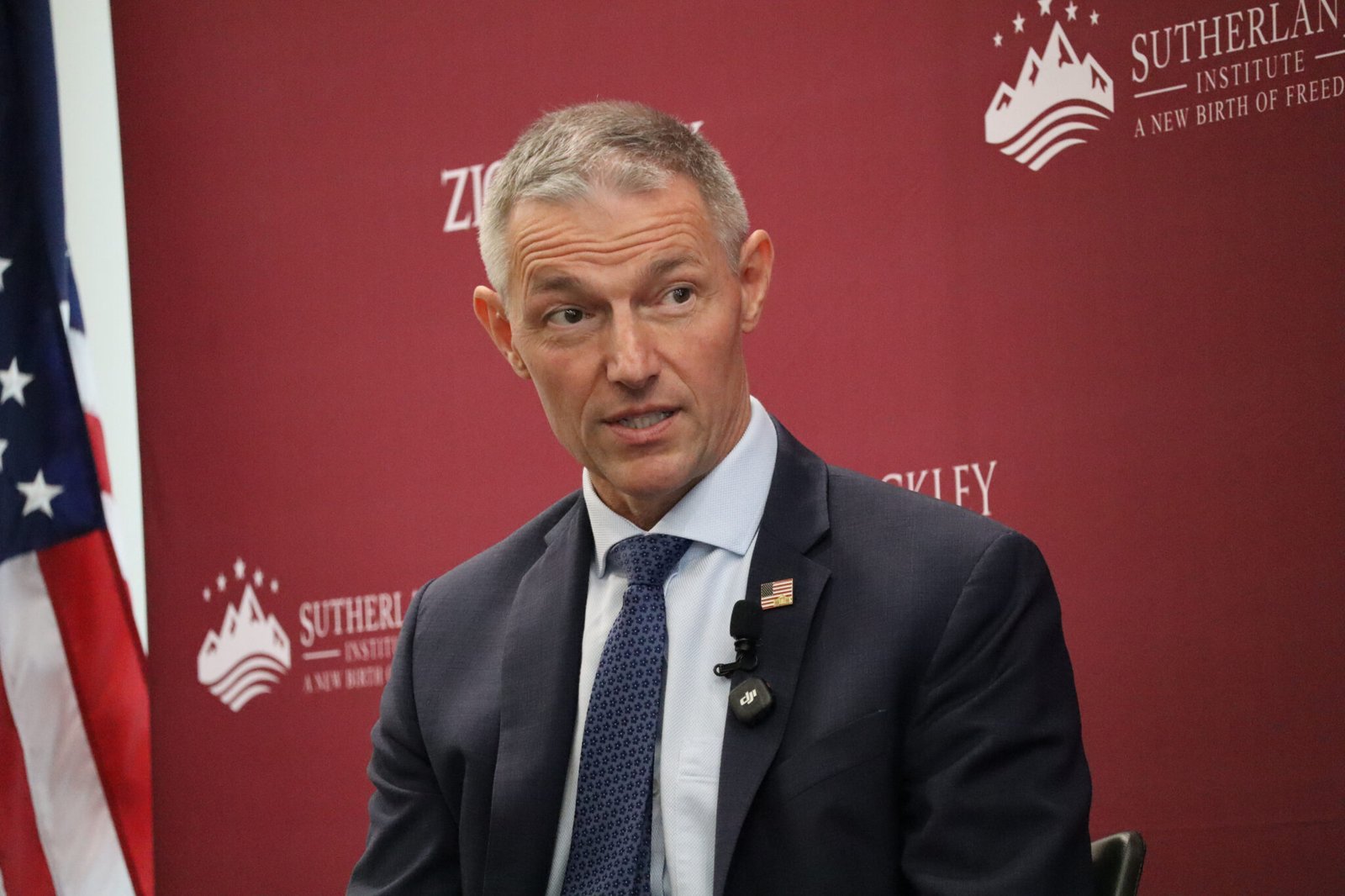
In a wide-ranging forum Tuesday, Utah Rep. Mike Kennedy said he sees promise for enhanced use of artificial intelligence in medicine and believes states, not the federal government, should have broad authority over matters of public health and disease control.
Kennedy, a first-term Republican congressman representing Utah’s current 3rd Congressional District, made the comments in a Q&A session hosted by the University of Utah’s Hinckley Institute of Politics and the conservative Sutherland Institute.
In response to a student’s question regarding the post of U.S. Surgeon General that has been unfilled for nearly two years, Kennedy said, “I’m warning you right now, that position shouldn’t be there. We don’t need a chief doctor. If anybody understands this, you young folks should understand this.”
The surgeon general, a role established more than 150 years ago, can issue advisories warning about public health threats. Surgeons generalhave also advocatedfor vaccination, though they don’t set vaccine policies.
President Donald Trump’s third and current pick for surgeon general this term, Nicole Saphier, spoke in favor of immunization earlier this month during aSenate confirmation hearing.The committee didn’t take a vote on her nomination, which also requires approval from the full Senate.
The left-leaning Center for Science in the Public Interest has joined other groups incalling the post“a critical role as the nation’s chief health communicator” informing the nation about the best available science.
Kennedy, a physician, said communities throughout the country experienced the COVID-19 pandemic in very different ways and he believes states are in a better position to tailor their own responses to such outbreaks.
“New York City had significant problems, but Sanpete County in the state of Utah? Totally different world with COVID, even though it’s still the same virus,” he said.
Kennedy said he sold his medical practice when he was elected to Congress, but still sees patients in Utah and uses notetaking and transcription software to make notes of their conditions. He sees artificial intelligence as a tool that could help people analyze aspects of their own health, he said, and could also assist doctors, physician assistants and nurse practitioners by making suggestions to them.
Kennedy issponsoring federal legislationseeking to limit gender-affirming care for teenagers and extending the timeline for patients to sue a healthcare provider if they later regret the treatment.
He carried a similar Utah law while a state senator in 2023 and said Monday he sees the measures as helpful and a recognition of the long-term effects of some treatments, but said he does not support efforts to have doctors jailed for the care they provide.
Critics of the bills have pointed out that about 1% of those who undergo gender-affirming surgeries later regretted the decision, according to the American Journal of Surgery. They have countered that surgeries for minors are exceedingly rare and thata study commissioned by Utah lawmakersfound treatments effective in terms of improving mental health and other outcomes.
Kennedy, who is running for election in Utah’s newly drawn 4th Congressional District, faces Democrat Jonny Larsen, libertarian Taylor Wright and unaffiliated candidate Steven Burt in the Nov. 3 general election.
