


Hostname: page-component-8678677fb7-xsjpr
Total loading time: 0
Render date: 2026-10-07T09:01:04.691Z
Has data issue: false
hasContentIssue false

Nutrition Research Reviews
Article contents
Exploring the role of pistachio nutrients and bioactive components in sleep health: a narrative review
Published online by Cambridge University Press:
11 September 2026
Ashley Mixon,
Jara Pérez-Jiménez and
Marie-Pierre St-Onge[Opens in a new window]
Show author details

Rights & Permissions[Opens in a new window]
Abstract
Many adults report insufficient sleep duration and poor sleep quality. Interventions to improve sleep in adults are thus needed, and evidence suggests that diet could benefit sleep health. This review evaluates whether nutrients and bioactive compounds in pistachios could improve sleep. Pistachios are particularly rich in vitamin B6, magnesium, fibre, phenolic compounds, and phytomelatonin that could benefit sleep health. These nutrients are implicated in melatonin synthesis and gut–brain axis signalling of inhibitory neurons. Our evaluation of the literature indicates that pistachios could represent a promising wholefood intervention for improving sleep due to their favourable nutrient profile. However, human trials are needed to assess the direct effects of pistachio consumption on sleep outcomes.
Keywords
dietary fibremagnesiummelatoninpolyphenolsvitamin B6
Information
Type
Review Article
Information
Nutrition Research Reviews,
Volume 39, 2026, e29
DOI: https://doi.org/10.1017/S0954422426100511[Opens in a new window]
Creative Commons


This is an Open Access article, distributed under the terms of the Creative Commons Attribution-NonCommercial-NoDerivatives licence (https://creativecommons.org/licenses/by-nc-nd/4.0/), which permits non-commercial re-use, distribution, and reproduction in any medium, provided that no alterations are made and the original article is properly cited. The written permission of Cambridge University Press or the rights holder(s) must be obtained prior to any commercial use and/or adaptation of the article.
Copyright
© The Author(s), 2026. Published by Cambridge University Press on behalf of The Nutrition Society
Introduction
Sleep is foundational to the maintenance of a healthy life(Reference Grandner and Fernandez1). It is crucial for proper neurological processes, physiological, immune, and endocrine functions, well-being, cognitive performance, and physical health(Reference Golem, Martin-Biggers, Koenings, Davis and Byrd-Bredbenner2). Consistent, good-quality sleep is associated with a reduced risk of cardiovascular disease, high blood pressure, obesity, and stroke, conditions associated with increased mortality(Reference Wang, Hu, Pan, Zhang, Ren and Wang3–Reference Lee and Cho5). Despite this knowledge, about one in three adults in the United States report not getting enough rest or sleep every day (≤7 hours), and approximately two-thirds report sleep difficulties(Reference Martin, Aday, Allen, Almarzooq, Anderson and Arora6).
Sleep is induced by intrinsic neural networks regulated by circadian rhythms(Reference Pace-Schott and Hobson7). During low light, the hormone melatonin is secreted by the pineal gland, leading to sleep induction. Melatonin is produced endogenously from the essential and rate-limiting amino acid tryptophan through various enzymatic reactions that involve serotonin synthesis and require magnesium (Mg) and B vitamins as cofactors. Additionally, melatonin has been detected in foods(Reference Salehi, Sharopov, Fokou, Kobylinska, Jonge and Tadio8). Sleep health can be evaluated using various objective measures. Sleep duration refers to the total amount of time spent asleep, whereas sleep quality encompasses aspects such as sleep-onset latency (SOL; the time lapse between attempting to sleep and the commencement of sleep), nighttime awakenings (number of episodes and length of wake time during the sleep period), sleep efficiency (SE; percentage of time in bed spent asleep) and sleep stages (e.g., rapid-eye movement (REM) sleep and slow-wave sleep (SWS) scored according to standard polysomnographic criteria)(Reference Zhao, Yu, Shen, Liu, Zhao and Sharma9). Sleep health is a broad concept that includes sleep duration, quality, timing, regularity, variability, efficiency, disorders, architecture, and daytime functioning(Reference St-Onge, Aggarwal, Fernandez-Mendoza, Johnson, Kline and Knutson10). Poor sleep health refers to unfavourable changes in these parameters that do not necessarily meet diagnostic criteria for a sleep disorder. In contrast, sleep disorders such as insomnia and obstructive sleep apnoea are conditions that impair normal sleep and require clinical evaluation. Given the roles that Mg and B vitamins play in the synthesis of melatonin, combined with the presence of melatonin in foods(Reference Juhnevica-Radenkova, Moreno, Ikase, Drudze and Radenkovs11), there has been increasing interest in the potential of certain foods or dietary patterns to modulate sleep parameters.
Diet as a modulator of sleep health
In this context, findings of observational and experimental studies have consistently supported a relation between sleep and dietary patterns(Reference Dashti, Scheer, Jacques, Lamon-Fava and Ordovás12–Reference Arab, Lempesis, Garaulet and Scheer15). Specifically, epidemiological studies show that greater adherence to healthful dietary patterns, such as the Mediterranean Diet and the Dietary Approaches to Stop Hypertension (DASH), is associated with better sleep quality, higher SE, and fewer sleep disturbances(Reference Arab, Lempesis, Garaulet and Scheer15–Reference Castro-Diehl, Diez Roux, Redline, Seeman, McKinley and Sloan18). A hallmark feature of the Mediterranean Diet is the recommendation for daily intakes of nuts and legumes; DASH recommends four to five servings per week. In a recent longitudinal analysis evaluating the role of adherence to the Mediterranean Diet and DASH in the development of insomnia, intakes of nuts and legumes, in general, were associated with a reduced risk of stable or new-onset insomnia(Reference Zuraikat, Cheng, Jelic, Tasali, Cespedes Feliciano and Saquib17).
Given the established associations between dietary patterns and sleep, wholefoods that contain substrates and cofactors for melatonin synthesis warrant investigation. Of all tree nuts, pistachios are particularly well-suited to provide sleep benefits. Indeed, recent reviews have highlighted growing evidence that plant-based dietary patterns and plant-derived foods may support sleep health through multiple nutritional and bioactive mechanisms(Reference Arslan, Bozkır, Koçak, Akin and Yilmaz19–Reference St-Onge, Crawford and Aggarwal21). Building upon this literature, the present review focuses specifically on pistachios and examines how their unique nutrient profile may influence sleep physiology.
Notably, pistachios contain Mg, vitamin B6, tryptophan, fibre, and multiple phytonutrients(Reference Nadimi, Ahmadi, Falahati-pour, Mohamadi, Nazari and Hassanshahi22) (Table 1). A single serving of roasted pistachios is considered an excellent source of vitamin B6 and a good source of fibre and Mg, while also being a good-to-excellent source of tryptophan (depending on weight status). Pistachios also contain polyphenols, which may influence the sleep–wake cycle through potential effects on the neurotransmitter gamma-aminobutyric acid (GABA) or by interaction with the gut microbiota(Reference Perez-Jimenez, Agnant, Lamuela-Raventos and St-Onge20). Therefore, the purpose of this review is to assess the evidence regarding the potential role of pistachio consumption for sleep health. The following sections are organised based on nutritional and bioactive components that distinguish pistachios from other nuts, in order of distinction. The review focused on recent publications (after 2010) but included others outside this range when relevant. Only research published in English and indexed in PubMed was included.
Vitamin B6
Pistachios provide close to 40% of the daily requirement of vitamin B6 in one serving(23). To our knowledge, the bioavailability of vitamin B6 from pistachios has not been directly evaluated. In general, vitamin B6 from mixed diets is estimated to be approximately 75% bioavailable, although there is variability among plant foods according to the food’s fibre content, and whether pyridoxine glucoside is present(Reference Gregory24,Reference Reynolds25) . Nonetheless, given that pistachios contain the highest concentration of vitamin B6 of all tree nuts, they remain an excellent source of this nutrient(Reference Gonçalves, Pinto, Aires, Morais, Bacelar and Anjos26). Vitamin B6 is a crucial cofactor for enzymes in the synthesis of GABA from glutamate and of serotonin from tryptophan, the latter of which is then converted to melatonin(Reference Zhao, Yu, Shen, Liu, Zhao and Sharma9). GABA plays a role in stress relief and sleep regulation, being shown to improve SE and reduce SOL(Reference Sejbuk, Siebieszuk and Witkowska27). In rats, vitamin B6 deficiency decreases brain GABA compared to vitamin B6-replete animals and induces anxiety-like behaviour(Reference Amarasena, Hossain, Rasouli, Bertolo, Yuan and Mayengbam28). Rats deficient in vitamin B6 also had alterations in the composition of their gut microbiota, affecting the synthesis of short-chain fatty acids (SFCA). Overall, correlations were observed between SCFA and behavioural changes. However, to date, no studies have specifically examined the effect of pistachio-derived vitamin B6 on sleep parameters, and evidence surrounding the influence of supplemental B6 on melatonin is equivocal.
Data from the National Health and Nutrition Examination Survey (NHANES) 2005–2008 evaluated the relation between serum pyridoxal phosphate, a direct biomarker of vitamin B6 and co-enzyme in the conversion of tryptophan to 5-hydroxytryptamine in the melatonin biosynthesis pathway, and sleep problems (quality and duration)(Reference Ge, Luo, Zhang, Kang and Zhang29). Poor sleep quality was defined as the presence of a sleep disorder, trouble falling asleep, nighttime awakenings, and daytime sleepiness. In adults, pyridoxal phosphate was negatively associated with sleep problems, particularly in males. In males, higher pyridoxal phosphate was associated with lower odds of daytime sleepiness. However, both males and females with the highest pyridoxal phosphate had adequate sleep duration; those with very short, short, and long sleep duration had lower levels. The relation between pyridoxal phosphate and sleep was also examined in a cohort of elderly Taiwanese adults, aged ≥65 years(Reference Huang, Wahlqvist and Lee30). Females who rated their sleep as poor quality over the past three months had lower pyridoxal phosphate levels compared to those who rated their sleep as fair and good. In another study, investigators compared intakes of nutrients involved in one carbon metabolism in 91 adults, aged 60–70 years, with sleep disorders and 147 without(Reference Chen, Fan, Song, Wang, You and Cai31). Nutrients implicated in one carbon metabolism include methyl donors (methionine, folate, choline, and betaine) and cofactors (vitamins B2, B6, B12, zinc). Intakes of vitamins B6 and B12 and zinc were lower in adults with sleep disorders.
Despite the studies above showing benefits of vitamin B6 consumption on sleep, data from the Nurses’ Health Study, a cohort of ~1,000 US women aged 25–55 years at baseline, found no association between vitamin B6 intakes and melatonin synthesis, assessed via morning urinary 6-sulfatoxymelatonin excretion(Reference Schernhammer, Feskanich, Niu, Dopfel, Holmes and Hankinson32). Dietary intake of participants was assessed using the averages of two food frequency questionnaires (FFQ), obtained approximately four years apart around the time of urine collection. These data suggest that, although lower serum B6 status is associated with poorer sleep quality(Reference Huang, Wahlqvist and Lee30), the mechanism through which vitamin B6 influences sleep remains to be fully elucidated.
A few studies evaluated the impact of vitamin B6 supplementation for sleep, either alone or complexed with other B vitamins (see the section on Multiple supplement interventions for a review of studies evaluating complex supplements relevant to pistachio nutrient composition). One study compared a single vitamin B6 supplement to a B-vitamin complex and placebo for five days in younger adults (aged 18–40 years)(Reference Adventure-Heart, Madden and Delfabbro33). Each group took two capsules per day, immediately before bedtime. The B-vitamin complex included vitamins B1, B3, B5, B6, B7, B9, and B12. Self-reported sleep quality was lower, and tiredness upon waking was higher, in the B-vitamin complex group compared to vitamin B6 alone, but there was no difference between vitamin B6 supplementation and placebo. Accordingly, in a study of 12 healthy men, oral supplementation with 100 mg of pyridoxine in the evening did not impact serum melatonin onset and peak compared to the placebo group(Reference Luboshitzky, Ophir, Nave, Epstein, Shen-Orr and Herer34).
Discrepancies among studies may be due to the potential for multiple active ingredients in conjunction with vitamin B6 to alter its effects, or that improvements in sleep are only observed in those with sleep difficulties at the onset. Consistent with the former hypothesis, a study evaluated the impact of poly-gamma-glutamic acid and vitamin B6, compared to placebo, on sleep(Reference Garcia-Garcia and Baik35). The study was performed as three separate, placebo-controlled randomised crossover trials with the active treatments consisting of poly-gamma-glutamic acid alone (600 mg d−1), vitamin B6 alone (100 mg d−1), and poly-gamma-glutamic acid + vitamin B6 complex (600 mg d−1 + 100 mg d−1). Placebo consisted of cornstarch in each trial. The combination trial showed greater increase in total sleep time (TST) and improvement in self-reported sleep quality in the active treatment relative to placebo; no differences relative to placebo were noted for the single supplements. The authors suggested that dual supplementation of poly-gamma-glutamic acid and vitamin B6 may be helpful to improve sleep.
Notably, in these studies, the baseline B6 status of the participants was not measured. It is possible that poor sleep results from inadequate vitamin B6 status, and supplemental vitamin B6 only has beneficial effects in the context of correcting a deficiency. In keeping with this idea, an animal study showed that supplemental vitamin B6 restored sleep in B6-deficient animals(Reference Cier, Jouvet, Dubrocard, Michel and Michel36). Specifically, rats made deficient in vitamin B6 had longer SOL but no difference in electrocorticographic signals during sleep compared to rats fed a vitamin B6-replete diet. Supplementing deficient rats with vitamin B6 reduced SOL to normal levels. Whether these effects translate to humans has not been determined, although there are examples of sleep manifestations of nutrient deficiencies with other nutrients(Reference Khan, Kumar, Rai, Saeed, Ishtiaq and Tanveer Alam37,Reference Li, Yeh and Hsu38) . These findings suggest that, while B6 alone may not increase melatonin in supposedly B6-replete individuals, its presence is essential to sleep health. Given that pistachios provide B6 along with other sleep-promoting components, their regular consumption could help maintain adequate B6 levels necessary for sleep health.
Fibre
Dietary fibre may influence sleep through modulation of gut microbiota and production of SCFA, particularly butyrate(Reference Sejbuk, Siebieszuk and Witkowska27). Pistachios are a good source of fibre, providing 11% of the daily recommended value in one serving(23). Moreover, in vitro fermentation studies of pistachios have shown that the action of colonic microbiota on pistachio dietary fibre produces high amounts of SCFA(Reference Schlormann, Birringer, Lochner, Lorkowski, Richter and Rohrer39). In a comparison between common nuts, pistachios were found to generate the highest concentration of SCFA.
Pistachios could enhance sleep via alterations in the gut microbiome that can increase the production of SCFA such as butyrate(Reference Dufoo-Hurtado, Olvera-Bautista, Wall-Medrano, Loarca-Pina and Campos-Vega40), which in turn enhances sleep and regulates the sleep–wake cycle via gut-induced signals(Reference Szentirmai, Millican, Massie and Kapás41,Reference Smith, Easson, Lyle, Kapoor, Donnelly and Davidson42) . Indeed, in mice, butyrate modulates neuronal activity in the lateral hypothalamic area, and disruptions in intestinal biosynthesis of butyrate lead to sleep disturbances(Reference Wang, Wang, Lu, Yuan, Chen and Jin43). Importantly, supplementation with butyrate alleviates sleep disturbances induced by disruptions of the gut microbiota. These findings support those of a study showing lower abundance of butyrate-producing microbes in humans with acute and chronic insomnia compared to age and gender-matched controls without insomnia(Reference Li, Zhang, Zhou, Wang, Liu and Li44).
While there are no clinical studies evaluating the effect of pistachio-derived dietary fibre on sleep, observational studies have associated increased fibre intake with improvements in sleep quality. For example, in NHANES 2009–2014, higher dietary fibre intake was cross-sectionally associated with lower odds of sleep disorders, particularly in post-menopausal women with obesity(Reference Chen, Zhao, Ding, Zhou and Xiao45). Similarly, Gangwisch et al. found that higher intakes of dietary fibre and wholegrains were negatively associated with the prevalence of insomnia in post-menopausal women participating in the Women’s Health Initiative Observational Study(Reference Gangwisch, Hale, St-Onge, Choi, LeBlanc and Malaspina46). Longitudinal analyses also revealed lower odds of developing insomnia in women with higher fibre intakes at baseline in analyses adjusted for sociodemographic factors, but this was reduced to a trend after adjusting for other lifestyle variables and medical conditions. Additionally, a prospective cohort of 432 US women revealed that higher fibre intakes were associated with better overall sleep quality, SE, and fewer sleep disturbances at one-year follow-up(Reference Zuraikat, Makarem, St-Onge, Xi, Akkapeddi and Aggarwal16). These epidemiological findings corroborate those of two studies assessing the association between diet and sleep in adults with good sleep quality and adequate sleep duration(Reference St-Onge, Roberts, Shechter and Choudhury47,Reference Boege, Wilson, Kilkus, Qiu, Cheng and Wroblewski48) . In one study, polysomnography-measured sleep revealed that higher intakes of fibre resulted in more time spent in SWS(Reference St-Onge, Roberts, Shechter and Choudhury47), while the other noted a trend for higher fibre intakes to be associated with less fragmented sleep, measured using wrist actigraphy(Reference Boege, Wilson, Kilkus, Qiu, Cheng and Wroblewski48). Across multiple observational cohorts, higher fibre intakes consistently correlate with fewer sleep disturbances and better overall sleep quality.
Based on this evidence, there is a need to conduct intervention studies regarding dietary fibre intake and sleep outcomes. Studies of pistachio intake should be undertaken due to the potential synergies that may emerge among pistachio dietary fibre, known to be fermented by colonic microbiota, and the other constituents related to sleep modulation present at relevant concentrations in this nut, such as vitamin B6.
Phytomelatonin
In humans, melatonin is produced in the pineal gland and is considered a marker of circadian rhythms. Like mammals, plants also synthesise melatonin, phytomelatonin, which serves to fight oxidative stress and is important for plant development, growth, and immunity(Reference Kanwar, Yu and Zhou49). Nuts are particularly rich sources of phytomelatonin, and pistachios have been shown to contain up to 660 ng of phytomelatonin per gram(Reference Losso50). This content varies by cultivar and processing method, but remains notably high compared to other plant foods. However, it is relevant not only to determine the content of certain active constituents in foods, but also to know whether they will be released from the food matrix during the digestion process (i.e., they will become bioaccessible) for being ultimately absorbed (or bioavailable). In this sense, it should be highlighted that one study assessed the bioaccessibility of phytomelatonin from pistachio by an in vitro digestion procedure followed by colonic fermentation(Reference Dufoo-Hurtado, Olvera-Bautista, Wall-Medrano, Loarca-Pina and Campos-Vega40). It was found that pistachio, both with and without seed coat, contained bioaccessible phytomelatonin, and two important aspects were specifically observed for pistachio with seed coat: samples contained the highest amount of bioaccessible phytomelatonin and, notably, a more prolonged bioaccessibility due to the release of phytomelatonin in the colon by the action of the microbiota. Also, based on these permeability findings, a high absorption of the phytomelatonin released from pistachio would be expected.
While clinical trials on pistachio-derived phytomelatonin are lacking, several clinical studies on other phytomelatonin-rich foods provide useful context(Reference Yang, Chen, Ou and Chien51,Reference Howatson, Bell, Tallent, Middleton, McHugh and Ellis52) . For example, in an eight-week randomised controlled study, 36 post-menopausal women were randomly assigned to either consume 250 g of beefsteak tomatoes (approximately 1.5 large tomatoes or 1.5 servings) two hours before bedtime or avoid tomatoes throughout the trial period. Beefsteak tomatoes were chosen as they have been shown to contain high levels of phytomelatonin, approximately 1.3–5.0 ng phytomelatonin per gram, amounting to 0.325–1.25 μg of phytomelatonin in a 250 g serving. Overnight melatonin output was assessed using urinary 6-sulfatoxymelatonin, and sleep quality was measured using the Pittsburgh Sleep Quality Index (PSQI) at baseline and endpoint. After the eight-week supplementation period, participants in the intervention group had a significant increase in urinary 6-sulfatoxymelatonin and reported improvements in sleep quality compared to the tomato avoidance group. These results suggest that supplementation with melatonin-rich foods before sleep can increase overall overnight melatonin output and improve sleep quality. However, studies are needed in different populations, as this study only enrolled post-menopausal women.
Similarly, in a double-blind, placebo-controlled crossover trial, researchers tested the impact of tart cherry juice consumption on sleep quality(Reference Howatson, Bell, Tallent, Middleton, McHugh and Ellis52). Tart cherry juice contains approximately 1.42 μg mL−1 of phytomelatonin. Twenty healthy participants between the ages of 18 and 40 years were randomly assigned to consume 30 mL of tart cherry juice (providing 42.6 μg of phytomelatonin) or a placebo, each diluted with 200 mL of water twice a day for seven days. Urinary 6-sulfatoxymelatonin was measured at baseline and endpoint of each intervention period. Sleep was measured using wrist actigraphy and nightly diaries. Urinary 6-sulfatoxymelatonin was increased with tart cherry juice consumption compared to placebo, in which 6-sulfatoxymelatonin was not different from baseline. Furthermore, sleep duration and SE were increased with tart cherry juice supplementation relative to placebo.
Therefore, some clinical intervention studies of foods shown to be high in phytomelatonin, like beefsteak tomatoes and tart cherries, indicate that their consumption can influence sleep quality, duration, and circulating melatonin. These studies provided between ~1.25 and 85 μg of phytomelatonin. By comparison, one serving of pistachios (about 28 g) contains approximately 18.7 μg of phytomelatonin(Reference Losso50), well within the range of what has been shown to elevate melatonin levels. However, there are some discrepancies in the reported content of phytomelatonin(Reference Losso50,Reference Paroni, Dei Cas, Rizzo, Ghidoni, Montagna and Rubino53) , and studies should be undertaken to characterise the content of phytomelatonin in different pistachio cultivars and under different growing and maturation conditions. Nonetheless, given that pistachios are a good source of phytomelatonin, studies should evaluate whether they could modulate circulating melatonin levels and therefore influence sleep patterns.
Polyphenols
Polyphenols are naturally occurring compounds ubiquitous in plant foods that have been widely studied for their potential to influence various human biochemical processes(Reference Pandey and Rizvi54). Pistachios are a particularly rich source of polyphenols, ranking second among tree nuts in total polyphenol content and containing more than double the total phenol content of spinach, green beans, grapes, apples, onions, and tomatoes(Reference Bolling, Chen, McKay and Blumberg55). They are high in flavan-3-ols and hydroxybenzoic acids, including catechin and epicatechin, but are especially high in 3,4-dihydroxybenzoic acid, which is the major phenolic acid in pistachios(Reference Velasco-Ruiz, De Santiago, Ordóñez-Díaz, Pereira-Caro and Moreno-Rojas56). It is important to note that the polyphenol content of pistachios is minimally altered by the roasting process, indicating that the beneficial effects of polyphenol consumption can also be obtained from roasted pistachios(Reference Pandey and Rizvi54).
In recent years, polyphenols have gained attention for their potential role in modulating sleep parameters(Reference Perez-Jimenez, Agnant, Lamuela-Raventos and St-Onge20). A recent meta-analysis examined the effects of polyphenol-rich interventions on sleep quality in individuals with sleep disorders(Reference Wang, Liu, Ding and Zhang57). Researchers investigated SOL, TST, SE, and self-reported sleep quality as assessed by PSQI. Results of ten randomised controlled trials indicated that polyphenol supplementation significantly decreased SOL and increased TST. However, no significant improvements were observed in SE or PSQI scores. Subgroup analyses revealed that treatment duration, study design, and sample size accounted for a substantial portion of the variability in outcomes. Despite variations in polyphenol types and dosages, the overall findings support the potential of polyphenols to modestly improve objective sleep parameters, particularly in reducing SOL and enhancing TST. Though these results are promising, it is necessary to consider that eight of the ten studies used isolated extracts or supplements rather than polyphenol-rich foods; moreover, most of the supplements did not contain a combination of polyphenols, but were focused on a single compound(Reference Wang, Liu, Ding and Zhang57). This does not take into account the wide diversity of phenolic structures present in plant foods, nor the potential interaction with other food constituents such as dietary fibre. For this reason, further intervention studies should be conducted based on the consumption of wholefoods, such as pistachios, to determine whether they yield similar benefits for sleep parameters compared to extracts.
Some plausible mechanisms of action by which polyphenols may modulate sleep have been described, mostly linked to the fact that a major fraction of dietary polyphenols is not absorbed in the small intestine and instead reaches the colon, where they are subjected to the activity of the gut microbiota(Reference Aura58). This is particularly the case for pistachio phenolic compounds, as demonstrated by in vitro digestion and fermentation studies(Reference Dufoo-Hurtado, Olvera-Bautista, Wall-Medrano, Loarca-Pina and Campos-Vega40). These gut–phenolic interactions yield metabolites such as 5-(3,4-hydroxyphenyl)-γ-valerolactone and small phenolic acids, some of which have been shown to have the ability to cross the blood–brain barrier(Reference Dominguez-Lopez, Lopez-Yerena, Vallverdu-Queralt, Pallas, Lamuela-Raventos and Perez59). Notably, animal studies have indicated that certain phenolic metabolites may act as agonists of GABA receptors, an inhibitory neurotransmitter that favours sleep. Therefore, the effects of pistachio polyphenols on sleep parameters may be mediated indirectly by the gut microbiota and the production of neuro-modulating phenolic metabolites. Furthermore, there is evidence to indicate that polyphenols and dietary fibre act synergistically to increase the formation of microbial metabolites, such as SCFA, when they are in the same food matrix(Reference Perez-Jimenez, Sanz and Lamuela-Raventos60). As mentioned previously, SCFA production, specifically butyric acid, has been shown to influence sleep regulation via gut–brain signalling(Reference Szentirmai, Millican, Massie and Kapás41). Pistachios contain high amounts of both polyphenols and fibre and thus could contribute to enhanced gut–brain signalling via these nutrient interactions. Studies should be developed considering these nutrient interactions.
Tryptophan
The starting substrate for endogenous melatonin synthesis is the essential, and rate-limiting, amino acid tryptophan. As humans lack the ability to produce tryptophan, melatonin synthesis relies on food sources of this amino acid. The amino acid profile of protein in pistachios includes tryptophan, with a 1 oz (about 28 g) serving of pistachios containing ~71 mg(23). The recommended intake of tryptophan is 5 mg per kg body weight, or ~350 mg for a 70 kg person, making pistachios an excellent source of this amino acid(Reference Trumbo, Schlicker, Yates and Poos61). To our knowledge, current literature has not evaluated the bioavailability of tryptophan from pistachios. Nevertheless, pistachios are classified as a good-quality protein source based on their Protein Digestibility-Corrected Amino Acid Score (PDCAAS), and contain the highest concentration of tryptophan among tree nuts(23,Reference Gonçalves, Pinto, Aires, Morais, Bacelar and Anjos26,Reference Sá, Franczyk, Neufeld and House62) .
Observational studies have indicated an association between tryptophan intake and sleep-related variables. For instance, a cross-sectional study among 11,485 students across 11 Spanish universities indicated that a higher tryptophan intake was associated with longer sleep duration, higher SE, and lower risk of insomnia(Reference Morales-Suárez-Varela, Amezcua-Prieto, Peraita-Costa, Mateos-Campos, Ayán and Ortiz-Moncada63). This association is supported by data from a placebo-controlled study testing the impact of tryptophan-enriched cereals on sleep quality in older adults aged 55–75 years(Reference Bravo, Matito, Cubero, Paredes, Franco and Rivero64). Participants consumed a control cereal providing 22.5 mg of tryptophan per 30 g serving (equivalent to one-third of a serving of pistachio), twice per day for one week (low-dose), as part of their usual diet, followed by one week of consuming two daily servings of 30 g of cereals enriched with 60 mg per serving (equivalent to 1.7 servings of pistachios) of tryptophan (high-dose), and a final week in which participants returned to their habitual diet without any tryptophan-enriched cereal. Sleep was evaluated using wrist actigraphy. Compared to the low-dose cereal, consumption of a high-dose tryptophan cereal for one week increased TST and SE, and reduced SOL, wake bouts, total activity, and sleep fragmentation. Melatonin production, assessed from urinary excretion of 6-sulfatoxymelatonin, was significantly increased after one week of consumption of the high-dose tryptophan cereal and returned to below low-dose levels after the no-cereal condition. The authors concluded that melatonin production was enhanced from the consumption of the tryptophan-enriched cereal, contributing to better sleep quality.
Magnesium
Magnesium is an essential cofactor for melatonin production and plays a role in regulating deep sleep stages(Reference Ryan65). It is also important for GABA production and function. All nuts contain Mg, with pistachios providing 31 mg per 1 oz serving, or ~10% of daily requirements. Moreover, in preclinical models, administration of Mg-L-theanine complexes enhanced delta waves, probably through enhanced expression of GABA receptors(Reference Dasdelen, Er, Kaplan, Celik, Beker and Orhan66). In that study, Mg was shown to potentiate the effects of L-theanine on GABA receptor expression. In addition, inhibitory serotonin receptor levels were increased with Mg-L-theanine administration.
Although pistachio-specific studies are lacking, the relation between Mg intake and sleep has been explored in observational studies. Ikonte and colleagues noted that Mg intake from foods only and from foods and dietary supplements (unspecified supplemental Mg type) combined was lower in adults with short sleep duration compared to those with adequate sleep duration, which remained significant after adjusting for covariates(Reference Ikonte, Mun, Reider, Grant and Mitmesser67). In five cycles of NHANES, between 2009 and 2018, individuals with short sleep duration had lower intakes of dietary Mg(Reference Zhao, Hu, Yue, Tian, Zhou and Zhu68). After multivariate adjustment, being in the highest quartile of dietary Mg intake was associated with adequate sleep duration. Similarly, in a cohort of adults in Turkey, dietary Mg intake was higher in those with good quality sleep compared to those with poor sleep quality(Reference Cakir, Kilinc, Uyar, Ozenir, Ekici and Karaismailoglu69). These results suggest that inadequate intakes of Mg (dietary or supplemental) could be a risk factor for insufficient sleep. In support of these prior findings, data from the Coronary Artery Risk Development in Young Adults study showed that individuals with the highest intakes of total Mg (dietary and supplemental; unspecified supplemental Mg type) tended to report better sleep quality and had lower odds of not achieving sufficient sleep duration of ≥7 hours per night(Reference Zhang, Chen, Lu, Knutson, Carnethon and Fly70). Another study noted significant associations between Mg status and risk of obstructive sleep apnoea in NHANES: patients with sleep apnoea had higher Mg depletion scores than those without, and findings were robust across subgroup analyses(Reference Ma, Li, Chen, Miao, Wang and Ni71). In that study, obstructive sleep apnoea was defined broadly as snoring ≥3 nights per week; or snoring/gasping/stopping breathing ≥3 nights per week; or reporting excessive daytime sleepiness 16–30 times per month despite sleeping ≥7 hours per night.
Intervention studies also suggest a role for Mg in modulating sleep architecture. In a double-blind, randomised, placebo-controlled trial with a crossover design, elderly adults were assigned either Mg supplement tablets (up to 30 mmol d−1 of Mg oxide) or placebo for 20 days, with a two-week washout between interventions(Reference Held, Antonijevic, Künzel, Uhr, Wetter, Golly, Steiger and Murck72). At the end of each supplementation period, participants’ sleep was recorded via electroencephalogram from 11 p.m. to 7 a.m. The oral Mg oxide supplementation intervention increased SWS as well as non-REM delta and sigma power compared to placebo. Given that the delta power of SWS in electroencephalograms demonstrates restorative properties of sleep, Mg oxide intake may augment the function of deep sleep in older adults. Authors commented that associations between Mg levels and sleep architecture consistently support the hypothesis that supplemental Mg oxide intake modulates sleep physiology. In older adults, especially, Mg may attenuate the decrease in restorative SWS sleep, leading to improved sleep quality. More recently, a two-arm, double-blind, placebo-controlled study tested the effects of Mg glycinate supplementation in healthy adults reporting poor sleep quality for >4 weeks.(Reference Schuster, Cycelskij, Lopresti and Hahn73). Participants took two capsules per day, providing 250 mg Mg and 1523 mg glycinate daily, or placebo, for four weeks. The treatment reduced insomnia severity index scores with a small effect size in the intent-to-treat and per-protocol analyses. There was also a trend for greater improvements in sleep quality assessed using the Sleep Quality Scale in the active treatment versus placebo.
Given the extent of the literature on the role of Mg on sleep, several systematic reviews have been conducted(Reference Arab, Rafie, Amani and Shirani74–Reference Rawji, Peltier, Mourtzanakis, Awan, Rana, Pothen and Afzal76). One review highlighted that suboptimal dietary Mg intake is prevalent in adults, with nearly half of the population failing to meet recommended intake levels (320 mg d−1 for women; 420 mg d−1 for men)(Reference Rawji, Peltier, Mourtzanakis, Awan, Rana, Pothen and Afzal76). Across the observational studies included, a higher dietary Mg intake was associated with better sleep quality, fewer nighttime awakenings, and longer sleep duration. Notably, the strength of association for each variable varied depending on adjustment for confounding lifestyle factors. Importantly, the review noted that dietary Mg, rather than supplemental forms, remains understudied, representing a key gap in the literature on wholefood sources such as pistachios. Another systematic review reported data from four observational studies and five randomised controlled trials(Reference Arab, Rafie, Amani and Shirani74). In observational studies, higher intakes of Mg were associated with better sleep quality, earlier midpoint of sleep, and reduced sleepiness during the daytime, whereas data from clinical trials were mixed. The other systematic review focused on older adults and included three randomised controlled trials(Reference Mah and Pitre75). The authors of that review concluded that Mg supplementation (two formulations: Mg oxide and Mg citrate tablets) has null-to-positive effects on sleep when compared to placebo. However, authors noted that, given its low price, wide availability, and lack of adverse effects, there was no harm in suggesting <1 g supplements, up to three times per day, to alleviate insomnia symptoms.
Since those reviews have been published, two additional clinical trials have become available(Reference Schuster, Cycelskij, Lopresti and Hahn73,Reference Jadidi, Ashtiani, Hezaveh and Aghaepour77) . One was reviewed above in this section and showed an improvement in the Insomnia Severity Index(Reference Schuster, Cycelskij, Lopresti and Hahn73), and the other intended to determine the role of Mg and vitamin B6 in alleviating restless legs syndrome/Willis-Ekbom disease symptoms in patients with at least three months’ history of the disease. Patients randomised to Mg oxide (250 mg d−1) and to vitamin B6 (40 mg d−1) individually improved sleep quality and scores on the International Restless Leg Scale to a greater extent than those randomised to placebo. The authors also noted that Mg oxide supplementation outperformed vitamin B6 in improving sleep in this group.
Although the evidence linking Mg to sleep outcomes is still evolving, the consistent trend across studies supports associations between adequate Mg intakes and sleep quality with potential causal benefit, perhaps most clearly in older adults with sleep difficulties or to alleviate some sleep disorders. Given that pistachios are a naturally-rich source of Mg, their regular consumption could contribute to Mg adequacy. This is particularly relevant in populations with suboptimal Mg intake or age-related declines in SE. However, clinical trials directly examining pistachio consumption and sleep physiology are needed to confirm whether pistachio-derived Mg contributes to these effects.
Fatty acid profile
Dietary fats play a complex role in sleep regulation. Saturated fats have been linked to reduced SWS and longer SOL(Reference St-Onge, Roberts, Shechter and Choudhury47), and some cross-sectional population studies report that higher intake of polyunsaturated fats, particularly omega-3 fats, are associated with lower odds of self-reported sleep disorders and more normative sleep duration(Reference Bennett, Cain and Blumfield78,Reference Grandner, Kripke, Naidoo and Langer79) . Pistachios have the lowest total fat content of regularly consumed nuts and, like most other nuts, provide <15% of fat as saturated fat. However, no studies have specifically assessed how the fatty acid profile of pistachios could influence sleep.
Epidemiological studies have noted an association between unsaturated fat intake and sleep quality. In 495 female participants from the American Heart Association Go Red for Women Strategically Focused Research Network, higher unsaturated fat intake at baseline was cross-sectionally associated with a lower PSQI score, indicative of better sleep quality(Reference Zuraikat, Makarem, Liao, St-Onge and Aggarwal80). Furthermore, from this same cohort, baseline unsaturated fat intake predicted lower PSQI scores at one-year follow-up, suggesting that higher consumption of unsaturated fats may be associated with improvements in sleep quality(Reference Zuraikat, Makarem, St-Onge, Xi, Akkapeddi and Aggarwal16). Similarly, a cross-sectional study showed higher intakes of omega-3 fatty acid-rich fish in individuals with good sleep quality(Reference Del Brutto, Mera, Ha, Gillman, Zambrano and Castillo81). Fish consumption was obtained from self-reports of five commonly consumed high omega-3 polyunsaturated fatty acid species. Individuals with good sleep quality had higher mean servings of oily fish per week than those with poor sleep quality. However, it should be noted that the overall percentage of individuals with poor sleep quality was relatively low (28%) compared to that reported from other regions(Reference Adjaye-Gbewonyo, Ng and Black82). The authors proposed that this may be due to high overall oily fish consumption in the region, with <5% of the adult population having fewer than two servings per week. These results suggest that higher intakes of various types of unsaturated fats could be beneficial for sleep.
While the intake of unsaturated fat appears to be associated with higher sleep quality, conversely, the intake of saturated fat may be associated with poor quality sleep. Indeed, an inpatient study of healthy adults aged 30–45 years noted an inverse relation between saturated fat intake and sleep quality(Reference St-Onge, Roberts, Shechter and Choudhury47). In that study, participants consumed a controlled diet for the first four days of their inpatient stay, followed by one day of their self-selected diet. Participants consumed 33% more saturated fat when they self-selected their diet than the controlled diet. Sleep, measured using polysomnography, revealed a lower amount of SWS and longer SOL on the night of the self-selected diet compared to the controlled diet. The authors also noted that higher saturated fat intake during the diet was associated with less SWS and more stage 1 sleep.
Epidemiological evidence points to a relation between sleep quality and consumption of unsaturated fatty acids. At the same time, a high percentage of energy intake from saturated fat is associated with poor quality sleep. However, it is not clear at this time what the optimal ratios of unsaturated to saturated fat, omega 6 to omega 3, or monounsaturated to polyunsaturated fat should be for restful sleep, or whether absolute amounts are more relevant. Compared to other nuts, pistachios are relatively low in fat, but provide a similar amount of saturated fat. Intervention studies with pistachios focused on sleep outcomes should consider their fatty acid profile as a potential contributor to sleep effects.
Multiple supplement interventions
Some studies have tested dietary supplements that include multiple nutrients found in pistachios. One such study tested the efficacy of a Mg, melatonin, and vitamin B complex supplement in adults with mild-to-moderate insomnia(Reference Djokic, Vojvodic, Korcok, Agic, Rankovic and Djordjevic83). The supplement was taken once daily, one hour before bedtime for three months, and contained 175 mg Mg oxide, 10 mg vitamin B6, 16 μg vitamin B12, 1 mg melatonin, and 600 μg folate; a placebo capsule was provided to the control group. Insomnia severity decreased to a greater extent in the intervention group compared to the control group.
Another placebo-controlled crossover study examined the impact of a mulberry leaf extract combined with tryptophan and micronutrient supplementation on SOL, SE, and self-reported sleep quality(Reference Soon, Thota, Owen, Tian, Martin and Mantantzis84). Participants were 25 to 50 years of age and had poor sleep quality based on the PSQI. The trial included two intervention phases separated by a four–six-week washout period. The active supplement provided 750 mg mulberry leaf extract, 5.4 g whey protein (120 mg tryptophan), 1.337 mg zinc, 12.39 mg Mg, 1.96 mg vitamin B3, and 0.13 mg vitamin B6 per serving. The placebo consisted of 4 g of wheat gluten hydrolysate containing little tryptophan (approximately 40 mg). Participants were instructed to consume their assigned supplement once daily for 14 days with their standardised evening meal, four hours before bedtime. Compared to placebo, participants in the active group had shorter SOL and higher SE over the 14 days. The authors concluded that tryptophan, as a precursor to melatonin production, together with cofactors relevant for its conversion, probably contributed to reducing SOL.
Finally, one study showed that a vitamin B6-containing complex improved sleep in adults with self-reported sleep complaints(Reference Lemoine, Bablon and Da Silva85). Adults aged 20–75 years with mild-to-moderate insomnia were given two capsules per day to take 30–60 minutes before bedtime for two weeks. The capsules provided 1 mg melatonin, 0.42 mg vitamin B6, and extracts of lemon balm (240 mg), passionflower (150 mg), and California poppy (8.4 ng). Improvements were reported in sleep quality, SOL, TST, nocturnal awakenings, daytime fatigue, nap duration, and awakening quality. Unfortunately, the study lacked a control group and thus a placebo effect cannot be ruled out. This is particularly relevant since only self-reported measures were collected in this pilot study. Nonetheless, overall, combination supplement studies suggest that intakes of multiple sleep-supporting nutrients found in pistachios could contribute to better sleep.
Perspectives
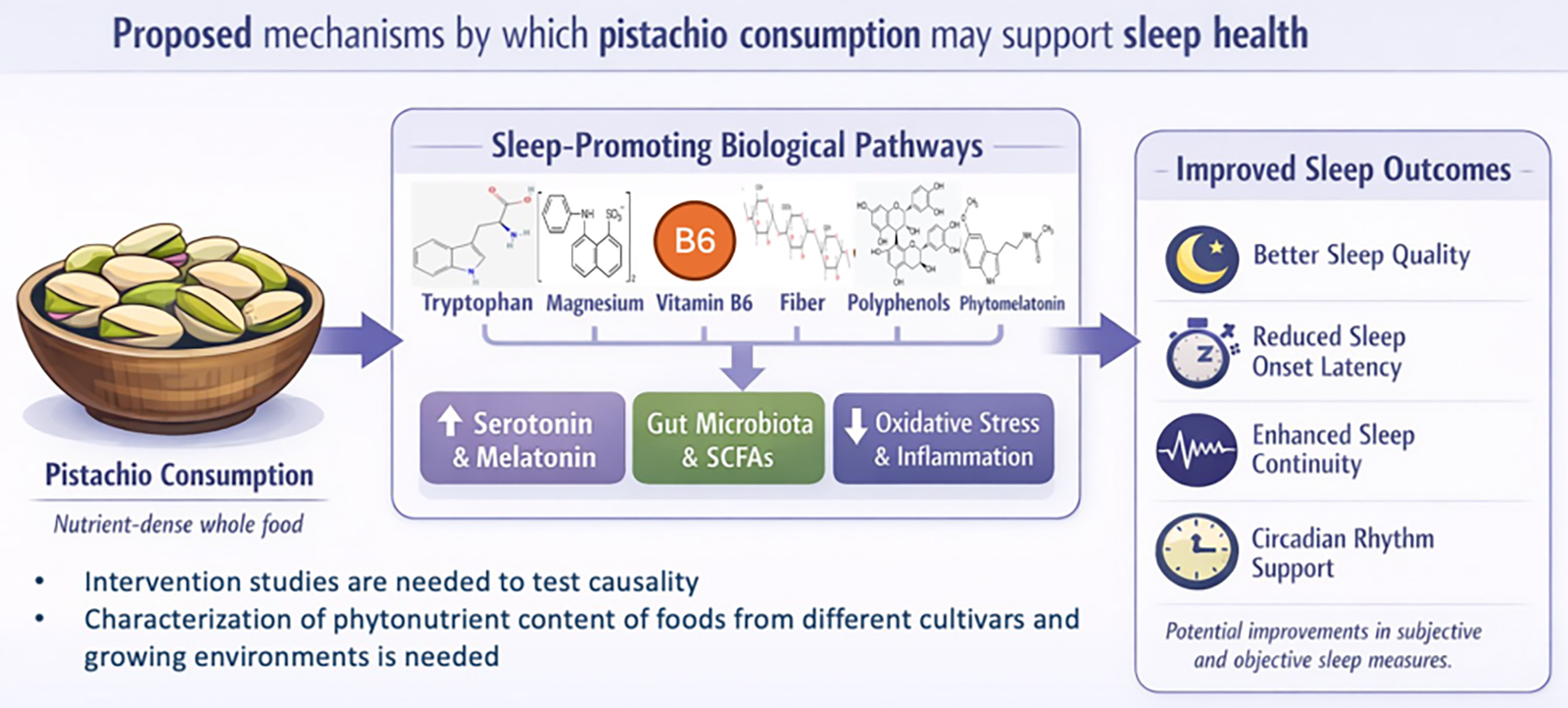
This review explored the potential role of pistachios in promoting sleep health by evaluating the current evidence surrounding their unique profile of nutritive and bioactive compounds (Figure 1). While direct studies investigating pistachio consumption and sleep outcomes remain limited, pistachios contain tryptophan, Mg, vitamin B6, fibre, polyphenols, and phytomelatonin, while being low in saturated fat. Each of these components has been implicated in modulating sleep physiology through mechanisms such as melatonin production, modulation of the gut microbiome, and gut–brain axis signalling. Furthermore, this review focuses on the mechanistic evidence supporting these components and how they may collectively contribute to sleep health.
Consequently, much of the literature described in this review is derived from studies evaluating individual nutrients or bioactive compounds rather than whole-pistachio interventions. Because nut consumption in the United States is relatively low, with less than 40% of adults consuming nuts daily(Reference Nielsen, Kit and Ogden86), the relation between nut intake and sleep quality may be obscured due to low statistical power. Therefore, larger and more diverse samples are needed to clarify these relations. Future studies may benefit from examining geographic regions or cultural dietary patterns where nuts and pistachios are consumed regularly and in meaningful quantities to assess associations with sleep quality.
Altogether, pistachios contribute nutritive and bioactive compounds that target multiple physiological pathways involved in sleep regulation, including melatonin biosynthesis, gut–brain signalling, and circadian rhythm alignment. While mechanistic plausibility is strong and emerging evidence is promising, randomised controlled trials directly assessing pistachio intake and sleep outcomes are needed to confirm these associations in humans. Future research should prioritise wholefood interventions using pistachios in diverse populations and explore dose–response relations, actual content, and bioavailability of key components, and interactions with habitual dietary patterns. Based on these results, clinical studies focused specifically on the potential of wholefood interventions, such as pistachios, as a tryptophan-rich source that also provides relevant nutrients reviewed herein, to modulate melatonin levels are needed.
Research agenda
• Epidemiological studies assessing the relation between nut consumption and sleep quality
• Randomised controlled pistachio intervention studies to evaluate their impact on sleep in human populations
• Studies assessing potential mechanisms of action for sleep-promoting effects of various foods, including pistachios
• Considering variability based on cultivar, growing conditions and environment, a comprehensive assessment of phenolic and phytomelatonin content of pistachios and other nuts should be done
Financial support
Funding for this work was provided in part by American Pistachio Growers (M-PS-O) and the National Institutes of Health (M-PS-O: grant nos R35HL155670; R01HL142648)
Competing interests
M-PS-O is the author of Eat Better, Sleep Better (Simon Element) and is on the advisory board of American Pistachio Growers
Authorship
AM: data curation, investigation, methodology, writing – original draft, writing – review and editing. JP-J: data curation, investigation, methodology, writing – original draft, writing – review and editing. M-PS-O: conceptualisation, data curation, funding acquisition, investigation, methodology, project administration, resources, software, supervision, writing – original draft, writing – review and editing.
References
Grandner, MA, Fernandez, FX (2021) The translational neuroscience of sleep: a contextual framework. Science374(6567), 568–573.10.1126/science.abj8188CrossRefGoogle ScholarPubMed
Golem, DL, Martin-Biggers, JT, Koenings, MM, Davis, KF, Byrd-Bredbenner, C (2014) An integrative review of sleep for nutrition professionals. Adv Nutr5(6), 742–759.10.3945/an.114.006809CrossRefGoogle ScholarPubMed
Wang, Q, Hu, S, Pan, NC, Zhang, T, Ren, L, Wang, Y (2023) Association of sleep complaints with all-cause and heart disease mortality among US adults. Front Public Health11, 1043347.10.3389/fpubh.2023.1043347CrossRefGoogle ScholarPubMed
Grandner, M, Mullington, JM, Hashmi, SD, Redeker, NS, Watson, NF, Morgenthaler, TI (2018) Sleep duration and hypertension: analysis of > 700,000 adults by age and sex. J Clin Sleep Med: JCSM: Off Pub Am Acad Sleep Med14(6), 1031–1039.Google ScholarPubMed
Lee, JH, Cho, J (2022) Sleep and obesity. Sleep Med Clin17(1), 111–116.10.1016/j.jsmc.2021.10.009CrossRefGoogle Scholar
Martin, SS, Aday, AW, Allen, NB, Almarzooq, ZI, Anderson, CAM, Arora, P, et al. (2025) 2025 Heart disease and stroke statistics: a report of us and global data from the American Heart Association. Circulation151(8), e41–e660.Google ScholarPubMed
Pace-Schott, EF, Hobson, JA (2002) The neurobiology of sleep: genetics, cellular physiology and subcortical networks. Nat Rev Neurosci3(8), 591–605.10.1038/nrn895CrossRefGoogle ScholarPubMed
Salehi, B, Sharopov, F, Fokou, PVT, Kobylinska, A, Jonge, L, Tadio, K, et al. (2019) Melatonin in medicinal and food plants: occurrence, bioavailability, and health potential for humans. Cells8(7), 681.10.3390/cells8070681CrossRefGoogle ScholarPubMed
Zhao, D, Yu, Y, Shen, Y, Liu, Q, Zhao, Z, Sharma, R, et al. (2019) Melatonin synthesis and function: evolutionary history in animals and plants. Front Endocrinol10, 249.10.3389/fendo.2019.00249CrossRefGoogle ScholarPubMed
St-Onge, MP, Aggarwal, B, Fernandez-Mendoza, J, Johnson, D, Kline, CE, Knutson, KL, et al. (2025) Multidimensional sleep health: definitions and implications for cardiometabolic health: a scientific statement from the American Heart Association. Circ Cardiovasc Qual Outcomes18(5), e000139.10.1161/HCQ.0000000000000139CrossRefGoogle Scholar
Juhnevica-Radenkova, K, Moreno, DA, Ikase, L, Drudze, I, Radenkovs, V (2020) Naturally occurring melatonin: sources and possible ways of its biosynthesis. Compr Rev Food Sci Food Saf19(6), 4008–4030.10.1111/1541-4337.12639CrossRefGoogle ScholarPubMed
Dashti, HS, Scheer, FA, Jacques, PF, Lamon-Fava, S, Ordovás, JM (2015) Short sleep duration and dietary intake: epidemiologic evidence, mechanisms, and health implications. Adv Nutr6(6), 648–659.10.3945/an.115.008623CrossRefGoogle ScholarPubMed
Zuraikat, FM, Wood, RA, Barragan, R, St-Onge, MP (2021) Sleep and diet: mounting evidence of a cyclical relationship. Annu Rev Nutr41, 309–332.10.1146/annurev-nutr-120420-021719CrossRefGoogle ScholarPubMed
Arab, A, Karimi, E, Garaulet, M, Scheer, F (2024) Dietary patterns and insomnia symptoms: a systematic review and meta-analysis. Sleep Med Rev75, 101936.10.1016/j.smrv.2024.101936CrossRefGoogle ScholarPubMed
Arab, A, Lempesis, IG, Garaulet, M, Scheer, FAJL (2025) Sleep and the Mediterranean diet: a systematic review and meta-analysis. Sleep Med Rev80.Google ScholarPubMed
Zuraikat, FM, Makarem, N, St-Onge, MP, Xi, H, Akkapeddi, A, Aggarwal, B (2020) A Mediterranean dietary pattern predicts better sleep quality in US women from the American Heart Association go red for women strategically focused research network. Nutrients12(9), 2830.10.3390/nu12092830CrossRefGoogle ScholarPubMed
Zuraikat, FM, Cheng, B, Jelic, S, Tasali, E, Cespedes Feliciano, EM, Saquib, N, et al. (2026) Greater adherence to healthful dietary patterns is associated with lower insomnia risk in the women’s health initiative observational study. Sleep49(1), zsaf316.10.1093/sleep/zsaf316CrossRefGoogle ScholarPubMed
Castro-Diehl, C, Diez Roux, AV, Redline, S, Seeman, T, McKinley, P, Sloan, R, et al. (2016) Sleep duration and quality in relation to autonomic nervous system measures, the Multi-Ethnic Study of Atherosclerosis (MESA). Sleep39(11), 1927–1940.10.5665/sleep.6218CrossRefGoogle ScholarPubMed
Arslan, N, Bozkır, E, Koçak, T, Akin, M, Yilmaz, B (2024) From garden to pillow: understanding the relationship between plant-based nutrition and quality of sleep. Nutrients16(16), 2683.10.3390/nu16162683CrossRefGoogle ScholarPubMed
Perez-Jimenez, J, Agnant, K, Lamuela-Raventos, RM, St-Onge, MP (2023) Dietary polyphenols and sleep modulation: current evidence and perspectives. Sleep Med Rev72, 101844.10.1016/j.smrv.2023.101844CrossRefGoogle ScholarPubMed
St-Onge, MP, Crawford, A, Aggarwal, B (2018) Plant-based diets: reducing cardiovascular risk by improving sleep quality?Curr Sleep Med Rep4(1), 74–78.10.1007/s40675-018-0103-xCrossRefGoogle ScholarPubMed
Nadimi, AE, Ahmadi, Z, Falahati-pour, SK, Mohamadi, M, Nazari, A, Hassanshahi, G, et al. (2020) Physicochemical properties and health benefits of pistachio nuts. IJVNR90(5–6), 564–574.Google Scholar
Details FCF. (2019) Nuts, Pistachios. USDA.Google Scholar
Gregory, JF (1990) The bioavailability of vitamin B6. Recent findings. Ann N Y Acad Sci585, 86–95.10.1111/j.1749-6632.1990.tb28044.xCrossRefGoogle ScholarPubMed
Reynolds, RD (1988) Bioavailability of vitamin B-6 from plant foods. Am J Clin Nutr48(3 Suppl), 863–867.10.1093/ajcn/48.3.863CrossRefGoogle ScholarPubMed
Gonçalves, B, Pinto, T, Aires, A, Morais, MC, Bacelar, E, Anjos, R, et al. (2023) Composition of nuts and their potential health benefits-an overview. Foods12(5).10.3390/foods12050942CrossRefGoogle ScholarPubMed
Sejbuk, M, Siebieszuk, A, Witkowska, AM (2024) The role of gut microbiome in sleep quality and health: dietary strategies for microbiota support. Nutrients16(14), 2259.10.3390/nu16142259CrossRefGoogle ScholarPubMed
Amarasena, S, Hossain, KS, Rasouli, A, Bertolo, RF, Yuan, Q, Mayengbam, S (2025) Vitamin B-6 deficiency induces anxiety-like behavior in Sprague-Dawley rats by disrupting gut homeostasis. J Nutr155(10), 3254–3266.10.1016/j.tjnut.2025.08.012CrossRefGoogle ScholarPubMed
Ge, L, Luo, J, Zhang, L, Kang, X, Zhang, D (2022) Association of pyridoxal 5’-phosphate with sleep-related problems in a general population. Nutrients14(17).10.3390/nu14173516CrossRefGoogle ScholarPubMed
Huang, YC, Wahlqvist, ML, Lee, MS (2013) Sleep quality in the survival of elderly Taiwanese: roles for dietary diversity and pyridoxine in men and women. J Am Coll Nutr32(6), 417–427.10.1080/07315724.2013.848158CrossRefGoogle ScholarPubMed
Chen, Q, Fan, R, Song, L, Wang, S, You, M, Cai, M, et al. (2024) Association of methyl donor nutrients dietary intake and sleep disorders in the elderly revealed by the intestinal microbiome. Food Funct15(12), 6335–6346.10.1039/D4FO01303DCrossRefGoogle ScholarPubMed
Schernhammer, ES, Feskanich, D, Niu, C, Dopfel, R, Holmes, MD, Hankinson, SE (2009) Dietary correlates of urinary 6-sulfatoxymelatonin concentrations in the Nurses’ health study cohorts. Am J Clin Nutr90(4), 975–985.10.3945/ajcn.2009.27826CrossRefGoogle ScholarPubMed
Adventure-Heart, DJ, Madden, NA, Delfabbro, P (2018) Effects of vitamin B6 (pyridoxine) and a B complex preparation on dreaming and sleep. Percept Mot Skills125(3), 451–462.10.1177/0031512518770326CrossRefGoogle Scholar
Luboshitzky, R, Ophir, U, Nave, R, Epstein, R, Shen-Orr, Z, Herer, P (2002) The effect of pyridoxine administration on melatonin secretion in normal men. Neuro Endocrinol Lett23(3), 213–217.Google ScholarPubMed
Garcia-Garcia, C, Baik, I (2021) Effects of poly-gamma-glutamic acid and vitamin B(6) supplements on sleep status: a randomized intervention study. Nutr Res Pract15(3), 309–318.10.4162/nrp.2021.15.3.309CrossRefGoogle ScholarPubMed
Cier, A, Jouvet, M, Dubrocard, S, Michel, F, Michel, P (1965) Carence en Vitamine B₆ ET sommeil chez le rat. Ann Nutr Aliment19, C611-22.Google Scholar
Khan, A, Kumar, H, Rai, KD, Saeed, A, Ishtiaq, J, Tanveer Alam, M, et al. (2024) Efficacy and safety of intravenous ferric carboxymaltose in the treatment of restless legs syndrome: a systematic review and meta-analysis. Front Neurol15, 1503342.10.3389/fneur.2024.1503342CrossRefGoogle ScholarPubMed
Li, YS, Yeh, WC, Hsu, CY (2023) Association of low serum ferritin levels with augmentation in patients with restless legs syndrome: a systematic review and meta-analysis. Sleep Med112, 173–180.10.1016/j.sleep.2023.10.022CrossRefGoogle ScholarPubMed
Schlormann, W, Birringer, M, Lochner, A, Lorkowski, S, Richter, I, Rohrer, C, et al. (2016) In vitro fermentation of nuts results in the formation of butyrate and c9,t11 conjugated linoleic acid as chemopreventive metabolites. Eur J Nutr55(6), 2063–2073.10.1007/s00394-015-1020-0CrossRefGoogle ScholarPubMed
Dufoo-Hurtado, E, Olvera-Bautista, R, Wall-Medrano, A, Loarca-Pina, G, Campos-Vega, R (2021) In vitro gastrointestinal digestion and simulated colonic fermentation of pistachio nuts determine the bioaccessibility and biosynthesis of chronobiotics. Food Funct12(11), 4921–4934.10.1039/D0FO02708ACrossRefGoogle ScholarPubMed
Szentirmai, É, Millican, NS, Massie, AR, Kapás, L (2019) Butyrate, a metabolite of intestinal bacteria, enhances sleep. Sci Rep9(1), 7035.10.1038/s41598-019-43502-1CrossRefGoogle ScholarPubMed
Smith, RP, Easson, C, Lyle, SM, Kapoor, R, Donnelly, CP, Davidson, EJ, et al. (2019) Gut microbiome diversity is associated with sleep physiology in humans. PLoS One14(10), e0222394.10.1371/journal.pone.0222394CrossRefGoogle ScholarPubMed
Wang, Z, Wang, Z, Lu, T, Yuan, G, Chen, W, Jin, J, et al. (2025) Gut microbiota regulate insomnia-like behaviors via gut-brain metabolic axis. Mol Psychiatry30(6), 2597–2611.10.1038/s41380-024-02867-0CrossRefGoogle ScholarPubMed
Li, Y, Zhang, B, Zhou, Y, Wang, D, Liu, X, Li, L, et al. (2020) Gut microbiota changes and their relationship with inflammation in patients with acute and chronic insomnia. Nat Sci Sleep12, 895–905.10.2147/NSS.S271927CrossRefGoogle ScholarPubMed
Chen, Y, Zhao, Z, Ding, W, Zhou, Z, Xiao, M (2024) Association between dietary fiber intake and sleep disorders: based on the NHANES Database. Brain Behav14(11), e70123.10.1002/brb3.70123CrossRefGoogle ScholarPubMed
Gangwisch, JE, Hale, L, St-Onge, MP, Choi, L, LeBlanc, ES, Malaspina, D, et al. (2020) High glycemic index and glycemic load diets as risk factors for insomnia: analyses from the Women’s Health Initiative. Am J Clin Nutr111(2), 429–439.10.1093/ajcn/nqz275CrossRefGoogle ScholarPubMed
St-Onge, MP, Roberts, A, Shechter, A, Choudhury, AR (2016) Fiber and saturated fat are associated with sleep arousals and slow wave sleep. J Clin Sleep Med: JCSM: Off Pub Am Acad Sleep Med12(1), 19–24.Google ScholarPubMed
Boege, HL, Wilson, KD, Kilkus, JM, Qiu, W, Cheng, B, Wroblewski, KE, et al. (2025) Higher daytime intake of fruits and vegetables predicts less disrupted nighttime sleep in younger adults. Sleep Health11(5), 590–596.10.1016/j.sleh.2025.05.003CrossRefGoogle ScholarPubMed
Kanwar, MK, Yu, J, Zhou, J (2018) Phytomelatonin: recent advances and future prospects. J Pineal Res65(4), e12526.10.1111/jpi.12526CrossRefGoogle ScholarPubMed
Losso, JN (2018) Melatonin contents of raw and roasted American pistachios.Google Scholar
Yang, TH, Chen, YC, Ou, TH, Chien, YW (2020) Dietary supplement of tomato can accelerate urinary aMT6s level and improve sleep quality in obese postmenopausal women. Clin Nutr39(1), 291–297.10.1016/j.clnu.2019.02.009CrossRefGoogle ScholarPubMed
Howatson, G, Bell, PG, Tallent, J, Middleton, B, McHugh, MP, Ellis, J (2012) Effect of tart cherry juice (Prunus cerasus) on melatonin levels and enhanced sleep quality. Eur J Nutr51(8), 909–916.10.1007/s00394-011-0263-7CrossRefGoogle ScholarPubMed
Paroni, R, Dei Cas, M, Rizzo, J, Ghidoni, R, Montagna, MT, Rubino, FM, et al. (2019) Bioactive phytochemicals of tree nuts. Determination of the melatonin and sphingolipid content in almonds and pistachios. J Food Compos Anal82, 103227.10.1016/j.jfca.2019.05.010CrossRefGoogle Scholar
Pandey, KB, Rizvi, SI (2009) Plant polyphenols as dietary antioxidants in human health and disease. Oxid Med Cell Longev2(5), 270–278.10.4161/oxim.2.5.9498CrossRefGoogle ScholarPubMed
Bolling, BW, Chen, CYO, McKay, DL, Blumberg, JB (2011) Tree nut phytochemicals: composition, antioxidant capacity, bioactivity, impact factors. A systematic review of almonds, Brazils, cashews, hazelnuts, macadamias, pecans, pine nuts, pistachios and walnuts. Nutr Res Rev24(2), 244–275.10.1017/S095442241100014XCrossRefGoogle ScholarPubMed
Velasco-Ruiz, I, De Santiago, E, Ordóñez-Díaz, JL, Pereira-Caro, G, Moreno-Rojas, JM (2023) Effect of in vitro gastrointestinal digestion and colonic fermentation on the stability of polyphenols in pistachio (Pistacia Vera L.). Int J Mol Sci24(5).10.3390/ijms24054975CrossRefGoogle ScholarPubMed
Wang, W, Liu, T, Ding, Y, Zhang, Y (2023) Effects of polyphenol-rich interventions on sleep disorders: a systematic review and meta-analysis. Curr Res Food Sci6, 100462.10.1016/j.crfs.2023.100462CrossRefGoogle ScholarPubMed
Aura, A-M (2008) Microbial metabolism of dietary phenolic compounds in the colon. Phytochem Rev7, 407–429.10.1007/s11101-008-9095-3CrossRefGoogle Scholar
Dominguez-Lopez, I, Lopez-Yerena, A, Vallverdu-Queralt, A, Pallas, M, Lamuela-Raventos, RM, Perez, M (2025) From the gut to the brain: the long journey of phenolic compounds with neurocognitive effects. Nutr Rev83(2), e533–e46.10.1093/nutrit/nuae034CrossRefGoogle Scholar
Perez-Jimenez, J, Sanz, Y, Lamuela-Raventos, RM (2025) (Poly)phenols as bioactive constituents linked to dietary fibre metabolic fate. Trends Endocrinol Metab36(6), 502–503.10.1016/j.tem.2025.03.012CrossRefGoogle ScholarPubMed
Trumbo, P, Schlicker, S, Yates, AA, Poos, M, (2002) Food, nutrition board of the institute of medicine TNA. Dietary reference intakes for energy, carbohydrate, fiber, fat, fatty acids, cholesterol, protein and amino acids. J Am Diet Assoc102(11), 1621–1630.10.1016/S0002-8223(02)90346-9CrossRefGoogle Scholar
Sá, AGA, Franczyk, A, Neufeld, J, House, JD (2024) In vivo protein quality of pistachios (Pistacia vera L.). J Food Compos Anal132, 106351.10.1016/j.jfca.2024.106351CrossRefGoogle Scholar
Morales-Suárez-Varela, M, Amezcua-Prieto, C, Peraita-Costa, I, Mateos-Campos, R, Ayán, C, Ortiz-Moncada, R, et al. (2024) Sleep patterns and Tryptophan consumption among students at Spanish Universities: the unihcos project. Nutrients16(14), 2376.10.3390/nu16142376CrossRefGoogle ScholarPubMed
Bravo, R, Matito, S, Cubero, J, Paredes, SD, Franco, L, Rivero, M, et al. (2013) Tryptophan-enriched cereal intake improves nocturnal sleep, melatonin, serotonin, and total antioxidant capacity levels and mood in elderly humans. Age (Dordr)35(4), 1277–1285.10.1007/s11357-012-9419-5CrossRefGoogle ScholarPubMed
Ryan, MF (1991) The role of magnesium in clinical biochemistry: an overview. Ann Clin Biochem28 (Pt 1), 19–26.10.1177/000456329102800103CrossRefGoogle ScholarPubMed
Dasdelen, MF, Er, S, Kaplan, B, Celik, S, Beker, MC, Orhan, C, et al. (2022) A novel theanine complex, Mg-L-Theanine improves sleep quality via regulating brain electrochemical activity. Front Nutr9, 874254.10.3389/fnut.2022.874254CrossRefGoogle ScholarPubMed
Ikonte, CJ, Mun, JG, Reider, CA, Grant, RW, Mitmesser, SH (2019) Micronutrient inadequacy in short sleep: analysis of the NHANES 2005-2016. Nutrients11(10).10.3390/nu11102335CrossRefGoogle ScholarPubMed
Zhao, S, Hu, J, Yue, C, Tian, J, Zhou, S, Zhu, Q (2025) Dietary magnesium intake is associated with self-reported short sleep duration but not self-reported sleep disorder. Brain Behav15(2), e70251.10.1002/brb3.70251CrossRefGoogle Scholar
Cakir, B, Kilinc, FM, Uyar, GO, Ozenir, C, Ekici, EM, Karaismailoglu, E (2020) The relationship between sleep duration, sleep quality and dietary intake in adults. Sleep Biol Rhythms18, 49–57.10.1007/s41105-019-00244-xCrossRefGoogle Scholar
Zhang, Y, Chen, C, Lu, L, Knutson, KL, Carnethon, MR, Fly, AD, et al. (2022) Association of magnesium intake with sleep duration and sleep quality: findings from the CARDIA study. Sleep45(4), zsab276.10.1093/sleep/zsab276CrossRefGoogle ScholarPubMed
Ma, J, Li, W, Chen, Q, Miao, X, Wang, X, Ni, Z (2025) Magnesium is a key trace element in obstructive sleep apnea: evidence from Mendelian randomization analysis and NHANES database. Respir Med244, 108158.10.1016/j.rmed.2025.108158CrossRefGoogle ScholarPubMed
Held, K, Antonijevic, AI, Künzel, H, Uhr, M, Wetter, TC, Golly, IC, Steiger, A, Murck, H (2002) Oral Mg(2+) supplementation reverses age-related neuroendocrine and sleep EEG changes in humans. Pharmacopsychiatry35(4), 135-143.10.1055/s-2002-33195CrossRefGoogle ScholarPubMed
Schuster, J, Cycelskij, I, Lopresti, A, Hahn, A (2025) Magnesium bisglycinate supplementation in healthy adults reporting poor sleep: a randomized, placebo-controlled trial. Nat Sci Sleep17, 2027–2040.10.2147/NSS.S524348CrossRefGoogle ScholarPubMed
Arab, A, Rafie, N, Amani, R, Shirani, F (2023) The role of magnesium in sleep health: a systematic review of available literature. Biol Trace Elem Res201(1), 121–128.10.1007/s12011-022-03162-1CrossRefGoogle ScholarPubMed
Mah, J, Pitre, T (2021) Oral magnesium supplementation for insomnia in older adults: a systematic review & meta-analysis. BMC Complement Med Ther21(1), 125.10.1186/s12906-021-03297-zCrossRefGoogle ScholarPubMed
Rawji, A, Peltier, MR, Mourtzanakis, K, Awan, S, Rana, J, Pothen, NJ, Afzal, S. (2024) Examining the effects of supplemental magnesium on self-reported anxiety and sleep quality: a systematic review. Cureus16(4), e59317.Google ScholarPubMed
Jadidi, A, Ashtiani, AR, Hezaveh, AK, Aghaepour, SM (2023) Therapeutic effects of magnesium and vitamin B6 in alleviating the symptoms of restless legs syndrome: a randomized controlled clinical trial. BMC Complement Med Ther23, 1.10.1186/s12906-022-03814-8CrossRefGoogle Scholar
Bennett, CJ, Cain, SW, Blumfield, ML (2019) Monounsaturated fat intake is associated with improved sleep quality in pregnancy. Midwifery78, 64–70.10.1016/j.midw.2019.07.019CrossRefGoogle ScholarPubMed
Grandner, MA, Kripke, DF, Naidoo, N, Langer, RD (2010) Relationships among dietary nutrients and subjective sleep, objective sleep, and napping in women. Sleep Med11(2), 180–184.10.1016/j.sleep.2009.07.014CrossRefGoogle ScholarPubMed
Zuraikat, FM, Makarem, N, Liao, M, St-Onge, MP, Aggarwal, B (2020) Measures of poor sleep quality are associated with higher energy intake and poor diet quality in a diverse sample of women from the go red for women strategically focused research network. J Am Heart Assoc9(4), e014587.10.1161/JAHA.119.014587CrossRefGoogle Scholar
Del Brutto, OH, Mera, RM, Ha, J-E, Gillman, J, Zambrano, M, Castillo, PR (2016) Dietary fish intake and sleep quality: a population-based study. Sleep Med17, 126–128.10.1016/j.sleep.2015.09.021CrossRefGoogle ScholarPubMed
Adjaye-Gbewonyo, D, Ng, AE, Black, LI (2020) Sleep difficulties in adults: United States, 2020. NCHS Data Brief436, 1–8.Google Scholar
Djokic, G, Vojvodic, P, Korcok, D, Agic, A, Rankovic, A, Djordjevic, V, et al. (2019) The effects of magnesium – melatonin – Vit B complex supplementation in treatment of insomnia. Open Access Maced J Med Sci7(18), 3101–3105.10.3889/oamjms.2019.771CrossRefGoogle ScholarPubMed
Soon, CS, Thota, R, Owen, L, Tian, L, Martin, F-P, Mantantzis, K, et al. (2025) Mulberry leaf extract combined with tryptophan improves sleep and post wake mood in adults with sleep complaints – a randomized cross-over study. Eur J Nutr64(3), 124.10.1007/s00394-025-03643-8CrossRefGoogle ScholarPubMed
Lemoine, P, Bablon, JC, Da Silva, C (2019) A combination of melatonin, vitamin B6 and medicinal plants in the treatment of mild-to-moderate insomnia: a prospective pilot study. Complement Ther Med45, 104–108.10.1016/j.ctim.2019.05.024CrossRefGoogle ScholarPubMed
Nielsen, SJ, Kit, BK, Ogden, CL (2014) Nut consumption among U.S. adults, 2009-2010. NCHS data brief176, 1–8.Google Scholar
Verde, A, Míguez, JM, Leao-Martins, JM, Gago-Martínez, A, Gallardo, M (2022) Melatonin content in walnuts and other commercial nuts. Influence of cultivar, ripening and processing (roasting). J Food Compos Anal105, 104180.10.1016/j.jfca.2021.104180CrossRefGoogle Scholar
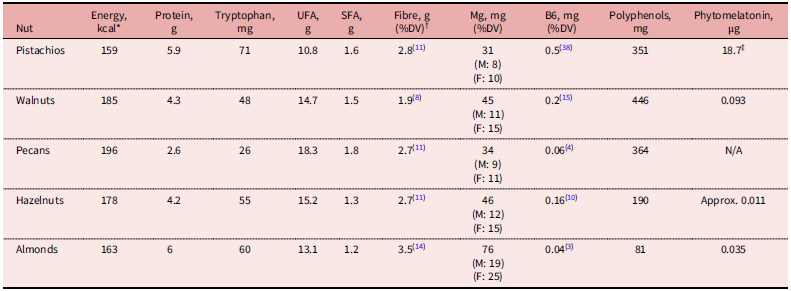
Table 1.Nutrient composition of tree nuts, per serving (1 oz/28.3 g)Table 1 long description
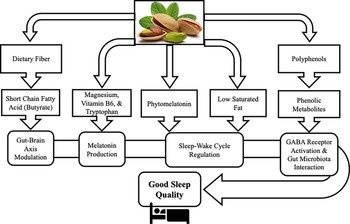
Fig. 1.Schematic highlighting potential mechanisms through which consumption of nutrients from pistachios may influence sleep. Pistachios are good-to-excellent sources of dietary fibre, magnesium, vitamin B6, tryptophan, phytomelatonin, and polyphenols, which, along with their low saturated fat content, contribute to sleep–wake cycle regulation via melatonin production, gut–brain axis modulation, and GABA receptor activation.
You have
AccessOpen access
