


By Kassidy GuyNov 10, 2026
The Governor General’s Gold Medal is awarded to the University of Saskatchewan (USask) graduate student who achieves the most outstanding academic record at the doctoral level. It is one of the highest academic honours a Canadian university can bestow on a graduate student
The fall 2026 recipient of the Governor General’s Gold Medal is Dr. Amir Khajavinia (PhD, PharmD) from the College of Pharmacy and Nutrition. Khajavinia will be presented with the Governor General’s Gold Medal during USask Convocation on Nov. 10 at Merlis Belsher Place
Khajavinia’s research journey began long before arriving in Canada. After earning a Doctor of Pharmacy degree in Iran, he spent several years working in community pharmacies before considering further education
“I really liked working as a pharmacist, but I always wanted to know how we can improve the medicines we were giving to patients,” said Khajavinia.
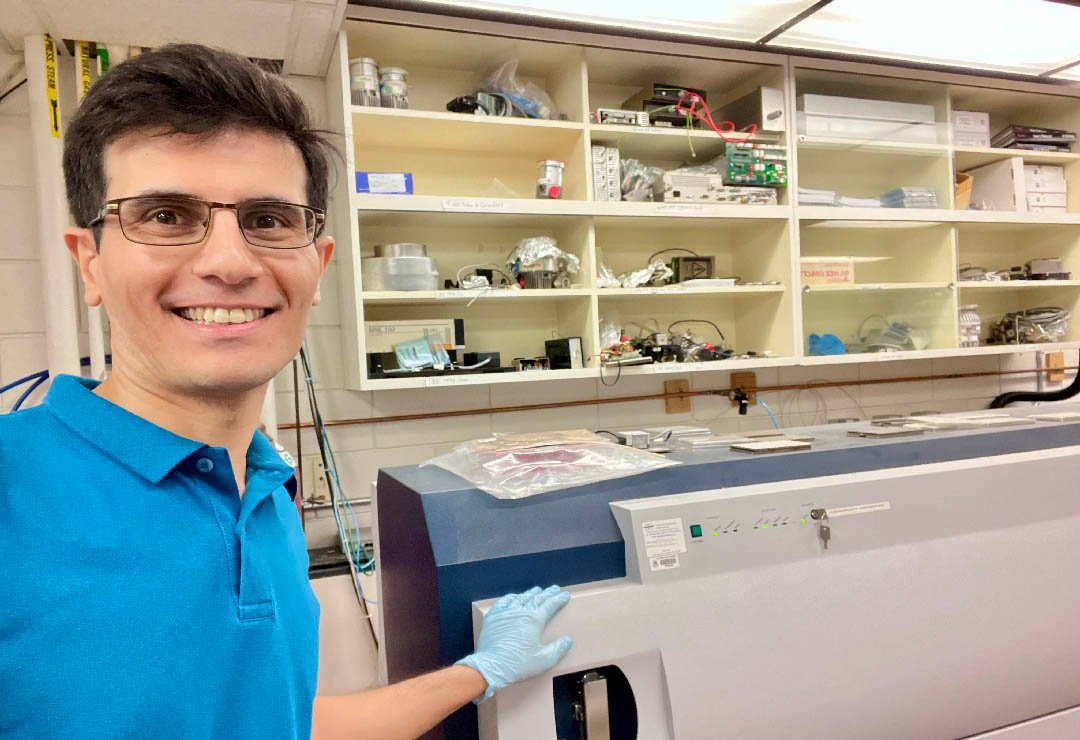
Hands-on lab work had always been Khajavinia’s greatest passion in life; however, when he began his master’s degree at USask in 2019, he was introduced to an analytical laboratory technique that sparked a new passion: mass spectrometry
Mass spectrometry is a technique used to identify unknown compounds, quantify known substances, and study chemical structures based on their mass-to-charge ratios.
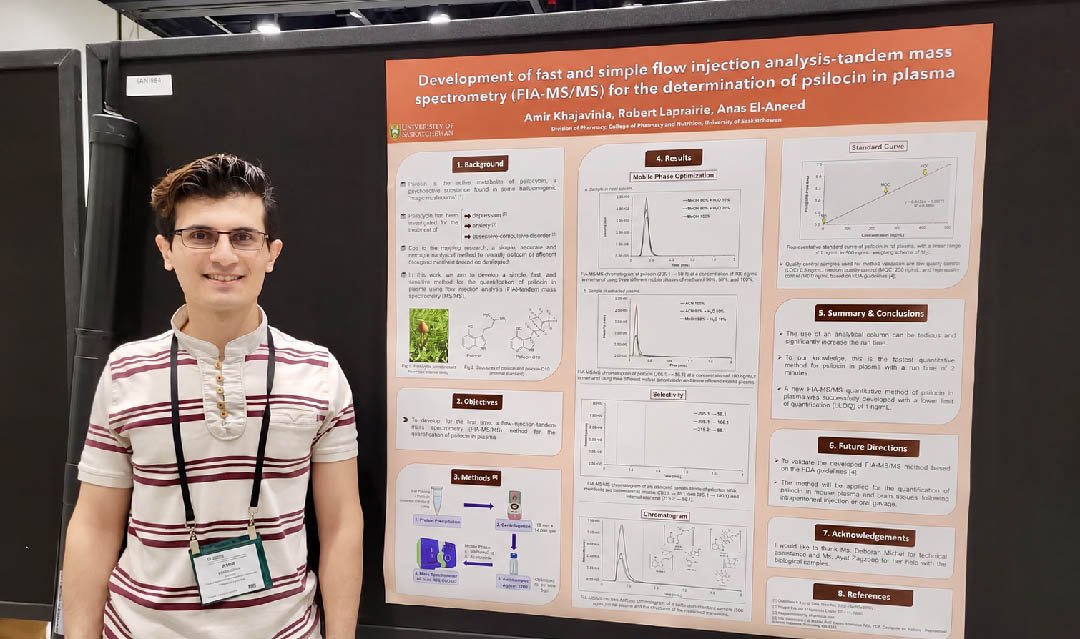
Under the supervision of Dr. Anas El-Aneed (PhD) in the College of Pharmacy and Nutrition, Khajavinia’s doctoral research focused on developing highly sensitive methods to detect and measure psilocin, the active compound responsible for the psychedelic effects associated with “magic mushrooms.” The tools he developed can help researchers better understand how psychedelic compounds behave in the body. It’s work that supports ongoing investigation into potential mental health therapies.
“Before we can understand what a compound does in the body, we need measurements we can trust,” said Khajavinia
Khajavinia compares mass spectrometry to trying to listen to one person’s voice in a noisy, crowded room. Through this technique, you’re able to separate the many conversations until you can focus on the one you’re interested in and listen more closely. In his research, Khajavinia found that tryptophan, an amino acid naturally present in mouse plasma, could produce a signal similar to psilocin. He developed a method to separate the two compounds so researchers could reliably measure how much psilocin was present.
His research addressed a critical challenge in psychedelic science: accurately measuring tiny amounts of compounds in biological samples. By improving the accuracy and reliability of these measurements, his work gives scientists greater confidence in the data used to study potential mental health therapies
Khajavinia also explored the use of nanodiamonds to improve the detection of small molecules during mass spectrometry analysis. The approach reduces background interference and may support future research involving psychedelic compounds, cannabis-derived compounds, and other biologically important molecules
The research drew on collaborations across institutions, including the Saskatchewan Structural Sciences Centre and the University of Alberta’s mass spectrometry facility, providing opportunities to apply different technologies and perspectives to complex scientific questions
Reflecting on the award, Khajavinia emphasized the recognition belongs to a much larger community
“The award has my name on it, but the work carries the contributions of many people,” said Khajavinia. “I feel like the most valuable part of doing this research was getting to know all these amazing people and learning from them.”
Dr. Debby Burshtyn (PhD), dean of the College of Graduate and Postdoctoral Studies (CGPS), is proud to recognize Khajavinia as this fall’s Governor General gold medalist
“Dr. Khajavinia’s work combines scientific excellence with real-world impact. Through innovative research in mass spectrometry, he has developed tools that will support future advances in mental health and pharmaceutical research,” said Burshtyn. “This award reflects both the quality of his scholarship and the groundbreaking contributions he is making to the field.”
Today, Khajavinia is putting his expertise to work with Alberta Precision Laboratories in Edmonton. In the Newborn Screening and Biochemical Genetics Laboratory, he helps develop and improve testing methods used to screen babies for rare but treatable conditions shortly after birth
“My training at USask gave me a strong foundation in developing measurement methods, checking that they work, and investigating unexpected results,” he said. “I now get to apply those skills to work that supports the health of children and their families.”
