


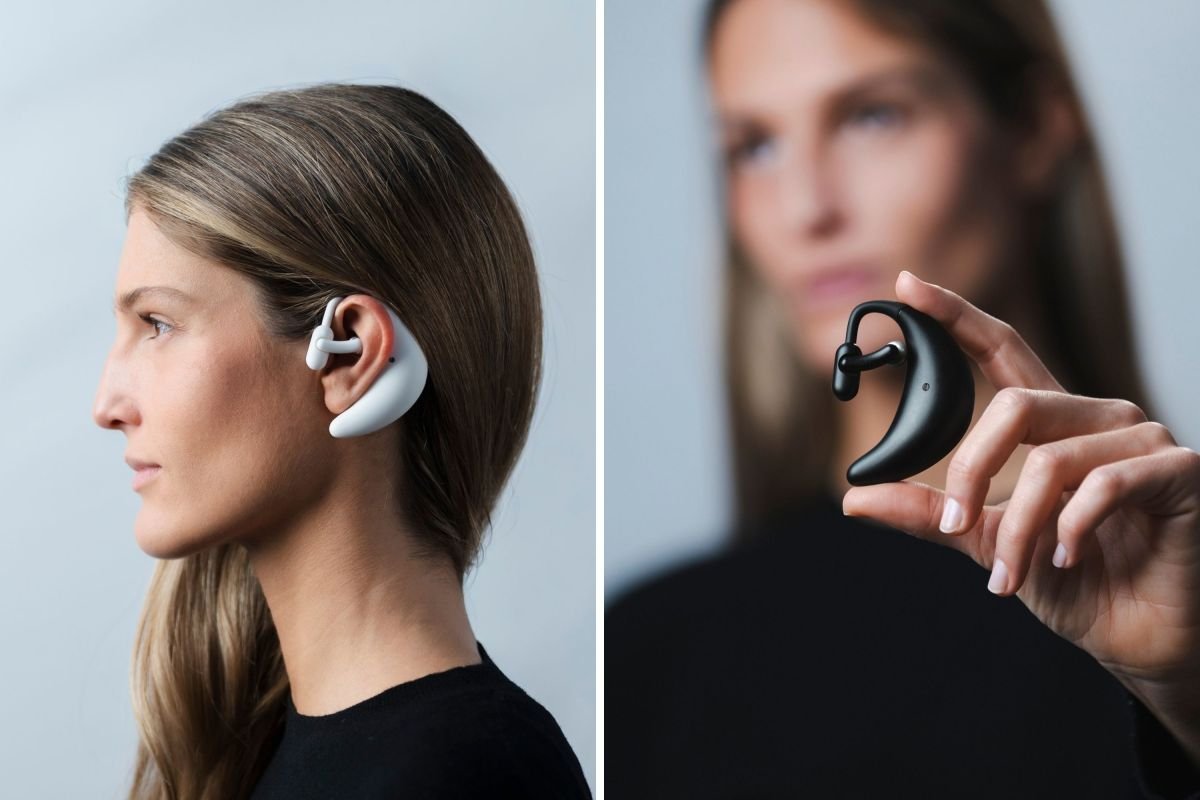
An AI-powered device aims to help improve your sleep and reduce stress by rewiring your brain networks in just 10 minutes a day. Doctors told Newsweek that it has a “plausible mechanism” and “there’s good science behind the idea,” but could it make people actually feel better in real life?
SONA is a wearable ear device that sends a personalized, optimal dose of stimulation to the vagus nerve, the main nerve of the body’s parasympathetic nervous system (PNS), which sends signals between your brain, digestive system, and heart. The PNS is responsible for helping your body relax and slow your heart rate
Most wearable technology today aimed at addressing chronic stress is read-only, medical biochemist and environmental scientist Jane Ollis, the founder of SONA, told Newsweek. She explained: “Your watch can tell you, in impressive detail, that you slept badly and your stress score is through the roof. Useful to know, but then what?”
Ollis points out that many wearable devices today try to calm the body directly through gentle electrical stimulation, vibration, or sound, but they “run on fixed settings, or presets you choose yourself, and never check how your body is actually responding.”
However, SONA “reads and writes,” Ollis said, noting that “the most groundbreaking feature isn’t the stimulation, which scientists have been studying for years. It’s the reading.”
…
She said: “It reads what your body is doing, writes back to the brain through the vagus nerve, and then reads again to see whether that worked…that loop is the whole point.”
Sleep-related issues are prevalent in the United States, based on data from the U.S. Centers for Disease Control and Prevention (CDC)
According to the National Center for Health Statistics of the CDC, in 2024, just under a third (30.5 percent) of adults experienced short sleep duration, while 15.4 percent had trouble falling asleep, and 18.1 percent had trouble staying asleep. The CDC warns that poor sleep health, including sleep difficulties, “has been linked to detrimental health conditions, including obesity and depression.”
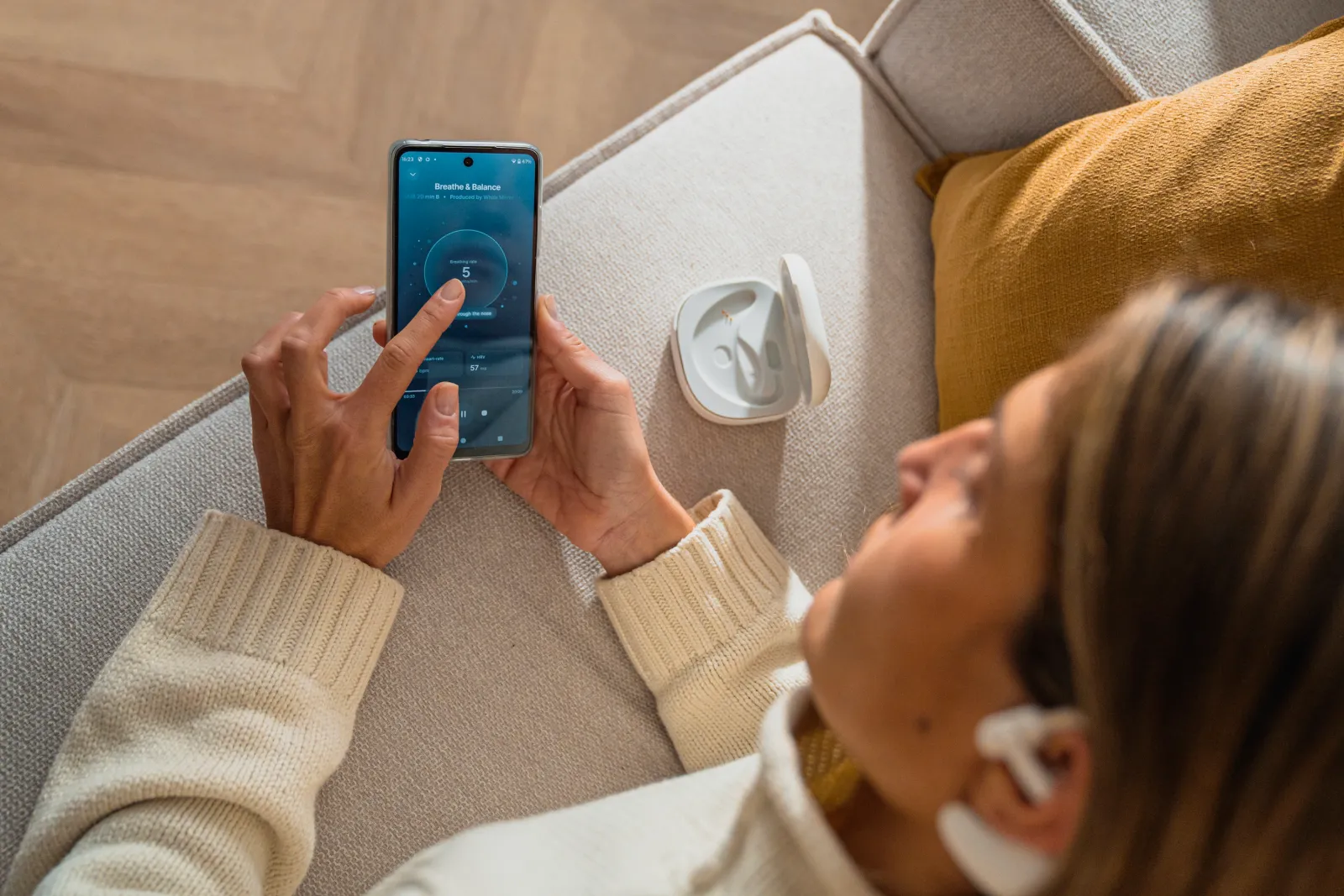
SONA works by reading your heart rate variability (HRV), which measures the small differences in time between heartbeats, and your breathing through its own sensors. Along with breathing patterns, HRV “gives us clues about how our nervous system is responding to stress,” Dr. Craig Zebuda, chief medical officer at Yunara Life, told Newsweek. A higher HRV generally indicates a well-functioning nervous system and a greater ability to adapt to stress.
A small branch of the vagus nerve surfaces in the ear, in the little hollow just above the ear canal. Gentle stimulation of that sends a signal to a part of the brainstem known as the nucleus tractus solitarius, “which connects to the areas that govern arousal, alertness, and how we respond to stress,” Ollis explained
SONA “writes back to the brain through that branch of the vagus nerve with gentle stimulation. It then reads again to see how you responded, and adjusts. It does this within a session and from one session to the next, alongside a guided breathing pacer and soundscapes, in sessions of 10 to 20 minutes,” she said
Zebuda noted that “this is an interesting approach because our bodies don’t all respond to stress the same way,” and most wearables simply measure this information and show it to us, whereas SONA appears to use that information to adjust the stimulation
…
Neuroscientist Chelsie Rohrscheib, head sleep expert at Wesper, told Newsweekthat SONA’s approach is “potentially more sophisticated because it claims to use real-time measures such as HRV and respiration to adapt stimulation to the individual, which is a much more targeted approach.”
Zebuda likened it to a thermostat that automatically adjusts the temperature based on what’s happening in the room. “In theory, that could make the stimulation more effective, but we’d need studies to know for sure,” he noted
Dr. Hanul Bhandari, a senior consultant at New Waters Recovery who is a double-board-certified physician specializing in neurology and sleep medicine, agreed, telling Newsweek that a “closed-loop system,” such as that created by SONA, “may provide stimulation more efficiently by adjusting stimulation based on real-time HRV and respiration data, although greater effectiveness remains to be demonstrated.”
Ollis acknowledges that the effects of ear stimulation on HRV have been inconsistent in previous studies. However, she said, “I don’t think that’s because the approach doesn’t work. I think it’s because most studies gave everyone the same dose,” pointing to data from her own team’s research that has shown how varied responses are
Every nervous system responds differently, and a person’s response can vary from one day to the next, Ollis said
“Your heart speeds up slightly as you breathe in and slows as you breathe out, because the vagus nerve applies a brake on the exhale. How strongly that happens varies between people, and within the same person, depending on whether they’ve slept well, had a stressful day, or a lot of coffee,” the biochemist explained. “Heart rate variability and breathing let SONA see that in real time, so it can respond to the nervous system that’s actually in front of it today.”
…
Ollis said her team has conducted their own “proof-of-concept studies and the early signals are strong.” In healthy volunteers, their studies showed that stimulation shifted HRV towards rest in every participant, and increased frontal alpha asymmetry, an EEG (electroencephalogram) pattern linked to lower stress. “We have since completed early-stage studies in tinnitus, chronic pain, and Parkinson’s with participants reporting symptom improvements,” she added.
Ollis says the “evidence for ear-based vagus nerve stimulation is growing fast,” pointing to a 2024 randomized trial published in JAMA Network Open, where “people with chronic insomnia improved their sleep scores twice as much as those on sham.” In a randomized, double-blind chronic migraine trial, those stimulated at 1 Hz saw “headache days fall by 7.0 a month, compared with 3.3 at 25 Hz,” Ollis noted, adding that several randomized trials and meta-analyses have also shown improvements in depression compared with sham.
She went on: “That migraine result makes the point for us—the same device and the same ear at a different dose produced twice the effect. What we will prove in our next, sham-controlled studies is that personalization makes the difference. That means dosing according to each person’s phenotype: their baseline heart rate variability, how their body responds in the first minutes of stimulation, and their breathing pattern.”
Medical experts tell Newsweekthat while SONA shows some promise, wider randomized clinical trials are needed to know that “it works in real life.”
Psychiatrist Dr. Mintimer Missarov told Newsweek that “closed-loop neuromodulation is a real thing with a real track record,” but the larger issue is that “nobody, as far as I know, has shown adaptive stimulation gives you better sleep than the same device on a fixed setting.”
Bhandari also noted that the value of SONA’s use of real-time HRV and breathing data depends “on signal quality, and personalization is not evidence of efficacy.” He added that “the analysis of heart rate variability can provide indirect information about autonomic regulation, but it does not directly measure vagal activity.”
However, Missarov finds it interesting that SONA pairs the pulses with guided slow breathing, noting that “slow breathing on its own raises HRV within minutes,” and that this “has been known for decades.”
So, when a SONA user sees their HRV jump during a 10-minute session, “the breathing may be doing most of the work,” the psychiatrist said, noting that “a jump during a session says nothing about how they sleep that night.” He added that a larger randomized trial using an identical sham device is needed, along with a follow-up over a few months
…
Missarov said that if a patient asked him about the device, he’d say “it’s probably safe, has a plausible mechanism, but it’s unproven for sleep. Side effects of ear stimulation are mostly skin irritation and the occasional headache, so the main risk will be to the wallet.”
Zebuda would also like to see clinical trials comparing people using the device with people using a placebo. “I’d also want to know whether people actually feel better, not just whether their HRV numbers improve. Are they sleeping better? Feeling less stressed? Waking up more rested? And do those improvements last?” he asked
Zebuda believes “there’s good science behind the idea, but we still need to prove that it works in real life. At the end of the day, we don’t want people just trying to optimize numbers on a screen—we want to actually help them feel and live better.”
Rohrscheib also called for more “robust research in a large, diverse population demonstrating that SONA provides meaningful benefits beyond those of traditional vagus nerve stimulation devices.” This should include both objective and subjective measures, such as improvements in sleep quality, reductions in stress, and better daytime functioning compared to individuals who use traditional vagus nerve stimulation devices, the neuroscientist concluded.
Do you have a health-related story to share? Let us know eek
Contact Newsweek editors on this story: Sirena Bergmanand Cristina Diciu
