


Affiliate links on Android Authority may earn us a commission. Learn more
Wearables and health
There’s a glaring accessibility gap in Google’s Fitbit ambitions, and it’s time to fix it
If any company can build a great wearable for disabled people, it’s Google.
•
Nov 18, 2026— 5:00 AM ET
•
•
Brady Snyder / Android Authority
Add Android Authority on Google:

Preferred Source
Google Discover
In recent years, Google has made impressive strides in software accessibility. From real-time captions and AI-powered vision tools to refined high-contrast display options across Android, the company frequently touts its commitment to creating technology that works for everyone. With the release of its2026 Fitbit lineup, Google has pushed this mission even further, introducing a suite of features aimed at lowering price barriers, streamlining health tracking, and making health insights simpler to understand.
Readers’ poll
Do you know someone in a wheelchair that uses wearables?
17 votes
The persistent gap in fitness tracking

Kaitlyn Cimino / Android Authority
At their core, standard fitness trackers are built on a fundamental assumption about human movement: that physical activity is measured through foot steps, leg strides, and upright posture. Accelerometers, gyroscopes, and heart-rate algorithms are calibrated to detect the rhythmic swing of an arm alongside a walking stride. Wearable makers do have features like wheelchair mode built in, but even the best models don’t really work well because of this.
When an individual uses a manual or powered wheelchair, those foundational algorithms fail. Pushing a wheelchair wheel generates a completely different motion profile than taking a step. On a standard tracker, a vigorous push down a hallway might register as a handful of erratic steps, or it might fail to register as movement altogether. Conversely, simple upper-body gestures while sitting still can falsely trigger step counts, inflating metrics and rendering activity tracking virtually meaningless. Even sleep tracking needs a custom algorithm for people with special needs.
Because these devices are not inherently designed to accurately measure propulsion pushes, active manual pushing time, or wheelchair-specific caloric burn, wheelchair users are often left with a device that misinterprets their daily efforts. That’s a lot of technical-sounding excuses that just means you need different software to measure the health of someone in a wheelchair
The cycle of low adoption and missing features

This “design oversight” creates a self-fulfilling economic cycle that harms progress for adaptive fitness
Because mainstream fitness wearables do not accurately track wheelchair activity out of the box, wheelchair users logically refrain from buying them. When market research teams analyze purchasing demographics and active user data, the wheelchair community appears as a minor fraction of the total user base. Consequently, hardware and software development teams prioritize feature roadmaps that cater to the majority — focusing on advanced metrics for running, cycling, swimming, and sleep tracking — while dedicated adaptive fitness features are pushed to the back burner.
It is a classic catch-22: wheelchair users aren’t buying these wearables because the devices don’t meet their needs, and tech companies aren’t heavily investing in wheelchair-specific tracking improvements because current sales data doesn’t reflect a large user base in that demographic
While competitors like Apple introduced dedicated “Roll” tracking modes and pushing algorithms for Apple Watch years ago, the broader fitness tracking market — including Fitbit — has lagged behind in delivering robust, native support for wheelchair movement
A true “tracker for everyone” must include disabled users
Joe Maring / Android Authority
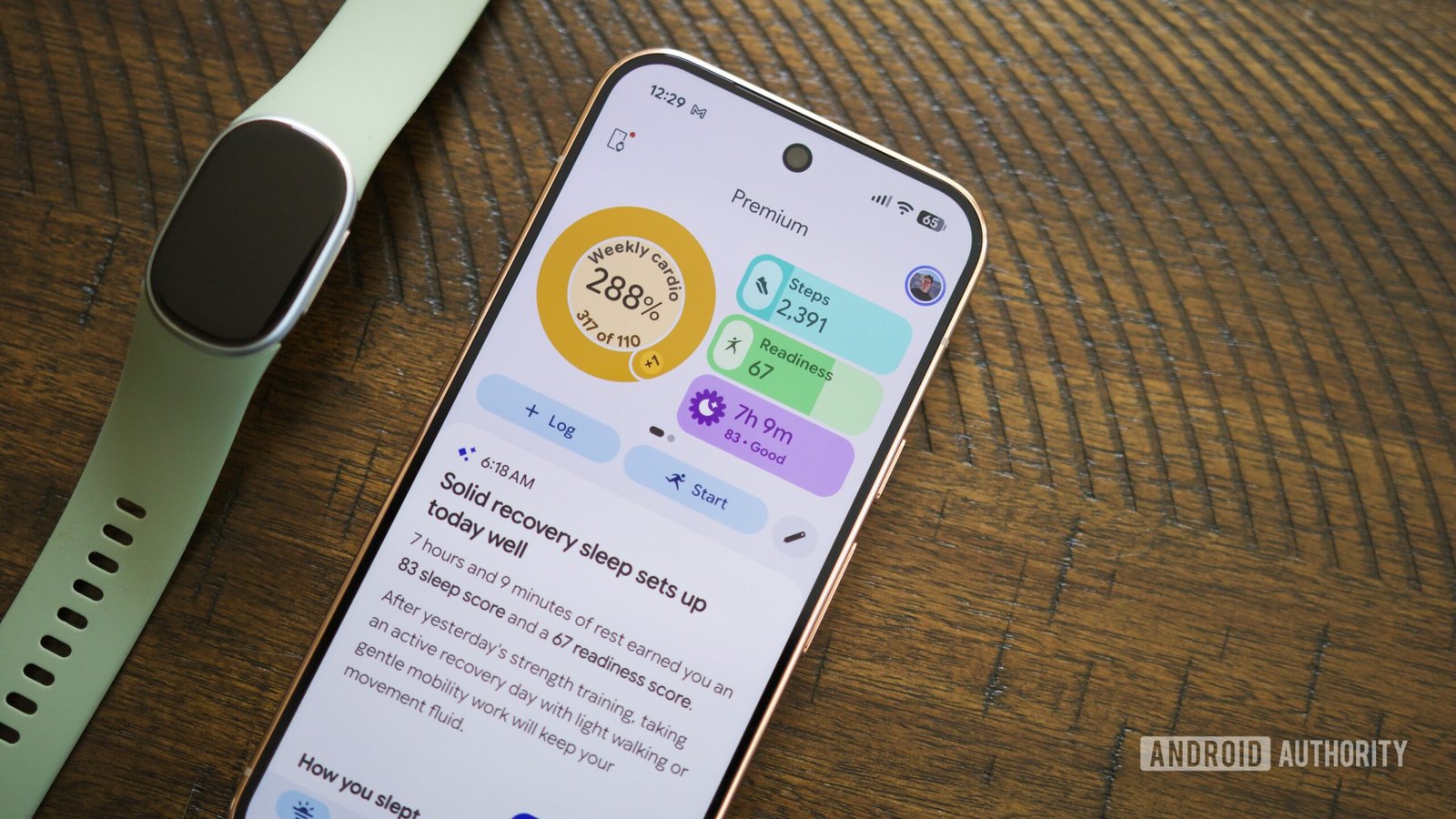
Google’s broader vision for its 2026 Fitbit ecosystem is ambitious. The company wants to position Fitbit not just as a tool for hardcore athletes or tech enthusiasts, but as a universal health companion — a device that fits seamlessly into the lives of people of all ages, fitness levels, and socioeconomic backgrounds
True universality requires designing for the margins, not just the averages.
However, a device cannot genuinely claim to be a “fitness tracker for everyone” if it leaves behind millions of individuals living with disabilities. True universality requires designing for the margins, not just the averages
As wearable technology leans heavily into predictive health analytics, recovery scores, and chronic condition monitoring, accurate activity tracking becomes crucial. For a wheelchair user, tracking upper-body exertion, resting heart rate trends, daily movement goals, and fatigue levels is just as vital for long-term health management as step counts are for an upright runner
Looking ahead: time for meaningful change

Stephen Headrick / Android Authority
Addressing this gap doesn’t require reinventing the wheel—it requires a commitment to inclusive design from the ground up. Google has the engineering talent, data science capabilities, and artificial intelligence models necessary to develop sophisticated motion-detection algorithms specifically tuned for wheelchair propulsion and adaptive exercises
If Google truly wants to fulfil its promise of making health and fitness tracking universally accessible in 2026 and beyond, it must break this “cycle of neglect”. It is time to stop viewing adaptive features as niche additions and start treating them as fundamental requirements for a truly inclusive health platform
Google Fitbit Edge
Google Fitbit EdgeDisplay • Tracking • Longevity • Durability
MSRP: $179.99
A feature-packed fitness tracker with a bigger screen and week-long battery life
The Fitbit Edge strikes a balance between a basic fitness band and a full-fledged smartwatch. With a larger OLED display, advanced health tracking, built-in GPS, and up to seven days of battery life, it’s a compelling pick for fitness-focused users.
See price at Google Store
Google Fitbit Air

Google Fitbit AirScreen-free fitness tracker • Affordable price • Excellent sleep tracking
MSRP: $99.00
The Google Fitbit Air is the company’s first screenless fitness band.
The Google Fitbit Air combines Fitbit’s trusted health tracking with Google’s smarter insights in one app. It works with both Android and iPhone and brings fitness, sleep, medical records, meals, and hydration tracking into a single, easy-to-use health hub.
See price at Amazon
Features
FitbitGoogleWearables
