Advertisement

Updated: 8:16 AM EST Nov 20, 2026Editorial Standards ⓘ
Terry Stackhouse
Updated: 8:16 AM EST Nov 20, 2026Editorial Standards ⓘ
Terry Stackhouse
AUGUSTA, Maine —
A new state report highlights significant health and wellness challenges faced by Maine’s farmers, fishermen, and loggers, including health care delays and mental health concerns
The report, based on a survey of nearly 300 workers, found that more than half had delayed seeking health care in the past year due to cost and time away from work
The working group behind the report has proposed a statewide program to connect workers and their families with mental health support, including short-term counseling and other services. The recommendations include offering low or no-cost services without requiring employer referrals
Nichole Sargent, owner and co-founder of Southpaw Packing, a slaughter and processing plant in Windham, served on the working group. Her family has deep ties to Maine’s heritage industries
“A lot of people don’t know how intertwined our heritage industries are and, you know, when we’re not making money at one entity, we’re doing something else within, you know, our heritage industries to try to compensate for that,” Sargent said
She acknowledged the difficulty of taking time off work and the stigma around asking for help
“People see loggers, fishermen and farmers and people that are like that strong, burly, you know, persona. And that also goes against us because we’re not by nature going to show that weakness and ask for help,” Sargent said
Sargent also started an initiative called “Slicing Through the Stigma” after several suicides in the agricultural community. According to the survey, nearly three-quarters of agriculture respondents said mental health was a major or moderate concern in their industry. More than half of forestry and logging respondents shared the same concern
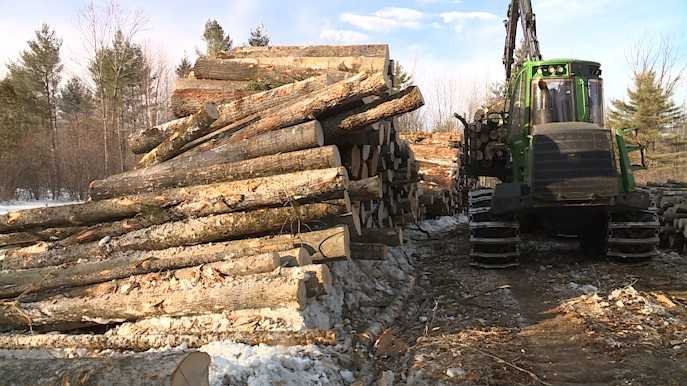
Dana Doran, executive director of Professional Logging Contractors of the Northeast, emphasized the economic pressures facing loggers
“If we don’t take a look at as a state, the economic impact of what’s happening to, you know, loggers, fishermen, farmers and their ability to go to work every day. We’re going to lose our rural identity,” Doran said
He added that the financial strain doesn’t end when the workday does
“You’ve got exceptionally high bills to pay. You’ve got loans on your equipment. And so the bills are always there. The debt is always there,” Doran said
For fishing families, Monique Coombs of the Maine Coast Fishermen’s Association highlighted the stress tied to the price of the catch and the cost of bringing it ashore
“It’s incredibly stressful. Lobstermen are pretty good at knowing how many lobsters they need to catch in order to make their bottom line. And so right now, a lot of that calculus is just not working for a lot of fishermen. Or it’s getting to a point where it might not work,” Coombs said
The report calls for permanent state funding for the proposed support program but does not specify a cost. As newly elected state lawmakers prepare to convene in Augusta next month, Sargent urged the public to take action now
“We need you to check in on your neighbor. You know, check in on that farmer. Check in on that logger. A lot of us are isolated,” Sargent said