


September 9, 2026
ByJulie Corliss,
Executive Editor, Harvard Heart Letter
- Reviewed byMarkos Kalligeros, MD,
Contributor
Share
Print This Page
If you have type 2 diabetes or if you have an elevated body mass index (BMI) and at least one other metabolic risk factor (such as a large belly, abnormal lipid levels, or high blood pressure), you should be screened for fatty liver disease. That’s according to new recommendations published in March 2026 by experts who care for this common but often symptomless threat to your liver health
What is fatty liver disease?
First recognized in the 19th century, fatty liver disease was originally considered mainly a consequence of heavy alcohol use. In the 1980s, doctors coined the term “non-alcoholic fatty liver disease” after noticing similar liver damage in people who didn’t drink alcohol
In 2023, fatty liver disease was renamed steatotic liver disease, an umbrella term that refers to fat buildup in the liver. It’s now divided into three main types:
Metabolic dysfunction–associated steatotic liver disease (MASLD), which is liver disease in people with metabolic risk factors who drink little or no alcohol
Metabolic dysfunction and alcohol-related liver disease (MetALD), which is liver disease in people with metabolic risk factors who drink moderate amounts of alcohol
Alcohol-associated liver disease (ALD), which is liver disease in people who drink heavily
In 10% to 30% of people with MASLD, the accumulated fat triggers inflammation and injury to liver cells — a form of the disease called metabolic dysfunction–associated steatohepatitis (MASH). Left untreated, the inflammation can worsen, causing scarring (fibrosis) which can become severe (cirrhosis). It’s now one of leading reasons for a liver transplant
An alarming number of people — one in three — have MASLD, which is closely connected to cardiovascular disease. Diagnosing and addressing the disease early can reverse the problem and prevent progression to the late-stage complications, says Dr. Markos Kalligeros, a gastroenterology fellow at Harvard-affiliated Beth Israel Deaconess Medical Center
“Fatty liver disease is considered a silent disease because early on, there are no symptoms,” says Dr. Kalligeros. After years of fat buildup, however, the liver can become inflamed. This can lead to mild fatigue, or a dull ache in the upper right side of the abdomen. But these symptoms are vague, unreliable, and often absent — even in advanced disease. That’s why testing is important
Who should be tested for fatty liver disease?
The new recommendations suggest screening for MASLD if you have type 2 diabetes or if you have a body mass index (BMI) of 25 or greater (23 or greater for people of Asian descent) and one or more of the following:
- a waist circumference of 37 inches or more (men) or 31.5 inches or more (women).
- a fasting blood sugar of 100 to 125 milligrams per deciliter (mg/dL) or an HbA1c of 5.7% to 6.4% (as found in people with prediabetes)
- high blood pressure or treatment for high blood pressure
- a fasting triglyceride level of 150 mg/dL or higher
- an HDL cholesterol value less than 40 mg/dL (men) or less than 50 mg/dL (women).
Of note, the disease is not confined to people who are overweight, says Dr. Kalligeros. As many as one in five people with fatty liver disease have a normal BMI, a pattern called “lean MASLD.” People with even mildly elevated liver enzymes should also be tested. However, up to half of all people with fatty liver disease have normal liver enzyme levels
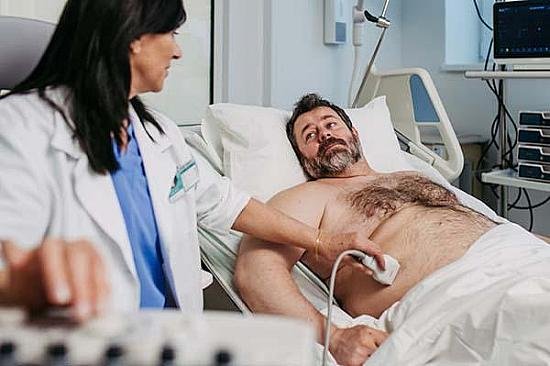
In addition, if you’ve had an imaging test (such as an abdominal ultrasound, MRI, or CT scan) done for another reason that happens to show fat in your liver, you should be screened for fatty liver disease
Finally, anyone with alcohol use disorder should also be screened for liver disease
Blood tests and imaging used to diagnose fatty liver disease
Screening usually starts with a simple tool called the FIB-4 score. It uses a person’s age plus three common lab values (platelet count and two liver enzyme levels) to estimate a person’s risk of serious liver disease. People whose scores are 1.3 (or 2.0 for those age 65 and older) or lower are considered low risk. But they should be monitored by their primary care doctor and get repeat FIB-4 tests every one to two years.
People with FIB-4 scores greater than 1.3 (or 2.0 for those 65 and older) are often advised to undergo a painless, noninvasive test called transient elastography (also known as FibroScan) that measures liver stiffness. Scarred tissue is firmer than healthy tissue. Doctors translate that measurement into a fibrosis stage: stage 0 (no scarring), 1 (mild), 2 (moderate), 3 (advanced), or 4 (severe, extensive scarring, called cirrhosis). People at stage 2 or higher should be managed by a gastroenterologist to help prevent further progression.
New treatments for MASLDUntil recently, the initial treatment of MASLD has included only general measures such as loss of excess weight, moderation (or, better yet, cessation) of alcohol consumption, improving lipid levels, and, for those with diabetes or prediabetes, optimal control of blood sugar. Though these are still the mainstays of treatment, the FDA approved resmetirom (Rezdiffra) in 2024 and injectable semaglutide (Wegovy) in 2025 for people who have MASH along with stage 2 or 3 fibrosis. Other GLP-1 medications may be recommended (instead of semaglutide) as treatment for obesity, diabetes, or other conditions. |
Image: © Halfpoint Images/Getty Images
Share
Print This Page
