



ETV Bharat / bharat
The Hidden Health Cost Of Noise Pollution: Why Constant Urban Noise Can Affect Hearing, Sleep, Stress & Children
From honking to loud music, constant noise exposure can strain the body, disrupt sleep and create lasting hearing problems | Ankita Kumari reports
Representational Image (ETV Bharat)
ByETV Bharat English Team
Published :September 30, 2026 at 5:19 PM IST
The festive months have begun, bringing colourful celebrations, music, lights and a lively atmosphere across India. DJs, loudspeakers and amplified music often add to the energy of these occasions. But a growing concern over noise pollution extends well beyond festivals
For millions living in cities, excessive noise is part of everyday life, from relentless honking and heavy traffic to construction work, commercial activity and prolonged use of loud personal audio devices. Festival celebrations may make the problem more visible, but they are only one contributor to an urban soundscape that remains noisy year-round
Repeated exposure to loud sounds can affect more than hearing, with experts warning of possible impacts on sleep, stress, cardiovascular health, concentration and overall well-being. As noise levels rise during festive periods, complaints about excessive sound also increase, prompting governments and courts to impose restrictions
Recently, the Bombay High Court took suo motu cognisance of noise pollution during religious festivities and sought details from the Maharashtra government on the measures being taken to control it. The court also indicated strict action against excessive noise and polluting firecrackers during festivals, bringing the long-standing debate over urban sound levels into sharp focus
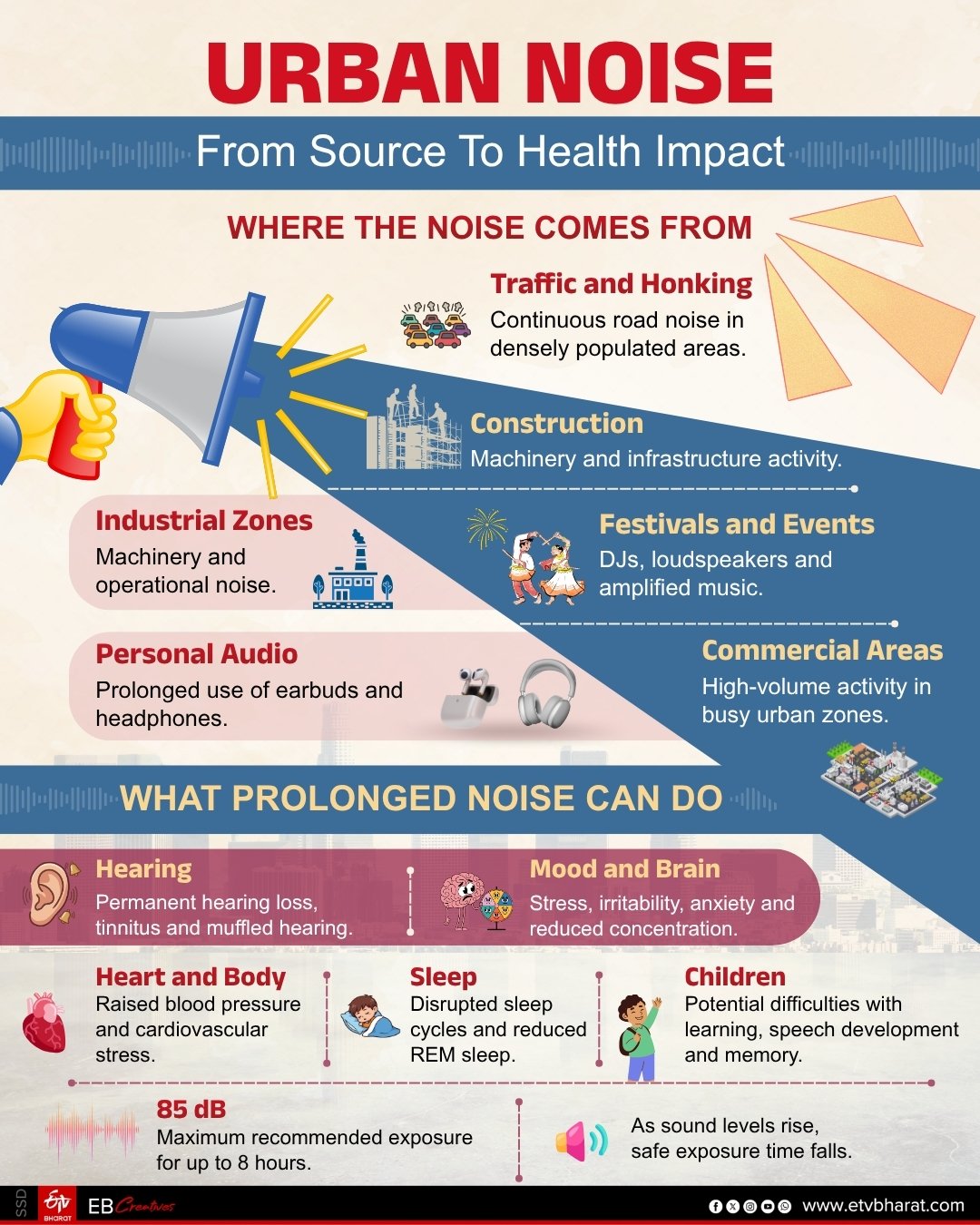
Health Impact of noise pollution (ETV Bharat Graphics)
Noise Pollution And Its Impact On Health
Weighing in on the medical realities, Ear, Nose and Throat (ENT) specialist Dr Kapil Sikka of AIIMS explains that noise pollution doesn’t hit us suddenly or only during special events. People have become so habituated to the constant din that they mistakenly brush it off as an ordinary, unchangeable city problem. However, the physiological toll on the human body is profound and cumulative
Detailing the impact on the ear, Dr Kapil noted that the tiny hair cells in the inner ear handle normal sounds easily. But loud sounds can physically damage these delicate structures. Especially when sound reaches 85 decibels (dB) or higher, sound waves strike these sensory cells with overwhelming force. Once these vital hair cells are destroyed, they do not grow back, directly leading to permanent hearing loss.
World Health Organisation (WHO) guidelines recommend a maximum safe exposure of 85 decibels for up to eight hours; as sound levels rise above this threshold, safe exposure time decreases exponentially. Dr Kapil stresses that maintaining moderate sound volumes is crucial, particularly because individuals with sensitive ears can be severely and irreversibly harmed
The medical consequences extend far beyond hearing loss, deeply affecting overall physical and mental well-being, says ENT specialist Dr Shilpi Budhiraja
Hearing Damage: Prolonged or repeated exposure to noise levels above 85 dB destroys inner ear hair cells, resulting in permanent, irreversible hearing loss. Very high sound levels can also trigger acute acoustic trauma, including eardrum perforation, tinnitus (persistent ringing or buzzing), muffled hearing, or blocked ears
Mood And Anxiety: Unexpected noise creates a chaotic cacophony that increases irritability and anxiety. Chronic exposure to loud, unpleasant sounds like honking, heavy traffic, and high-volume audio floods the body with stress hormones such as cortisol and adrenaline. This keeps the body locked in a perpetual “fight-or-flight” response during periods of pressure, contributing to severe anxiety and chronic fatigue.
Immune System Strain: The persistent flood of stress hormones triggered by noise pollution can elevate blood pressure and blood sugar levels. Over time, this chronic physiological stress weakens the body’s immune system and its ability to fight off illnesses. Furthermore, studies in urban areas link chronic traffic noise directly to increased rates of heart attacks, strokes, and cardiovascular distress.
Cognitive Function: Loud environments significantly hamper concentration, focus, and short-term memory. Discussing vulnerable groups, Dr Shilpi Budhiraja notes that for children whose cognitive frameworks are still actively forming, chronic noise exposure creates serious trouble in communication and learning abilities, severely hindering cognitive performance, speech development, and memory retention.
She also highlights the long-term outlook for younger generations using earbuds extensively: the cumulative effects of hearing loss may remain hidden until later in life, showing up by age 60 or 70, whereas in older populations, the resulting frustration and hypertension are immediately visible
Sleep Quality: Broken sleep is another hidden, devastating impact. Nighttime noise disrupts normal sleep cycles and significantly reduces REM sleep. She added that repeated sleep disruption increases physiological stress, raises cardiovascular risk over time, and leaves individuals chronically exhausted the next day
Urban Noise Is A Year-Round Problem
Environmentalist Hishmi Husain says Indian cities already face high levels of noise pollution from traffic honking, construction, commercial areas, prolonged exposure, and daily infrastructure demands. Therefore, festivals don’t necessarily create the problem from zero; they add unbearable layers of noise to an already saturated environment
He emphasises that noise should be viewed as a broader, systemic environmental issue, with cities needing to measure, map, reduce, and monitor noise levels year-round rather than focusing only on festival-related spikes
Experts say reducing environmental noise involves practical engineering techniques, such as planting dense rows of trees near motorways and highways to absorb and scatter traffic sounds, using acoustic screens at large public events, and enforcing stricter local regulations on vehicle horns and industrial zones
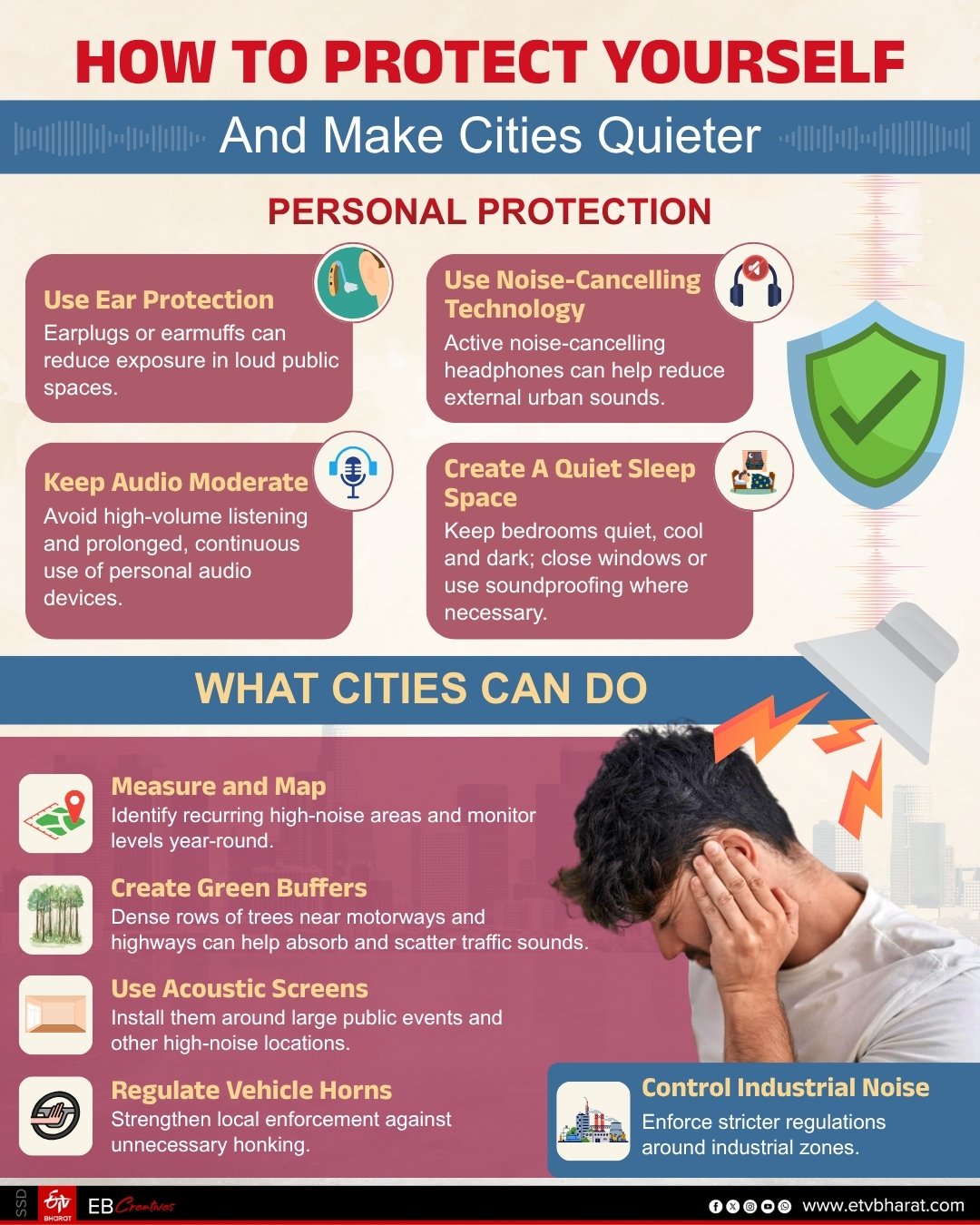
How to protect yourself (ETV Bharat Graphics)
How To Protect Yourself From Noise Pollution
ENT experts also suggest how people can take proactive steps to protect their health and hearing:
- Use Protective Gear: Invest in affordable, high-quality earplugs or earmuffs to block out disruptive environmental noise when navigating loud public spaces.
- Leverage Technology: Utilise active noise-cancelling headphones, which are exceptionally effective at muting external urban sounds during commutes or work hours.
- Manage Audio Habits: If you use personal audio devices for music or calls, keep the volume at a moderate, safe level and avoid prolonged, continuous listening sessions.
- Optimise Your Sleep Environment: To protect your health while resting, keep your bedroom quiet, cool, and dark, using soundproofing or closing windows as needed to block out street noise.
