


Advertisement

Updated: 10:43 PM PDT Oct 7, 2026Editorial Standards ⓘ
Edie Lambert
Anchor/Reporter
Updated: 10:43 PM PDT Oct 7, 2026Editorial Standards ⓘ
Edie Lambert
Anchor/Reporter
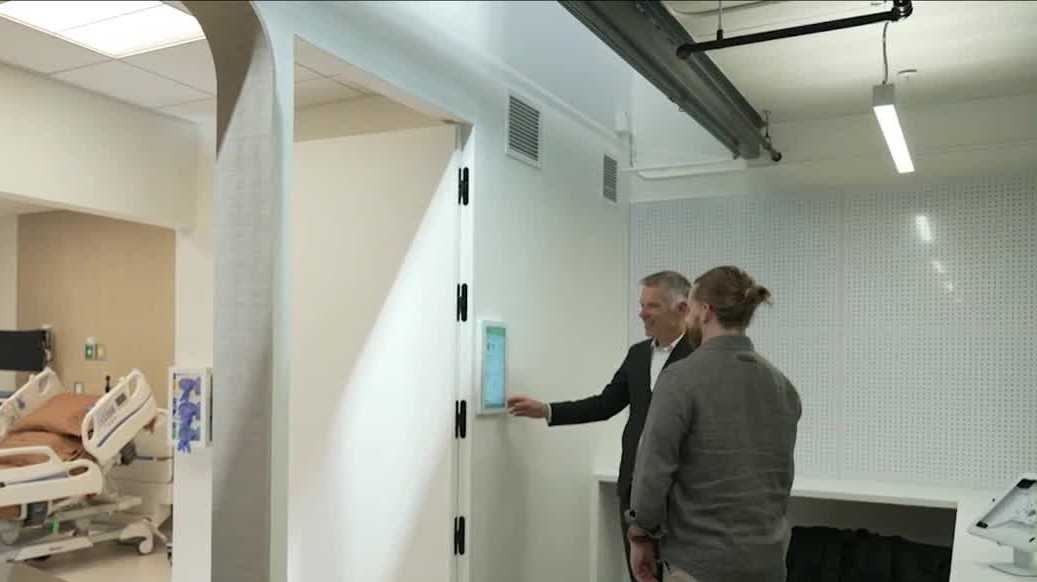
Hospital rooms often make it difficult for patients to sleep due to bright lights and loud noises, but Sutter Health is working to change that at its Innovation Center in San Francisco
Joining Host Edie Lambert on California Tonight, Sutter Health’s Chief Design and Innovation Officer Chris Waugh explained that losing sleep in a hospital is more than an inconvenience, it’s a health issue
“The immune defense system is working hard to coordinate cellular defense and reduce inflammation, we see an opportunity for cardio-vascular recovery during sleep, your heart rate goes down,” explained Waugh. The body also works on tissue repair and metabolic regulation as we sleep. It’s especially important for hospital patients in recovery, helping patients recover faster, avoid being readmitted, and manage pain.
“Just stepping back we realized we’re not letting the body do that as much as it could during hospital stays,” said Waugh
That’s why his team started looking for innovations that could support better sleep in hospital rooms. One solution being tested is the use of red overhead lights at night, which are designed to avoid disrupting a patient’s natural circadian rhythm, unlike standard blue and white lights. The red lights produce enough light for the care team to work in a room without activating a patient’s hormones that signal it’s time to wake up.
For rooms without exterior windows, digital “windows” display outdoor images that sync with natural light — showing sunlight during the day and a dark sky with stars at night — to help patients stay awake during the day and sleep at night. In addition to supporting healthier sleep cycles, it can help some patients avoid a condition known as delirium, which is a common diagnosis in hospitals
“Delirium is really important to take care of because people can lose a sense of day and night and ultimately be confused,” Waugh said. “It can extend length of stay, it can slow down the recovery process.”
Waugh’s innovation team is also developing digital displays to improve communication. These displays provide clear, real-time information for patients, families, and care teams. They allow family members to join clinical discussions and care sessions remotely, offer AI-supported language interpretation and patient guidance tools, and include digital alerting and monitoring capabilities for nursing teams. The displays can also support virtual sitting and fall-prevention measures.
To address noise, Sutter is working on monitors to measure the decibel levels both in the patient’s room and in the hallway. It gets too noisy, care teams would be notified. “Remind folks and visitors that it’s quiet and that patient is trying to rest,” explained Waugh
Sutter Health plans to incorporate these technologies into two new hospitals being built in Santa Clara and Emeryville, which are expected to open around 2030 and 2031. Some features could be implemented as early as next year as part of remodeling efforts at its California Pacific Medical Centers in San Francisco
Click here to learn more about Sutter Health’s Innovation Center
This story was featured as part of our new California Tonight show. It airs Monday-Friday at 7:30 p.m. Watch on KCRA and KSBW