



Tech Perpetuum
Advertisement feature

Article
Advanced wearables paving the way to better health
The invention of the “Manpo-kei” (10,000 steps) pedometer in 1965 heralded the beginning of a wearable technology industry that is worth about US$100 billion today

 14%
growth expected to reachUS$290.6 billion by 2030
A growing focus on personal health and increasing awareness about the impacts of chronic diseases are resulting in growing global consumer demand for wearables. The wearables market is expected to grow at a CAGR of more than 14% between now and 2030 to reach US$290.6 billion.1,2

Wearables are just one pillar within the burgeoning health tech segment, but provide a highly visible example of just how deeply technology has penetrated the worlds of fitness and health. Studies show that health tech wearables can positively impact users’ fitness, helping boost exercise levels, reduce sedentary behaviour, improve physical functioning and bolster mental health.3,4,5,6
At the same time, wearables are increasingly carving out a role in supporting users’ overall healthcare by enabling self-monitoring and easy collection of patient data for use by medical professionals. Remote health monitoring devices such as glucose monitors are helping doctors manage chronic diseases such as diabetes and high-blood pressure, while telehealth services are expanding users’ access to healthcare from anywhere.7,8
Realising the potential of healthtech through R&D

Technology has also expanded into the realm of professional sport, where wearables are providing key datapoints to improve athletes’ performance and coaching, and lower injury risks.9,10
Realising the significant potential for wearables to reshape how we approach fitness and healthcare will require significantly more research and development (R&D), especially as consumer demands expand into specialised sports and beyond basic fitness tracking features such as heart rate monitoring or accelerometers. New devices even have the potential to target industrial and enterprise sectors to improve employee safety and productivity and enable better workforce management.11
The immense versatility of wearables has made the sub-sector highly attractive to a diverse range of companies, from sports brands such as Nike and Adidas to tech giants such as Sony. In 2019, Google acquired Fossil’s smartwatch division for US$40m, as well as well-known wearables maker Fitbit for US$2.1 billion.12,13
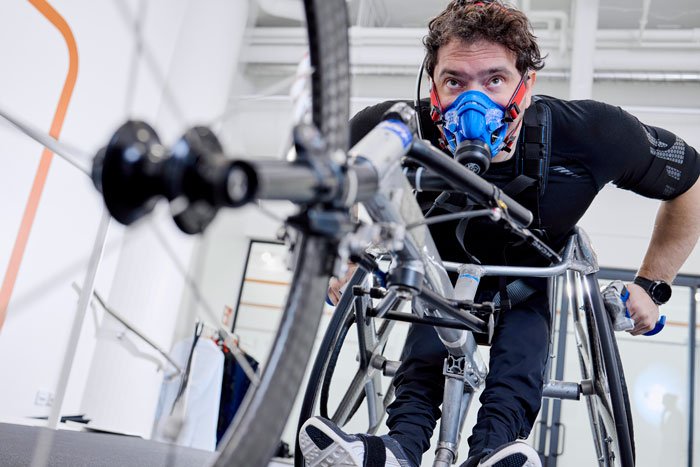
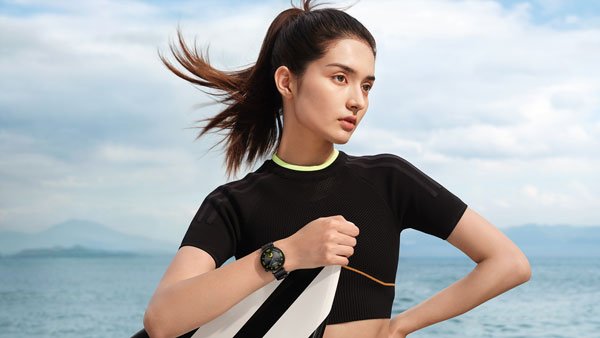
More recently, investments have focused on medical wearable innovations, with as much as US$815m poured into digital health wearables firms in 2020, marking a 78% increase from the previous year.14 Huawei, for example, has ramped up its investment and research in the fitness and health sectors, by partnering with more than 100 professional institutions globally to conduct health studies. It has also established a global network of more than 10 R&D centres and three Health Labs.
Health is wealth
78%
As much as US$815m poured into digital health wearables firms in 2020, marking a 78% increase from the previous year
Its first two health Labs in Xi’an and Dongguan in China represented a step forward in its goal to enhance R&D into fitness products, standards and industry incubation. A third facility in Helsinki, Finland marked the company’ first foray into the European market, with a specific focus on popular regional sports like swimming and skiing. Facilities at the lab enable sports science researchers to leverage Huawei’s wearables and fitness algorithms in real-life settings to improve athletes’ performance through data-backed monitoring and reduce the risk of injuries.
Blending fashion and function

Integrating digital devices in the medical industry has been a long-held aspiration for wearables makers looking to expand beyond retail consumers. Today, wearables are increasingly entering the conversation between doctors and patients as useful tools for 24/7 real-time health monitoring, chronic disease management and even clinical trials.15,16 Even emerging technologies like artificial intelligence (AI) are being implemented in ECG wearables to provide tailored feedback and make health predictions.17
In Huawei’s health Labs, the company’s GT 4 smartwatch is being used by researchers to closely monitor users’ physiological data, such as heart rate, sleep quality and blood oxygen levels. While these features are staples of current fitness trackers and wearables, the GT 4 enables users to tailor them to specific sports and provides personalised training plans to align with users’ specific goals.

24/7 tech-enabled health monitoring
Wearables are increasingly entering the conversation between doctors and patients as useful tools for 24/7 real-time health monitoring, chronic disease management and even clinical trials
The watch was also developed with style in mind, combining high-end, durable materials in a modern design, reflecting the importance of style for young, fashion-conscious consumers.18,19 The pairing of technological innovation with fashion-forward design is also a major engine of Huawei’s decision to expand into Europe, where three of its Aesthetic Research Centres are located – in Paris, Milan and London.

AI transforms patient care

Tools such as AI and machine learning can enable doctors to better understand patients’ individual needs and quickly provide tailored, effective care

While wearables are being embraced by consumers, creating tangible improvements in users’ health outcomes and experiences will require more personalisation.20 Tools such as AI and machine learning can, for example, enable doctors to better understand patients’ individual needs and quickly provide tailored, effective care. However, to achieve this, wearables makers must continue investment in R&D and innovation, especially as they seek to also tackle persistent challenges in managing user privacy and medical inequalities.21
To support further R&D into wearables innovation, wearables makers are increasingly employing the help of academic institutions to build a pipeline of high-quality research to feed into their devices. Huawei, for instance, is actively collaborating with local Finnish institutions and regional European experts, including those from iCARE4VD, in some of Europe’s most ambitious research initiatives at the intersection of AI and cardiovascular disease. Its health labs, meanwhile, are staffed by a multidisciplinary team of experts in physiology, AI, machine learning, software testing and software engineering.
Investing in rich, science-backed R&D will be essential in pushing wearables to the forefront of medicine and fitness, where their expanding capabilities will be able to tangibly improve health outcomes. By focusing on collaborations with experts and engaging with technology in real-life contexts, wearables could transform how we think about and manage our health
Explore more content

Article
The industrialisation of AI-native banking: how China’s banks and Huawei are engineering the future of finance
China’s financial sector has moved through three distinct eras: branch-centric banking, digital banking and now machine-speed finance enabled by artificial intelligence (AI)
Read more

Article
Laying the foundations for an AI-driven banking revolution
Banks have been among the earliest adopters of digital innovations, whether it is computers in the 1950s or big data platforms at the turn of the century
Read more

Article
Opening new realms of innovation
Intellectual property (IP) rights have a long history, dating back to ancient Greek chefs who were granted year-long “patents” for inventing new dishes. Since then, IP laws
Read more
Produced by
References
- 1.https://www.hfe.co.uk/blog/a-study-of-fitness-trackers-and-wearables/
- 2.https://news.abplive.com/technology/gadgets/wearable-tech-industry-poised-to-cross-290-billion-in-2030-globaldata-1630840
- 3.https://pubmed.ncbi.nlm.nih.gov/37318806/
- 4.https://www.huawei.com/eu/news/2022/7/health-fitness-wearables-apps-research
- 5.https://techcollectivesea.com/2023/08/18/gamification-healthtech-fitness-apps-wearables/
- 6.https://www.mckinsey.com/industries/life-sciences/our-insights/using-digital-tech-to-support-employees-mental-health-and-resilience
- 7.https://sifted.eu/articles/ai-healthtech-trends-brnd
- 8.https://www.mckinsey.com/industries/healthcare/our-insights/telehealth-a-quarter-trillion-dollar-post-covid-19-reality
- 9.https://www.styku.com/blog/how-technology-is-changing-athletic-training
- 10.https://www.cogniteq.com/blog/how-wearable-technology-changing-sports-industry
- 11.https://intpolicydigest.org/why-now-is-the-time-to-invest-in-wearables/
- 12.https://www.cnet.com/tech/mobile/googles-40m-purchase-of-fossil-tech-was-for-hybrid-smartwatches-report-says/
- 13.https://news.crunchbase.com/startups/as-google-buys-fitbit-a-look-at-its-ma-and-investment-history/
- 14.https://mercomcapital.com/digital-health-wearable-makers-raised-815-million-in-2020/
- 15.https://www.medicaleconomics.com/view/trust-in-wearables-grows-at-a-rapid-rate-but-are-doctors-ready-
- 16.https://pharmaphorum.com/patients/how-rise-medical-device-use-pharma-rd-driving-wearable-technology-healthcare-and
- 17.https://pharmaphorum.com/patients/how-rise-medical-device-use-pharma-rd-driving-wearable-technology-healthcare-and
- 18.https://www.ncbi.nlm.nih.gov/pmc/articles/PMC7600024/
- 19.https://www.gartner.com/en/newsroom/press-releases/2016-12-07-gartner-survey-shows-wearabledevices-need-to-be-more-useful
- 20.https://www.ncbi.nlm.nih.gov/pmc/articles/PMC10481846/
- 21.https://www.theverge.com/2021/11/16/22785163/digital-health-physical-activity-inequity
- 22.https://news.samsung.com/my/samsung-announces-open-innovation-initiative-with-leading-universities-and-academic-hospitals-to-build-digital-health-ecosystem
