


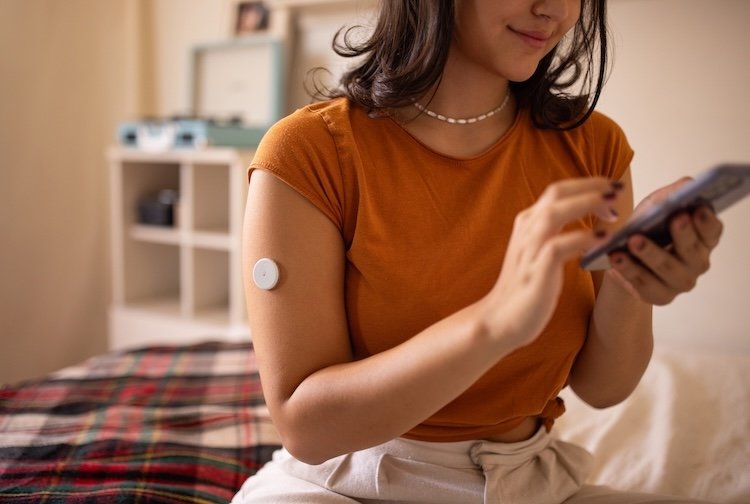
Continuous glucose monitors (CGM) are small sensors that sit just under the skin and check blood sugar levels. The devices can connect to smartphone apps to provide real-time data. (Getty Images)
Big box stores are now selling a device typically used by people with diabetes to make critical decisions about their insulin levels. But these over-the-counter continuous glucose monitors (CGMs) aren’t marketed for diabetes.
A new wellness trend promotes wearable monitors to track glucose, or blood sugar, levels to manage weight and prevent future metabolic issues.
Some experts caution that this trend may cause healthy people to misinterpret their glucose levels. There also isn’t much research on the long-term benefits of CGMs for non-diabetics.
“These devices provide real-time feedback on the impact of diet, physical activity and stress on glucose levels, which can motivate healthy behavioral changes and can be used for a short period of time,” said Priyanka Majety, M.D., an endocrinologist at VCU Health who treats patients with diabetes. “That said, doctors and health care providers don’t regularly use CGMs for people without metabolic health issues because there isn’t enough evidence yet to show that it’s effective or appropriate for improving their health.”
With the U.S. Food and Drug Administration approving several CGMs for those without diabetes, VCU Health News spoke with Majety to better understand what these devices are used for and how to accurately read glucose levels.
What is a continuous glucose monitor (CGM) and how does it work?
A continuous glucose monitor (CGM) is a small sensor that sits just under the skin and checks glucose in the fluid between cells (interstitial fluid) every few minutes, sending readings to a phone app. Because it measures interstitial glucose, the measurements can lag by roughly 5 to 15 minutes, especially around meals or exercise.
Why is CGM critical for people with diabetes?
For people with diabetes, CGM improves safety and outcomes by:
- Reducing episodes of hypoglycemia, which are abnormally low blood sugar levels that can cause shaking, dizziness, confusion and hunger.
- Increasing the amount of time blood sugar stays in a healthy range.
- Lowering A1C.
Multiple guidelines recommend CGM early in diabetes care.
Can high glucose levels contribute to other health conditions?
Yes, there are several other medical conditions that can develop from high glucose levels, including:
- Chronic hyperglycemia
- Damage to blood vessels and nerves
- Vision problems
- Heart and kidney disease
If you do not have diabetes, how does blood sugar affect your day-to-day?
If you don’t have diabetes or prediabetes, your blood sugar naturally rises and dips throughout the day when you eat. Typically, glucose rises after meals and goes back down to your baseline within about two hours.
Lifestyle factors, like eating late at night, lack of exercise or poor sleep, can cause more variation for glucose levels for those even without diabetes.
What are typical daily, “normal” glucose levels?
When your body is fasting (not eating), blood sugar levels are typically between 70 to 99 mg/dL.
After eating, you will usually see a peak above 140 mg/dL, sometimes above 200 mg/dL. It will go back down to near your baseline within 2 hours.
These short spikes are brief, normal and not harmful to healthy individuals.
How do exercise, sleep and stress interact with glucose?
Regular aerobic activity lowers average glucose over 24 hours. High-intensity workouts can cause brief glucose spikes, then improve overall glycemia (blood sugar levels) afterward. Sleep loss and stress can raise glucose and make your body less sensitive to insulin.
With broader access, is CGM helpful for people without diabetes?
CGM in patients without diabetes is primarily an emerging tool for early detection of dysglycemia (blood sugar abnormalities), personalized risk assessment for diabetes, and lifestyle optimization, but its routine clinical use in this population is not yet established.
Can CGM diagnose prediabetes or diabetes?
No, CGMs cannot diagnose prediabetes or diabetes. A diagnosis relies on laboratory A1C or plasma glucose testing or a 2-hour oral glucose tolerance test. CGM may reveal patterns to discuss, but it is not diagnostic.
Are there risks to monitoring without a clinician?
The main disadvantages and risks of CGM use for people without diabetes include device-related errors, psychological impacts, cost and lack of clinical guidance.
- Device-related errors and false alarms are common. CGM sensors can produce inaccurate readings due to sensor issues, disconnections or medications, leading to false alerts. These errors are particularly problematic in individuals without diabetes, who have lower baseline glucose levels and may be more likely to receive erroneous alerts. Misinterpreting these readings can cause unnecessary anxiety and unwarranted trips to the doctor’s office.
- Psychological and behavioral risks are increasingly recognized. Frequent exposure to glucose data may promote unhealthy fixation on minor blood sugar fluctuations. There is concern that CGM use in people without diabetes could exacerbate health anxiety.
- Cost and accessibility are significant barriers. CGM devices are expensive, and insurance coverage is generally limited to patients with diabetes.
- Supervision from a health care provider ensures you’re doing it correctly. Without guidance, readings can be misinterpreted and other health problems may develop, such as skin irritation and rashes from sensor adhesives and repeated insertions. If used, it should be goal-directed and time-limited.
What are the best ways to support healthy blood sugar levels?
To improve blood sugar levels, I recommend starting with the fundamentals first: eat balanced meals with fiber and protein, daily movement, consistent sleep and stress management.
If you’re still very curious about tracking glucose levels more closely, consider a brief CGM trial with a clinician’s guidance rather than indefinite wear.
More health and wellness news
Related Articles
MASLD and heart disease: What a fatty liver can tell you about cardiovascular risk
Fri, 23 Oct 2026 08:16:00 EDT

What to know about roller coaster safety and injuries
Thu, 22 Oct 2026 09:19:00 EDT

Family medicine professor elected to National Academy of Medicine
Wed, 21 Oct 2026 12:43:00 EDT
