


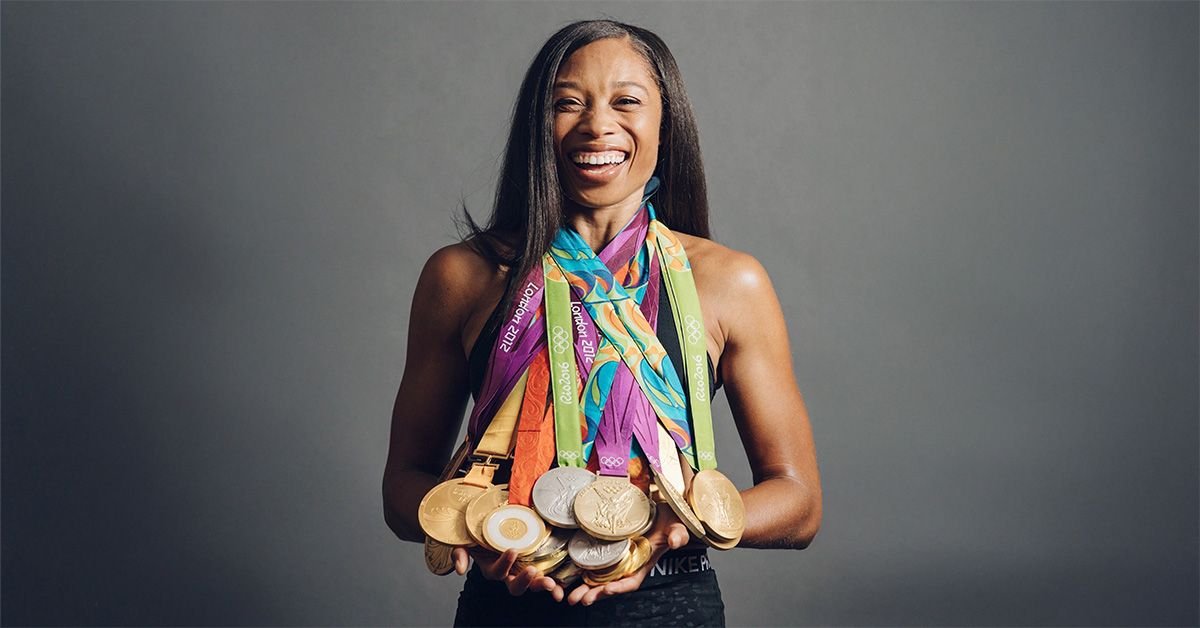
Track and field star Allyson Felix shares rest and recovery tips and explains why motherhood inspired her to advocate for paid leave
When it comes to national policies around paid sick or family leave, the United States falls short compared to other developed countries
Around 28 million Americans lack access to paid sick time, which disproportionately affects low-income workers and their families, particularly caregivers
A recent survey from Theraflu and Wakefield Research of more than 1,000 employed U.S. adults who care for someone in their household found that 80% of respondents couldn’t afford to take a sick day
More than half of respondents said they worked while sick because they needed the income, while 28% said that taking a sick day could put their job at risk
Working parents are often obligated to continue their responsibilities even when they’re sick. Mothers are more likely than fathers to bear the brunt of this responsibility, even in the most egalitarian households
Without paid sick leave, burnout is inevitable — whether you’re a caregiver or not. If left unchecked, burnout can lead to serious health issues
like heart disease and type 2 diabetes
That’s why track and field icon Allyson Felix is on a mission to help make paid sick time a fundamental right rather than a privilege
The five-time U.S. Olympian partnered with Theraflu to raise awareness for The Right to Rest & Recover Fund, which has offered microgrants to families that help offset lost income from unpaid sick days. The Fund has distributed more than $1 million in microgrants since 2021
As a mom of two, Felix knows firsthand how physically and emotionally taxing it can be to care for young children when you’re unwell
The elite sprinter specializing in the 200m, 400m, and relay events understands the importance of rest and recovery for the body and mind. At 40, her recent announcement to make a comeback for the 2028 Olympic Games in Los Angeles is a testament to this
As the most decorated American track and field athlete in history — with 11 Olympic medals across five Games and a three-time world champion — Felix has her heart set on another goal: Paid sick leave for all
“I don’t think it’s a conversation that we’re having enough of,” Felix told Healthline. “I love that Theraflu is doing something about it for people who are experiencing this hardship.”
Rest and recovery prevent burnout
Regardless of your parenting or caregiving status or even your fitness level, everyone benefits from rest and recovery — and from sick days when you need them
Clarinda Hougen, MD, primary care sports medicine specialist at Cedars-Sinai Orthopaedics in Los Angeles, CA, said that from an exercise science standpoint, rest and recovery are fundamental
“When we exercise, we place stress on our muscles, tendons, and other tissues,” she told Healthline
“Healing the microtears that occur in muscle tissues during exercise results in muscle hypertrophy and can only occur during periods of rest. In other words, strength gains and improved endurance occur during recovery rather than during the exercise itself.”
Hougen shared a few tips to prioritize rest and recovery:
- Get at least 7 hours of sleep per night.
- Build 1–2 rest days into your weekly exercise regimen.
- Practice “active recovery” (i.e., light walking, cycling, yoga, or other low intensity activities immediately after a high intensity workout).
- Eat a nutritious diet including protein and carbohydrates.
“Athletes who participate in a variety of different activities that involve different types of movement are less likely to experience injury,” she said
I just try to do the best that I can each dayAllyson Felix
Quality sleep and self-care promote recovery
Hougen explained that inadequate sleep can negatively impact performance and raise the risk of injury in athletes and non-athletes
“Rest and recovery should absolutely be considered a core pillar of every individual’s wellness regimen,” Hougen said
“If rest periods are inadequate over many weeks, the body is not able to fully repair and heal damaged tissues, and overtraining syndrome may develop,” she said. “When this occurs, athletes may feel decreased enjoyment in their sport and increased perceived exertion during activity.”
From a physical standpoint, recovery practices might include intentional rest, sleep, and other forms of lighter exercise
Taking time to rest can also help reduce stress and improve mood, fostering mental resilience, Hogen said
Felix echoed this sentiment, emphasizing that it’s important to recognize when you need rest and recovery and to carve out time and space for it
“I just try to do the best that I can each day by being intentional and planning out how I’m going to take care of my body,” Felix said
Allyson Felix talks rest and recovery
When she’s not training for the Olympics, Felix maintains an active lifestyle. She hits the track for speed workouts and recovers with other forms of exercise like Pilates or spending time outdoors with her family
She stays busy pursuing her latest ambitions, including the Theraflu initiative, a shoe company, and an athletic talent agency
But her greatest achievement, she says, is motherhood. Here’s how she finds balance with it all
This interview has been lightly edited for clarity and length
Why is rest and recovery essential?
Felix:I think we live in a time where this kind of mentality of ‘no days off’ and ‘just pushing through’ is almost glorified. What I found is that it’s just not sustainable, and our rest and recovery are so important
I learned that so much as an athlete, but now I see it in every aspect of life and just how valuable it is for everyone
You have to fill your cup first. You have to be able to do the things that support longevity and let you do all the things you want to do. And to me, in this phase of life, I understand that more now than ever
Why is rest and recovery for caregivers so important?
Felix:I think I just understand it; I’m living it. And I also understand the double burden of being a caregiver: when you’re sick, your responsibilities don’t stop. People depend on you, the little ones depend on you, and you have to show up for them
When one of my kids is sick, I’m navigating that double burden if I’m not feeling well. I think that if you’re not in this situation, you probably don’t really understand it
I think it used to be a lot easier when it was my sole job to take care of my body and be an Olympic athlete.Allyson Felix
How do you prioritize rest and recovery now?
Felix: I try to prioritize taking care of my body, from the things I’m eating, the nutrition I’m getting, the sleep I’m getting — and sometimes it’s really challenging, because I have little kids
For me, it’s about asking for help when I need it. There are days when I feel like I’m not going to make it, and I tell my husband I’m going to get a 30-minute nap to take care of myself
Then there’s prioritizing my mental health, whether that’s scheduling time on my calendar to do something that brings me joy or to rest. You have to make space for it, because there are a million things that will always come up. I try to be intentional about how I take care of myself
Honestly, I think it used to be a lot easier when it was my sole job to take care of my body and be an Olympic athlete. I had a nap built into my day, and everything revolved around training
I think now, it’s more the reality of how I can prioritize taking care of myself and my family, work, and all of the things
What forms of exercise do you enjoy now?
Felix:Moving my body just makes me feel like me
A lot of times, it’ll look like early mornings or late nights on the treadmill or doing something at home. I also enjoy playing tennis. I still enjoy doing track workouts. I enjoy doing Pilates, so I try to switch things up and have a nice variety to make sure I keep moving
Focusing on family has also been a really great exercise for the family. We love to take walks at the end of our days. Now my daughter can ride her bike, and we have one of those little tow things for my son, so we’ll go on the bike path. Staying active as a family is really key as well
What keeps you inspired and motivated?
Felix: Motherhood is my greatest role. It brings me the most joy of all the things I get to do. The work I do, I’m passionate about it. When I get to advocate for mothers and parents and do work that I’m passionate about and believe will have an impact, just having a sense of purpose is very fulfilling
And my businesses, I’m growing them — my shoe company, Saysh, my agency, Always Alpha — and knowing that they are in the world, I want them to have the most impact
As an Olympian, it’s very clear-cut; success is very easy to determine. Now it’s just shifting that mindset to say that success, to me, looks like impact: How can I put that out into the world?
I still love to push myself athletically and set ambitious goals — there aren’t as many eyeballs on me when I’m doing those things
What brings you joy and gives hope for the future?
Felix: Whenever I’m able to be still and disconnect from everything that’s going on around me, I think about the time when I’m here with my family at home
Whether we’re going on a walk or I’m just watching my kids’ faces, there’s so much joy in just the very simple things
I think about how I’m raising them, and I want them to be great people in the world, good people with good values. When I look at them, I get reminded that there’s still a lot of good here, and that we’ve got to keep fostering it
I remind myself of that often; just taking a moment to notice the little things, the simple things that can bring you a lot of joy that I think we often just overlook, because we’re not looking up
