


Key Takeaways
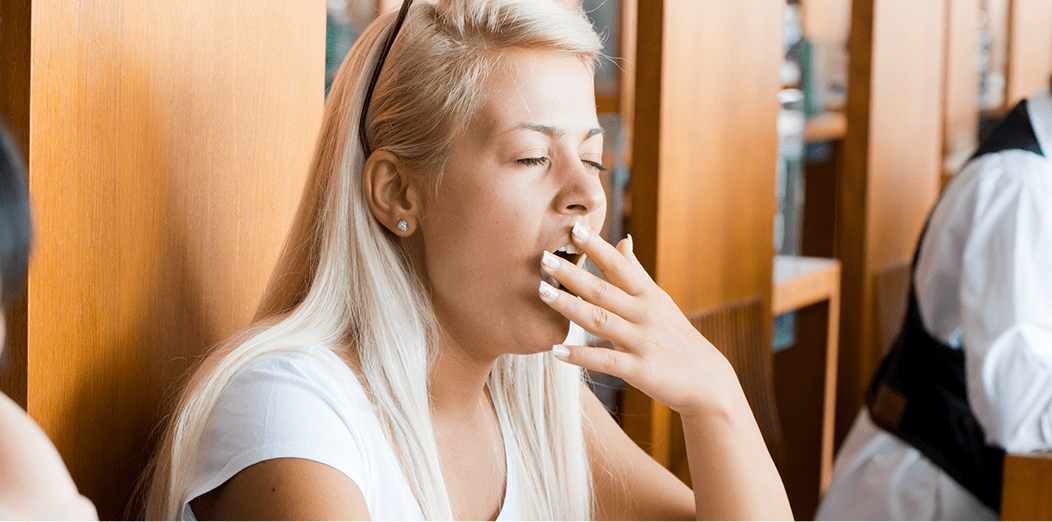
Teens need nine hours of sleep nightly for brain development, but nearly 70% don’t get enough, causing physical, mental, and behavioral problems
Sleep deprivation creates a cycle where teens feel anxious, stressed, and depressed, which makes it even harder to sleep
Lack of sleep leads to impulsive behavior, accidents, difficulty controlling emotions, and may trigger or worsen mental health disorders
It’s a radical thought, but what if the behavior we casually dismiss as “teenage angst” — the moodiness, the constant battles, the sleeping all day, the reckless, impulsive and careless behavior — is not in fact a normal part of being a teen? Or at least, not to the degree we assume it is. What if instead we are doing our teenagers a disservice by writing off as “normal” what are in reality the symptoms of chronic and severe sleep deprivation?
We know that the radical changes that occur in adolescence, including tremendous hormonal shifts and significant brain development, affect teenage behavior. But the physical, mental, and behavioral consequences of chronic sleep deprivation are profound, too. With studies showing that 60 to 70 percent of American teens live with a borderline to severe sleep debt, we need to know how going without their recommended (optimal) nine hours a night affects them.
Sleep deprivation puts teenagers into a kind of perpetual cloud or haze, explains Mary Carskadon, PhD, a professor of psychiatry at Brown University and director of chronobiology and sleep research at Bradley Hospital in Rhode Island. “One of the metaphors I use is that it’s like having an astigmatism. You don’t realize how bad your vision is until you get glasses or, in this case, good sleep.” That haze, Dr. Carskadon says, can negatively affect teenager’s mood, ability to think, to react, to regulate their emotions, to learn, and to get along with adults.
According to the National Sleep Foundation, drowsiness or fatigue is the principle cause of at least 100,000 traffic accidents each year. One analysis of North Carolina crash data found that 55 percent of all “fall-asleep” crashes were caused by drivers under the age of 25. Parents shouldn’t let sleep deprived adolescents get behind the wheel any more than they would if their kid had been drinking.
But while it might pose the most serious risk, driving is not the only danger. After getting between three and four hours of sleep for several nights in a row, while working on a term paper in his sophomore year of high school, Gabriel Levine went into his kitchen at 3am to get a snack. Instead of slicing through a wedge of cheese he sliced through his thumb clear to the bone, severing a ligament. “It ended up requiring a trip to the emergency room and two surgeries to repair it, and I spent six weeks in a cast,” says Levine, now 19 and a freshman in college. Though he says the injury was “absolutely the result of how little sleep I’d been getting by on for months,” he didn’t get any extensions on homework or papers. And because he could only type with one hand, he ended up having to stay up even later to finish his work.
Along with a lack of sleep goes the ability to exercise self-control — over one’s emotions, impulses and mood. Ryan C. Meldrum, PhD, an assistant professor in the Department of Criminal Justice at Florida International University, found a link between short sleep duration, late bedtimes, and poor overall sleep quality and aggression, impulsivity, and being short-tempered
“There’s a theory that views self-control not as a stable personality trait,” explains Dr. Meldrum, “but as something that is subject to the strains and stressors of the environment that people have to navigate on a daily basis. So imagine that self-control is like a muscle — if we exert a lot of energy and expend a lot of effort we need rest and recuperation in order to restore one’s ability to self-regulate.”
Allison Baker, MD, a child and adolescent psychiatrist, says teens who don’t get the kind of sleep they need in order to be able to self-regulate can actually exhibit many of the same symptoms as kids with ADHD. Signs of sleepiness can include an inability to sit still, to stay on task and to focus. “It’s an easy misdiagnosis to make,” Dr. Baker says
Research by Dr. Carskadon and several others shows that sleep-deprived teens are far more likely to use stimulants like caffeine and nicotine to get through the day but also to deal with sleep-related negative moods by self-medicating with alcohol. They’re also more likely to engage in unprotected sex and reckless driving than teens who get upwards of seven hours of sleep a night because they lack impulse control and suffer from impaired judgment that leads to poor decision-making.
As a college student, Carolyn Capputo made the choice to drive knowing she was severely sleep deprived even after she’d fallen asleep at the wheel. Now a number of years out of college, she knows she was lucky she didn’t cause a serious accident, but at the time it just didn’t seem like a big deal. “The summer before my sophomore year in college,” she says, “I’d routinely stay up past 3am chatting online with my best friend because we missed each other and were still keeping college hours (at least in terms of staying awake). Then I’d wake up at 6:30 in the morning to go to my summer job. I fell asleep driving to work more than once.”
“There is data that shows that because teens are not fully developed in terms of their executive functioning,” says Dr. Carskadon, “even acute short-sleep can lead to risky behavior and poor judgment. The combination of the lack of infrastructure and poor sleep sends them down the wrong path.”
Many of the teens interviewed for this story citied mood as the first thing affected by sleep deprivation. In general, it went something like this:
- “I’m miserable, things get to me more and I’m more fragile.” — Emma Levine, a 16-year-old sophomore in New York City
- “I’m just generally more grouchy and irritable.” — Jake Multer, Emma’s classmate
- “When I’m tired, everything else seems worse. It’s easy to get depressed.” — Nina Lopez, a junior from Arlington, Virginia
Some kids can suffer and push through, or have the ability to subsist on very little sleep for long periods and then binge-sleep enough to recharge, so they can get through the next sleep-deprived week. But other kids are not so resilient
In 2024, the National Sleep Foundation surveyed more than 1,100 adolescents and found that 8 out of 10 teens don’t get enough sleep. More than one-third of the teens surveyed had symptoms of depression. Almost three-quarters said that their emotional well-being is negatively impacted when they sleep less than usual. And multiple studies, including Dr. Meldrum’s, have found that severe sleep debt is linked to suicidal ideation.
In addition, since many mental illnesses first show up in the teenage years, doctors worry that severe sleep deprivation could trigger a serious depression in kids who are already predisposed to it
Last year Ben Freedman, a 17-year-old junior at Pioneer High School in Ann Arbor, Michigan, suffered what his dad, Jonathan, a professor at the University of Michigan, describes as a pretty bad clinical depression. Ben says the combination of chronic sleep deprivation and stress from an overwhelming academic workload triggered a severe mix of depression and anxiety. “I was way tired out,” he says. “And less sleep put me in a really, really depressed state. I was suffering really badly.” Ben says he was getting 5–6 hours of sleep at the time but his dad says it was less. “Ben took on too many AP courses last year,” says Jonathan. “He and his friends were pulling all-nighters and I as a dad intervened as much as I possibly could. Sleep deprivation and depression go hand-in-hand, and Ben’s kind of a melancholy guy.”
Medication, therapy, and changing his sleep habits have all helped Ben feel better, but his dad says convincing Ben that he had to make changes wasn’t easy. “There was a lot of resistance at first. It took a while but eventually he came around and he’s committed to more regular consistent sleep
Sleep deprivation in teens is not a normal part of growing up. The symptoms and consequences have concrete effects on even the most resilient kids and potentially devastating ones on those who have a predisposition toward mood disorders like depression. In part three of this series on teenagers and sleep we ask the experts — a sleep researcher, psychiatrist, pediatrician and teenager — what steps our kids can take to regain healthy sleep habits given the reality of the obstacles they face.
When teens don’t get enough sleep, it negatively impacts their mood and ability to learn. Lack of sleep can also cause recklessness and impulsivity and raises the likelihood of dangerous events like traffic accidents
Teens should get nine hours of sleep each night to support their developing brains. But studies show that close to 70 percent of teens don’t get that
Sleep-deprived teens are more likely to use stimulants like caffeine and nicotine and to drink alcohol. They’re also more likely to engage in unprotected sex and reckless driving because they lack impulse control and suffer from impaired judgment, leading to poor decision-making
Last reviewed or updated on June 17, 2026.
Learn more about our Family Re
References
TopicsSleepTweens, Teens, & Young Adults
Copy linkLink copiedShareDownload
Related Reading
 Encouraging Good Sleep HabitsTips for helping kids fall — and stay — asleep
 How to Help Teenagers Get More SleepIt’s not easy, but parents still have the power to encourage good sleep habits
 Complete Guide to Teenagers and SleepAdolescents are notoriously sleep-deprived, because of a combination of biology, technology and the demands of…
 ADHD and Sleep IssuesWhy they’re common and what we can do to help
 How to Help Kids Who Have Trouble SleepingThere are several ways to say goodbye to bad nights
 Choosing a Sleep Training Method That Works for Your FamilyA survey of strategies from ‘cry it out’ to ‘no cry’
- ADHD and Sleep Disorders: Are Kids Getting Misdiagnosed?Since both cause attention problems, they can be difficult to tease apart
- Why Are Teenagers So Sleep-Deprived?A perfect storm of biology, technology, and homework
- Melatonin for Kids: Is It Safe?What to know before you give your child melatonin
- Quick Guide to Sleep-Wake DisordersChildren with sleep-wake disorders don’t sleep well. Their lack of sleep affects their health and…
 Encouraging Good Sleep HabitsTips for helping kids fall — and stay — asleep
 How to Help Teenagers Get More SleepIt’s not easy, but parents still have the power to encourage good sleep habits
 Complete Guide to Teenagers and SleepAdolescents are notoriously sleep-deprived, because of a combination of biology, technology and the demands of…
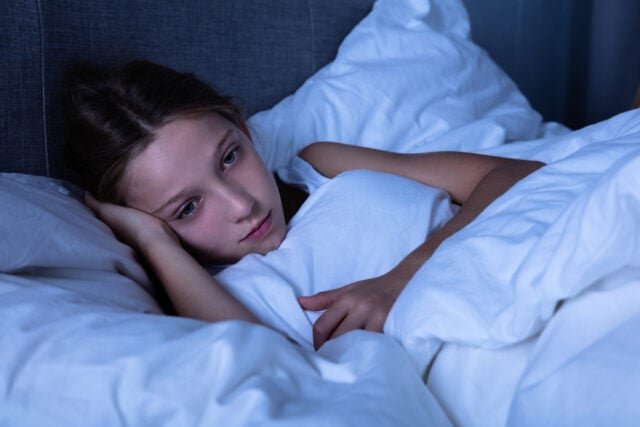 ADHD and Sleep IssuesWhy they’re common and what we can do to help
 How to Help Kids Who Have Trouble SleepingThere are several ways to say goodbye to bad nights
 Choosing a Sleep Training Method That Works for Your FamilyA survey of strategies from ‘cry it out’ to ‘no cry’
 ADHD and Sleep Disorders: Are Kids Getting Misdiagnosed?Since both cause attention problems, they can be difficult to tease apart
 Melatonin for Kids: Is It Safe?What to know before you give your child melatonin
 Quick Guide to Sleep-Wake DisordersChildren with sleep-wake disorders don’t sleep well. Their lack of sleep affects their health and…
More Related
