


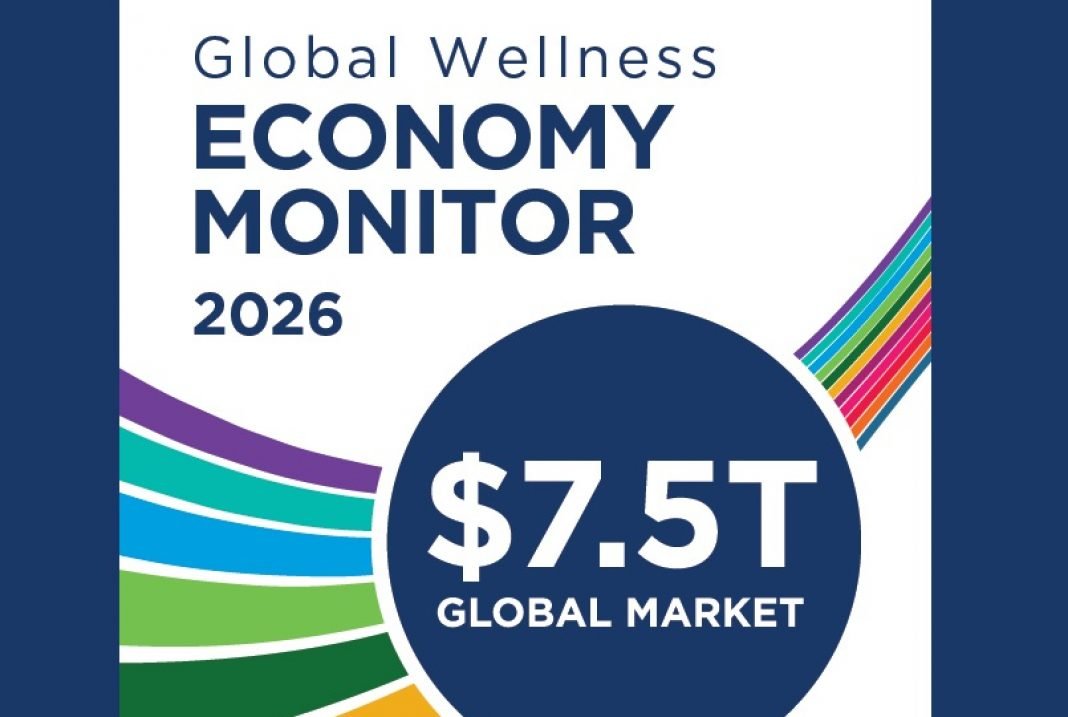
Theglobal wellness economyhas reached a record $7.5 trillion, with wellness tourism, spas and wellness real estate among the fastest-growing sectors. The market is now forecast to approach $11 trillion by 2030
According to new research from the Global Wellness Institute (GWI), the global wellness economy is accelerating as consumers increasingly prioritize health, longevity and wellbeing
The market expanded 8.9% between 2024 and 2025 and has grown 49% since 2019. GWI forecasts that it will reach $8.2 trillion by the end of 2026 before approaching $10.9 trillion by 2030
For the travel industry, the figures point to an increasingly lucrative opportunity. Wellness tourism, spas and thermal and mineral springs are experiencing a strong comeback following their slower recovery from the pandemic
Wellness tourism expanded 11.4% in 2025, making it the third-fastest-growing wellness sector. Spas recorded 12.8% growth, while thermal and mineral springs increased 10.4%
All regions worldwide reached new records for wellness tourism revenues and trips last year
Africa strong emergence as a consumers’ market
North America remains the dominant market, with theUS accounting for 36% of global wellness tourism spending. However, the strongest recent growth is coming from other regions
The Middle East and North Africa recorded a 21.5% increasein wellness tourism between 2024 and 2025, followed by Sub-Saharan Africa at 18.1% and Asia at 15.6%
Per capita spending on wellnessis vastly higher in North America ($6,419) and Europe ($2,149) compared to other regions (e.g., $635 in Latin America-Caribbean, $527 in Asia-Pacific and $440 in Middle East-North Africa)
All these figures underline the growing potential for destinations seeking to diversify their tourism offering beyond traditional leisure and sightseeing
Wellness real estate is another major growth driver. The sector expanded 23.2% in 2025 and is now 3.5 times larger than in 2019. It has moved from a niche concept into mainstream property development, encompassing hotels, residential projects and other real estate categories
Mental wellness is also expanding rapidly, nearly doubling in size since 2019. It grew 11% last year, with meditation, mindfulness and sleep-related services contributing to the trend
Looking ahead, GWI expects wellness real estate to remain the fastest-growing sector through 2030, with annual growth of 15.3%. Mental wellness is forecast to expand 12.6% annually, while thermal and mineral springs are projected to grow 9.8%
Wellness tourism is expected to record annual growth of 7.1%, with spas advancing 8%
Katherine Johnston, GWI senior research fellow, said the expansion reflects structural changes rather than a temporary consumer trend
Ageing populations, overstretched healthcare systems, chronic diseases, stress and growing mental health challenges are increasing demand for preventive health, longevity and healthier living environments
The wellness economy now represents 6.36% of global GDP, compared with 4.3% in 2013. GWI expects that share to reach 7.21% by 2030
Three sectors currently exceed $1 trillion in value. By 2030, seven are expected to cross that threshold, including wellness tourism
The findings are contained in GWI’s 2026 Global Wellness Economy Monitor, a 160-page report examining 11 sectors, regional developments and future market projections. Download the report by clickinghere
