


The Hand That Wears the Wearable
Wearable data is tranforming how we think about health and happiness.
By Nirja J. Trivedi and Joy A. Xu
A pair of fingers jog through a park, one finger bearing a thin gold band. A hand wearing a silver ring lies on a doctor’s examining table (a sonogram — also of a hand — in the background) while a white-sleeved doctor’s hand, wearing another silver band, looks on. These bands are Oura Rings, and the video is an advertisement titled “Wear Your Best Life” playing behind Oura CEO Tom Hale ’90 at the student-run health tech conference at Harvard. Hale’s company has been on a meteoric rise the last couple of years, and he was invited to the conference as a keynote speaker to present on the intersection of consumer hardware, artificial intelligence, and longitudinal data in health. The room is packed with Harvard undergraduates, biotech CEOs, venture capitalists, and researchers alike.
Oura Rings — which resemble everyday jewelry and sit unassuming on the fingers of at least six million worldwide — track objective biometrics such as sleep, activity, heart rate, and menstrual cycles and calculate nebulous values such as “resilience,” “readiness,” and “stress.” It connects to an app on users’ phones that cheerily announces, “Fresh mind, fresh ideas,” or cautions, “It’s going to be okay,” depending on the user’s biometrics for the day.
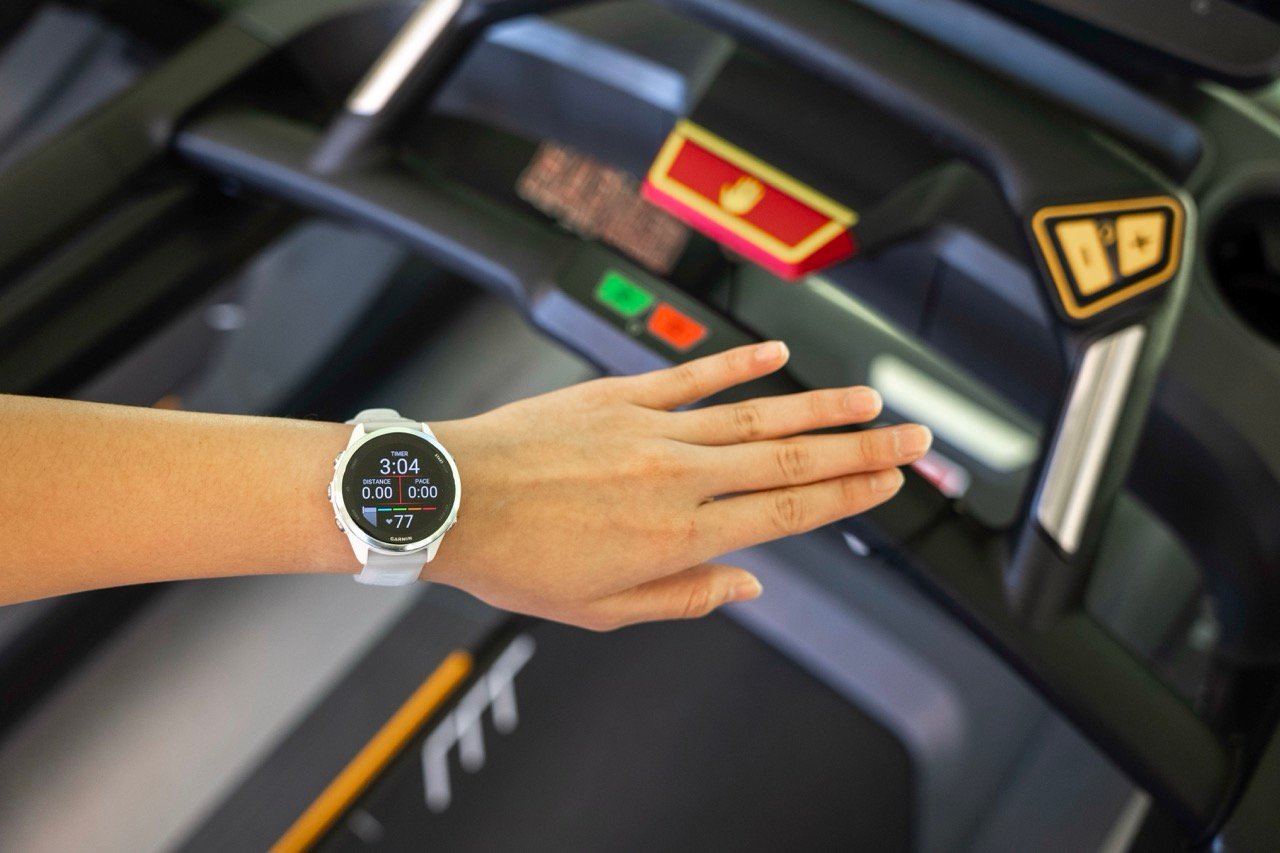
Along with products like the WHOOP band, Apple Watch, and Garmin smartwatch, the Oura Ring is one of many options on the health wearables market today. The premise of the power of these technologies lies in the idea that data is agency
“No one hands you a manual for the body that you’re born into, and so you kind of learn it as you go,” Hale tells us after he comes offstage. “A wearable is one of the ways that you learn about that, and it’s one of the ways that you improve the effectiveness of how you operate the container in which you live.”
The rapid growth of these wearables in the market has been heavily influenced by Harvard graduates. The same year that Oura launched its first ring, for example, Whoop CEO William L.F. “Will” Ahmed ’12 launched the first Whoop band after developing it at Harvard’s Innovation Lab.Lila Sciences and Strava similarly began at Harvard
Simultaneously, health wearables are steadily spreading among undergraduates today
Chae-Hee Park ’28 first started wearing wearables when she got her first Fitbit in fourth grade. She just got her first Garmin this year. Over the past decade, her wearables have made her more intentional with her movement and elevated the importance of “being in the know” — which she says dovetails with a broader interest in her personal data
“In general, I’m just a nosy gal,” she says. “The first thing I did when I came on campus is read my admissions file. I’m constantly asking Chat if my heart rate variability is normal or if it’s good.”
For others, wearables can help optimize more specific health goals. For Kathryn N. “Katie” Robinson ’27, her Garmin helps her track running mileage. She says wearables are useful “if you have a goal in mind and you want to reach that.”
After seeing communities of women raving online about how they were able to learn about their personal menstrual cycles thanks to the Oura Ring, Solomae T. Getahun ’27 decided to give the Oura Ring a try two years ago and has enjoyed using it ever since. “Schools don’t even teach women about their health and how our bodies work,” she says. “It’s been a lot of self exploration and finding it out myself through research and through things like the Oura Ring.”
For Hale, women’s health offers an “underserved market that you overserve” — a focus that he says has been “transformative” for the business’s success
Wearable data has also made it possible to transform how we think about personal happiness, says Micah Kaats, a fifth-year Ph.D. student in public policy at the Harvard Kennedy School. Kaats uses Garmin data paired with thrice daily surveys to study the relationship between everyday habits and happiness. Unlike infrequent survey data on happiness, collected by organizations such as the World Happiness Report, which he says can only give researchers “relatively broad measures of life as a whole,” data collected from wearables is “more high-frequency” and offers researchers the opportunity to “learn about subjective feelings from objective biomarkers.”
Kaats has found, among other insights, that daily physical activity and sleep are strongly correlated with increased happiness and reduced levels of stress, but he hopes to move beyond broad trends and tap into the strength of how personalized wearables are to each user. Specifically, Kaats hopes to use the data he collected to define “a personal happiness equation” for each individual
“More physical activity predicts higher levels of happiness, but how much and how frequent, what time of day, that all does vary quite a bit by individual,” Kaats says. “For you, if we look at your week, if we look at your sleep, if we look at your activity, what kind of combination of variables ends up predicting the highest levels of well-being?” He adds that there has never before been as much potential to understand an individual’s health with as much granular, continuous data as there is today.
Amit Solanki, a research associate at the School of Engineering and Applied Sciences, says that the data wasn’t enough. He bought an Oura Ring because he hoped it would encourage him to exercise — but found it unhelpful
Advertisement
“It did provide insights, but just providing insights is not enough for change,” he says. As he walks into the Malkin Athletic Center with a group of friends for badminton practice, he adds that going to the gym with friends has been much more fruitful for changing his behavior than his ring
Sergio Imparato, a lecturer in the Government department who teaches the popular course GOV 1090: “Biotech Ethics,” takes it a step further. He warns that the proliferation of personal health data might even be harmful, leading to “negative outcomes and negative attitudes about health, in the sense of being anxiety-inducing and making us take choices that actually lead to unhealthy habits or unhealthy things that effectively are counterproductive.”
“Where do you draw the line between, ‘oh, obviously this scientifically is telling me that I’m sick,’ or is my own judgment about how I feel as a human, more trustworthy?” he adds
Janet Ye ’27 has tried to draw that line. When she woke up feeling good on the day of the Cambridge Half Marathon, she decided not to open her Oura app. It was the day after Halloween, and she knew the app would tell her that she hadn’t gotten enough sleep. “That placebo is gonna mess with my head,” she says. “I didn’t even want to check.”
Oliapp — she thinks it’s inaccurate, and it “would probably stress me out to know it.”
Imparto agrees. “Technology is a tool and too often these days we treat it as a destiny, as a common destiny,” he says. “Like every tool, it ought to be used responsibly, and it has its functions.”
Ultimately, he says, it’s up to us to “figure out for ourselves what the proper function of that tool should be.”
See more on:The Scoop
