


Screen time before age 2 can delay language, disrupt sleep: Landmark study
A major UK review has linked regular screen exposure in babies and toddlers under two to several developmental and health risks. The researchers say the findings support tighter guidance as intentional screen time offers no meaningful benefit at this stage
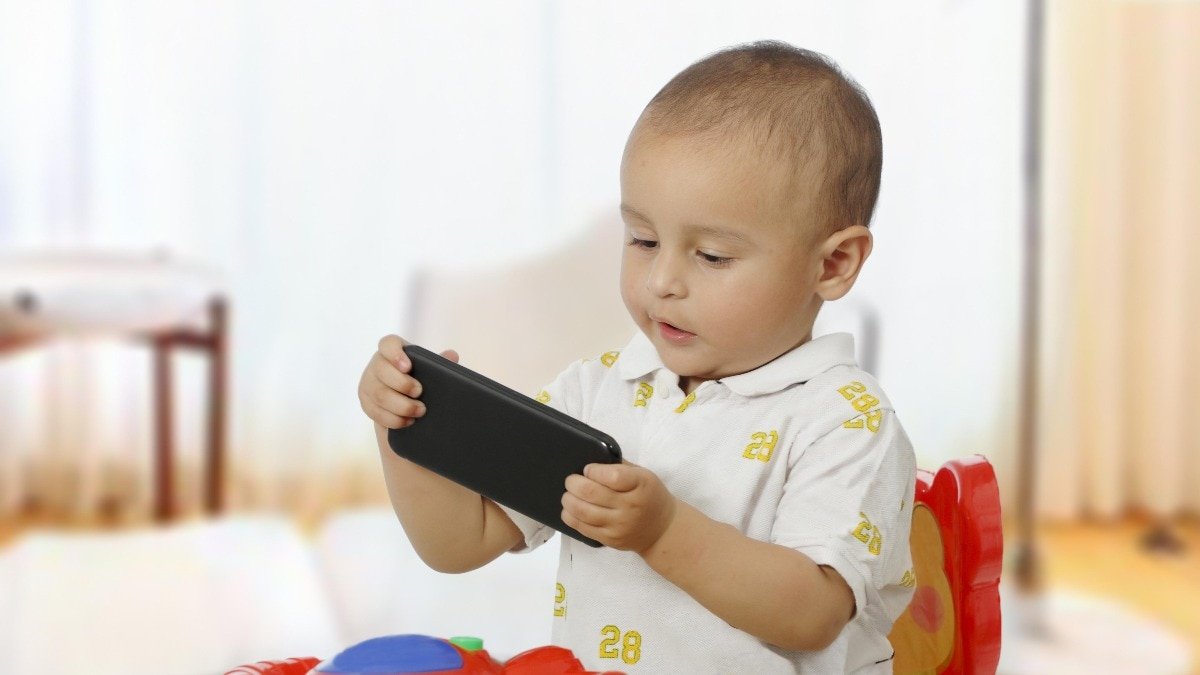
Babies may increasingly rely on digital devices for comfort instead of turning to caregivers, potentially disruption emotional development. (Photo: Getty Images)
Parents often hand a smartphone or tablet to a crying baby to calm them down. But a landmark review of global research suggests that this increasingly common habit could have lasting consequences for a child’s development
Researchers from four UK universities have found that regular screen exposure in babies and toddlers under the age of two is associated with a range of potential long-term health and developmental risks
The review concludes that children in this age group should avoid intentional screen time altogether
While it does not prove that screens directly cause developmental disorders, the researchers say there is enough evidence to warrant greater caution
The review links early screen exposure to reduced parent-child bonding, delayed language development, fewer opportunities for physical play, sleep disturbances, eye health concerns and a higher risk of childhood obesity
Researchers also warn that babies may increasingly rely on digital devices for comfort instead of turning to caregivers, potentially affecting emotional development
“Our findings suggest no under-twos should receive regular intentional screen time,” the researchers wrote, adding that while passive exposure is difficult to avoid in today’s digital world, deliberately introducing screens offers “no meaningful benefit” during this critical stage of development
Rafe Clayton, senior lecturer in media and communication at the University of Leeds and co-lead of the study, said parents are often “inadvertently teaching children and babies to develop unhealthy habits and relationships with screen devices” because they receive little guidance on their own screen use
The researchers argue that current government advice, which allows limited shared screen activities such as video calls or supported learning, should be reconsidered as it may unintentionally reassure parents that screen use is harmless
Previous studies have shown that the first 1,001 days of life are the most important period of human development and parents need better support rather than blame
The team is now urging policymakers to introduce baby screen-time risk assessments and strengthen guidance to help families protect children’s early brain development in an increasingly digital world
– Ends
Parents often hand a smartphone or tablet to a crying baby to calm them down. But a landmark review of global research suggests that this increasingly common habit could have lasting consequences for a child’s development
Researchers from four UK universities have found that regular screen exposure in babies and toddlers under the age of two is associated with a range of potential long-term health and developmental risks
The review concludes that children in this age group should avoid intentional screen time altogether
Published by the Action on Digital Device Immersive Conditions Team, the study is described as the most comprehensive review to date on screen use in infants
While it does not prove that screens directly cause developmental disorders, the researchers say there is enough evidence to warrant greater caution
The review links early screen exposure to reduced parent-child bonding, delayed language development, fewer opportunities for physical play, sleep disturbances, eye health concerns and a higher risk of childhood obesity
Researchers also warn that babies may increasingly rely on digital devices for comfort instead of turning to caregivers, potentially affecting emotional development
“Our findings suggest no under-twos should receive regular intentional screen time,” the researchers wrote, adding that while passive exposure is difficult to avoid in today’s digital world, deliberately introducing screens offers “no meaningful benefit” during this critical stage of development
Rafe Clayton, senior lecturer in media and communication at the University of Leeds and co-lead of the study, said parents are often “inadvertently teaching children and babies to develop unhealthy habits and relationships with screen devices” because they receive little guidance on their own screen use
The researchers argue that current government advice, which allows limited shared screen activities such as video calls or supported learning, should be reconsidered as it may unintentionally reassure parents that screen use is harmless
Previous studies have shown that the first 1,001 days of life are the most important period of human development and parents need better support rather than blame
The team is now urging policymakers to introduce baby screen-time risk assessments and strengthen guidance to help families protect children’s early brain development in an increasingly digital world
– Ends
