

Close Menu
HealthJustFineHealthJustFine

    Subscribe to Updates

    Get the latest creative news from FooBar about art, design and business.

    What's Hot

    Hormone estradiol shapes women’s brain responses to threat after trauma, Emory study finds

    July 3, 2026

    Menopause: Alternative to HRT for hot flushes now on NHS

    July 3, 2026

    Tired, anxious, gaining weight? It could be your hormones

    July 3, 2026
    Facebook X (Twitter) Instagram
    HealthJustFineHealthJustFine
    Facebook X (Twitter) Instagram
    • Home
    • General Health News
    • Sleep Health
    • Mental Wellness
    • Fitness & Recovery
    • Health Tech & Wearables
    • More
      • Longevity & Anti-Aging
      • Women’s Hormone Health
      • Gut Health & Microbiome
      • Metabolic Health & Blood Sugar
      • Nutrition & Anti-Inflammatory Foods
    HealthJustFineHealthJustFine
    Home»Women's Hormone Health»Hormone estradiol shapes women’s brain responses to threat after trauma, Emory study finds
    Women's Hormone Health

    Hormone estradiol shapes women’s brain responses to threat after trauma, Emory study finds

    HealthJustfine TeamBy HealthJustfine TeamJuly 3, 2026No Comments4 Mins Read
    Facebook Twitter Pinterest LinkedIn Tumblr Reddit WhatsApp Email
    Hormone estradiol shapes women’s brain responses to threat after trauma, Emory study finds
    Share
    Facebook Twitter LinkedIn Pinterest WhatsApp Email
    — Getty Images, blackCAT

    Women are more than twice as likely as men to develop stress-related conditions such as posttraumatic stress disorder (PTSD), but the biological mechanisms underlying that risk have remained poorly understood. New research from Emory University School of Medicine provides the first direct evidence in humans that the ovarian hormone estradiol plays a key role in shaping how the brain responds to perceived threats after trauma.

    The study, published Dec. 15 in the Proceedings of the National Academy of Sciences (PNAS), was supported by the National Institutes of Health and the National Science Foundation. It shows estradiol influences activity in threat-related brain regions and  traumatic stress can disrupt this regulatory effect. 

    “Our findings suggest that ovarian hormones have an important influence on the brain’s threat-detection circuitry, but traumatic stress appears to interfere with these normal regulatory processes,” says Jennifer S. Stevens, PhD, associate professor in the Department of Psychiatry and Behavioral Sciences at Emory University School of Medicine and principal investigator of the study. 

    Stevens and her colleagues studied 110 women enrolled in the Grady Trauma Project, a long-running Emory-led research initiative that examines the psychological and biological effects of trauma. Participants included women with PTSD, women with significant trauma exposure but no PTSD and women with little to no lifetime trauma

    Participants were randomly assigned to receive either a skin patch delivering estradiol, the primary ovarian estrogen, or a placebo. Patches were administered during either the luteal or follicular phases of the menstrual cycle, periods when estradiol levels are naturally low. Twenty-four hours later, participants underwent functional MRI scans while viewing images of fearful and neutral faces, allowing researchers to measure activity in brain regions involved in processing social threat cues.

    Among women with PTSD who received the placebo, naturally low estradiol levels were associated with heightened activity in the central amygdala, a brain region critical for fear expression and physiological stress responses. In contrast, among women with little to no trauma exposure, estradiol administered during the luteal phase reduced activity in the central amygdala and a nearby region called the corticomedial amygdala.

    The pattern differed among women with trauma exposure. For women who experienced significant trauma but did not meet criteria for PTSD, estradiol increased activity in both amygdala regions. Among women with PTSD, estradiol had no measurable effect on either region. These findings suggest trauma exposure may alter how the brain responds to estradiol and interfere with its normal role in regulating responses to perceived threats. 

    Using high-resolution functional MRI, the researchers identified these effects within specific subregions of the right amygdala that are densely populated with estrogen receptors and play a central role in fear-related physiology and behavior. 

    The findings build on another recent study from the same research team showing low estradiol levels after ovulation strengthen the brain’s encoding of negative memories by altering activity in the entorhinal cortex, a region that serves as a gateway to the hippocampus. Together, the studies suggest the post-ovulation period may be a particularly important window when hormonal fluctuations influence PTSD-related brain processes.

    “This work helps address a major gap by identifying biological processes that may contribute to women’s risk and highlights the need to consider how trauma and hormones interact when thinking about prevention, screening and treatment,” explains Stevens

    The PNAS study involved multiple Emory researchers, including study co-investigators from the Grady Trauma Project and the department of psychiatry and behavioral sciences: Vasiliki Michopoulos, Abigail Powers Lott and Sanne van Rooij. Additional investigators included Kim Wallen (psychology), Andrea Braden and Marisa Young (gynecology and obstetrics) and Kelly Ethun (pathology and laboratory medicine).

    Media Contact

      • jrjohn9@emory.edu
      • 404-727-5696

    Resources

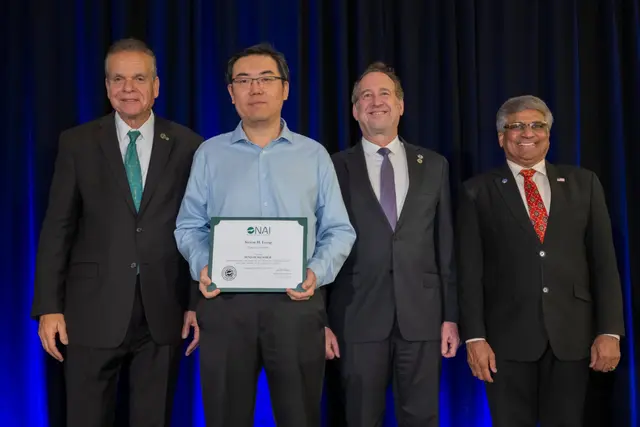
    Emory University professor Steven Liang receiving an award

    The National Academy of Inventors named Steven. H Liang, Emory School of Medicine associate professor, to its 2026 class of Senior Members. The honor is the highest professional distinction solely for inventors

    person riding bike on sidewalk beside a wall with a colorful mural

    Emory is introducing a new funding program for faculty called AMPLIFY that will further catalyze ambitious, publicly engaged scholarship in the humanities, arts and social sciences

    military serviceperson talking with a counselor

    Emory Healthcare Veterans Program is expanding Texas outreach to connect more veterans with no-cost PTSD care, highlighting its Atlanta-based two-week treatment program for veterans from Texas and across the country

    brain estradiol hormone shapes womens
    HealthJustfine Team
    • Website
    • Facebook

    Related Posts

    Menopause: Alternative to HRT for hot flushes now on NHS

    July 3, 2026

    Tired, anxious, gaining weight? It could be your hormones

    July 3, 2026

    How Menopause Became the Hottest Health Conversation of 2025

    July 2, 2026
    Leave A Reply Cancel Reply

    Don't Miss
    Women's Hormone Health

    Hormone estradiol shapes women’s brain responses to threat after trauma, Emory study finds

    By HealthJustfine TeamJuly 3, 20260

    Women are more than twice as likely as men to develop stress-related conditions such as posttraumatic stress disorder (PTSD), but the biological mechanisms underlying that risk have remained poorly understood. New research from Emory University School of Medicine provides the first direct evidence in humans that the ovarian hormone estradiol plays a key role in…

    Menopause: Alternative to HRT for hot flushes now on NHS

    July 3, 2026

    Tired, anxious, gaining weight? It could be your hormones

    July 3, 2026

    1 in 3 young adults not getting enough sleep

    July 3, 2026
    Stay In Touch
    • Facebook
    • Twitter
    • Pinterest
    • Instagram
    • YouTube
    • Vimeo
    Our Picks

    Expert shares 6 tips to recover faster and stronger after intense workout sessions- Moneycontrol.com

    June 28, 2026

    These Viral Fitness & Wellness Recovery Products Are Taking Over TikTok Ahead of Prime Day

    June 28, 2026

    Life Time Has Created a Fitness and Recovery Paradise – Muscle & Fitness

    June 28, 2026

    The Movement Twenty Four: New 24-Hour Fitness and Recovery Hub Opens Down South

    June 28, 2026

    Subscribe to Updates

    Get the latest creative news from SmartMag about art & design.

    About Us

    Welcome to HealthJustFine.com, your trusted destination for reliable health news, wellness insights, and evidence-based information that empowers you to live a healthier life.
    Our mission is to make quality health information accessible, easy to understand, and relevant for everyone. We believe that staying informed is the first step toward making better decisions about your health, nutrition, fitness, and overall well-being. That’s why we deliver timely updates on the latest medical research, healthy living trends, preventive care, and wellness innovations from around the world.

    Our Picks

    Hormone estradiol shapes women’s brain responses to threat after trauma, Emory study finds

    July 3, 2026

    Menopause: Alternative to HRT for hot flushes now on NHS

    July 3, 2026

    Tired, anxious, gaining weight? It could be your hormones

    July 3, 2026
    Latest Posts

    Expert shares 6 tips to recover faster and stronger after intense workout sessions- Moneycontrol.com

    June 28, 2026

    These Viral Fitness & Wellness Recovery Products Are Taking Over TikTok Ahead of Prime Day

    June 28, 2026

    Life Time Has Created a Fitness and Recovery Paradise – Muscle & Fitness

    June 28, 2026
    Facebook X (Twitter) Instagram Pinterest
    • About Us
    • Contact Us
    • Terms & Conditions
    • Privacy Policy
    • Disclaimer

    © 2026 healthjustfine.com. All rights reserved. Designed by DD.

    Type above and press Enter to search. Press Esc to cancel.