


ETV Bharat / lifestyle
How Late-night World Cup Matches Are Disrupting Sleep, Hormones And Health
While the tournament lasts only a few weeks, disrupted sleep, hormonal imbalance and unhealthy habits can linger much longer
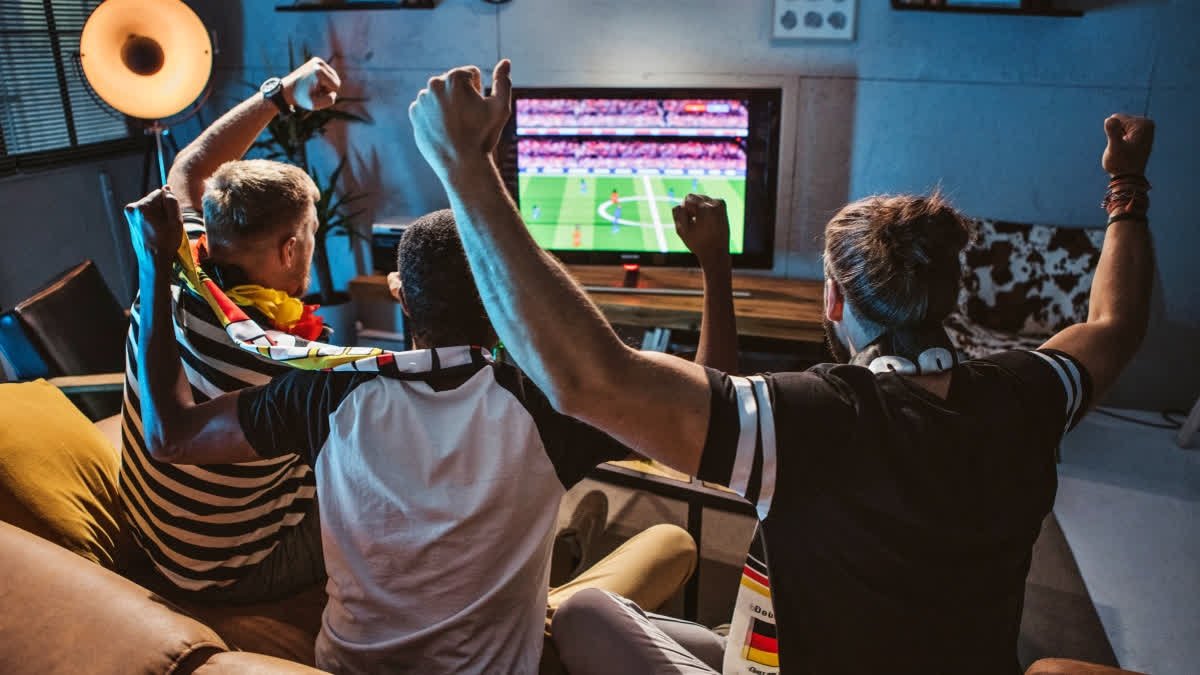
While your favourite striker is chasing the trophy, your body is fighting a different match (Getty Images)
ByETV Bharat Lifestyle Team
Published :July 4, 2026 at 2:06 PM IST
Every four years, WhatsApp groups explode at 3 am with messages like “What a goal!” and “Did you see that save?” People who normally sleep by 11 pm are suddenly debating offside decisions while eating instant noodles at two in the morning. Welcome to the FIFA World Cup. This year, however, the tournament is taking place in the United States, Canada and Mexico, which means many matches air in the middle of the night for Indian viewers. For die-hard fans in football-loving states like Kerala, West Bengal, Goa, Manipur and Mizoram, sleeping has become optional. Supporters of Brazil, Germany, Argentina and Italy are especially familiar with the ritual of sacrificing sleep for football glory.
The problem is that while your favourite striker is chasing the trophy, your body is fighting an entirely different match. It’s 2.30 am. The match has gone into extra time. Someone orders another coffee, another burger, maybe one more round of fries because nobody’s thinking about sleep just yet. That scene has become familiar across India
“The excitement is understandable. The World Cup comes only once every four years. But your body doesn’t care whether you’re watching football or binge-watching a TV series. It only knows that you should have been asleep hours ago,” says Dr. Basavaraj S. Kumbar, Consultant – Internal Medicine, Aster Whitefield Hospital
| Date | Upcoming Late-Night Matches | India Time |
| 4 July, Saturday | R32: Match 87-Group K winners vs Best Third-Placed Team | 3:30 AM |
| 5 July, Sunday | R16: Match 91-Winner Match 76 vs Winner Match 78 | 2:30 AM |
| 6 July, Monday | R16: Match 92-Winner Match 79 vs Winner Match 80 | 1:30 AM |
| 7 July, Tuesday | R16: Match 94-Winner Match 81 vs Winner Match 82 | 1:30 AM |
| 8 July, Wednesday | R16: Match 96-Winner Match 85 vs Winner Match 87 | 1:30 AM |
| 10 July, Friday | QF: Match 97-Winner Match 89 vs Winner Match 90 | 1:30 AM |
| 11 July, Saturday | QF: Match 98-Winner Match 93 vs Winner Match 94 | 12:30 AM |
| 12 July, Sunday | QF: Match 99-Winner Match 91 vs Winner Match 92 | 2:30 AM |
| 15 July, Wednesday | SF: Match 101-Winner Match 97 vs Winner Match 98 | 12:30 AM |
| 16 July, Thursday | SF: Match 102-Winner Match 99 vs Winner Match 100 | 12:30 AM |
| 19 July, Sunday | Third Place: Match 103-Loser Match 101 vs Loser Match 102 | 2:30 AM |
| 20 July, Monday | Final: Match 104-Winner Match 101 vs Winner Match 102 | 12:30 AM |
The Invisible Referee
Every person runs on a 24-hour internal clock known as the circadian rhythm. It decides when you feel sleepy, when you feel energetic and when important hormones are released. Normally, as darkness falls, the brain starts releasing melatonin, the hormone that tells your body it is time to sleep. But if you’re sitting in front of a bright television or scrolling through match reactions on your phone until 3 am, that signal gets delayed.
Eventually, you sleep because you’re exhausted, not because your body is ready for restful sleep. The next morning, your alarm rings while your brain is still begging for another few hours. It’s not just sleep that suffers. Your hormones do too. According to Dr. Kumbar, disturbed sleep affects several hormones that regulate stress, hunger and metabolism. One of them is cortisol, often called the stress hormone. Normally, cortisol peaks in the morning to help you wake up and gradually falls through the day. Repeated late nights can throw this rhythm off balance. So, you may feel strangely alert at midnight but struggle to stay awake during your morning meeting.
Then come the hunger hormones. Research shows that lack of sleep reduces leptin, the hormone that tells your brain you’re full, while increasing ghrelin, which makes you feel hungry. That’s why midnight football rarely ends with cucumber slices. It usually ends with pizza, burgers, chips, soft drinks and desserts

Midnight football usually ends with pizza, burgers, chips and soft drinks (Getty Images)
Also read:Sleep Like A High Performer: Luke Coutinho’s Tactical Guide To Sleep Optimization
Midnight Dinners Confuse Your Metabolism
Late-night football doesn’t just change what you eat but also when you eat. Dinner gets pushed to midnight. Sometimes it’s replaced by fried snacks and sugary drinks. “Our digestive system isn’t designed for heavy meals when the body is preparing to rest. Eating large meals late at night can worsen blood sugar control the following morning, increase indigestion and, over time, contribute to weight gain, fatty liver, diabetes and high triglyceride levels,” says Dr. Kumbar. Food follows your biological clock too. When you repeatedly ignore that clock, your metabolism becomes confused.
Most football fans still have work, college or school the next morning. That means many are surviving on barely five or six hours of broken sleep. By lunchtime, the effects begin to show. You reread emails because your concentration slips. You forget simple things. You become more impatient. Decision-making becomes slower. Another cup of coffee suddenly feels essential instead of optional
Screen Time Adds to the Damage
Late-night matches also mean several uninterrupted hours in front of screens. That brings its own problems. Doctors warn about eye strain, dry eyes, headaches, neck pain, shoulder stiffness and lower back pain after sitting in one position for long periods. A sedentary night after an already sedentary workday also reduces physical activity, increasing long-term risks for obesity, diabetes and heart disease. Meanwhile, blue light from televisions, laptops and smartphones continues suppressing melatonin, making it even harder to fall asleep after the final whistle.
Mood Changes
Sleep deprivation doesn’t only affect the body. It changes the mind. People become more anxious, irritable and emotionally reactive. Some withdraw from social interactions simply because they’re too exhausted to engage. When your brain is tired, patience disappears faster than a defender facing Kylian Mbappé. Good sleep helps people regulate emotions, communicate better and build healthier relationships. Poor sleep does the opposite.
According to Professor Ashleigh Filtness, an expert in transport human factors and sleep science, even a few hours of lost sleep can slow reaction times and reduce concentration. That makes driving significantly more dangerous. Short daily commutes can become risky when combined with fatigue. Many fans underestimate this because they don’t “feel” sleepy. Unfortunately, the brain often disagrees.
Tips To Save Yourself
Dr. Kumbar believes fans can still enjoy the World Cup without completely sacrificing their well-being. A few practical habits can make a huge difference:
- Aim for 7-9 hours of sleep every 24 hours, even if you need to catch up with a daytime nap after an important match.
- Eat a proper dinner before kick-off
- Snacks on fruits, roasted makhana, popcorn, nuts or sandwiches.
- Drink enough water instead of surviving only on coffee, tea or energy drinks.
- During half-time, stand up, stretch and walk around instead of remaining glued to the couch.
- Once the match ends, avoid another hour of highlights and endless social media scrolling. Go straight to bed.
- Return to your normal meal and sleep schedule whenever possible between match days.
The FIFA World Cup is one of the greatest sporting spectacles on Earth. It creates unforgettable nights, impossible goals and lifelong memories. Those moments are worth celebrating but your body shouldn’t have to play extra time every single night
References:
https://link.springer.com/article/10.1186/1880-6805-32-9
Also read:
- The Importance Of Starting Your Morning Right
- Visual Guide To Everyday Self-Care Guide For Busy People
- Meditation: The Art of Stillness In A Noisy World
- Your Weekday Sleep Habits May Be Sneakily Sabotaging Your Sugar Levels: Study
