


Close Menu
HealthJustFineHealthJustFine

    Subscribe to Updates

    Get the latest creative news from FooBar about art, design and business.

    What's Hot

    “Sleeponomics Sleeponomics” is a combination of “Sleep” and “Economics Eco-nomics,” meaning consumpt.. – MK

    July 5, 2026

    Melatonin may ease chronic pain while improving sleep, study finds

    July 5, 2026

    Why 12 hours of rest is non-negotiable for Ananya Panday: ‘Could go to the gym at 5 am…’

    July 5, 2026
    Facebook X (Twitter) Instagram
    HealthJustFineHealthJustFine
    Facebook X (Twitter) Instagram
    • Home
    • General Health News
    • Sleep Health
    • Mental Wellness
    • Fitness & Recovery
    • Health Tech & Wearables
    • More
      • Longevity & Anti-Aging
      • Women’s Hormone Health
      • Gut Health & Microbiome
      • Metabolic Health & Blood Sugar
      • Nutrition & Anti-Inflammatory Foods
    HealthJustFineHealthJustFine
    Home»Gut Health & Microbiome»Study links gut microbiome to Alzheimer’s biomarkers
    Gut Health & Microbiome

    Study links gut microbiome to Alzheimer’s biomarkers

    HealthJustfine TeamBy HealthJustfine TeamJuly 5, 2026No Comments3 Mins Read
    Facebook Twitter Pinterest LinkedIn Tumblr Reddit WhatsApp Email
    Study links gut microbiome to Alzheimer’s biomarkers
    Share
    Facebook Twitter LinkedIn Pinterest WhatsApp Email

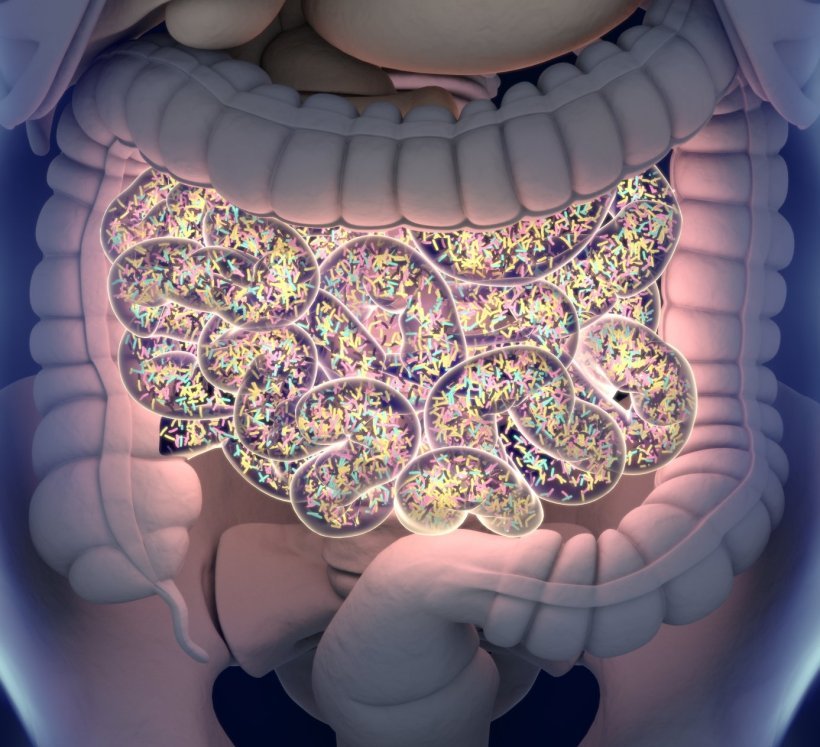
    3D illustration of the human gut, filled with tiny colorful objects...

    © Anatomy Insider – stock.adobe.com

    Researchers at National Yang Ming Chiao Tung University (NYCU) have found that older adults with higher levels of Akkermansia muciniphila – a next-generation probiotic increasingly recognized for its health benefits – show significantly lower levels of amyloid-beta accumulation in the brain, a key biological hallmark of Alzheimer’s disease. 

    Published in Alzheimer’s Research & Therapy, the study analyzed stool samples, Alzheimer’s disease biomarkers, and brain imaging data from 439 older adults. While the findings do not prove that gut bacteria prevent Alzheimer’s disease, they provide compelling new evidence that the gut microbiome may play a far greater role in brain aging than previously understood. 

    Although we observed a clear association between the gut microbiome and Alzheimer’s biomarkers, the underlying biological mechanisms remain to be clarified

    For decades, Alzheimer’s research has focused primarily on what happens inside the brain, particularly the buildup of amyloid-beta plaques. New drugs designed to remove these deposits have offered renewed hope for patients, but scientists are increasingly asking whether the disease may begin much earlier – and outside the brain itself. 

    One of the strongest candidates is the gut microbiome. Through immune, metabolic, and neural pathways, the trillions of microorganisms inhabiting the digestive tract communicate continuously with the brain, forming what researchers describe as the gut-brain axis. Among these microbes, Akkermansia muciniphila has attracted growing attention. Previous animal studies have linked the bacterium to improved metabolism, reduced inflammation, and enhanced memory, suggesting it may help protect cognitive function. 

    Rather than grouping bacteria into broad taxonomic categories, the NYCU team used high-resolution genomic sequencing to identify microbes at the species level, allowing researchers to distinguish subtle but potentially important biological differences. The analysis identified 59 bacterial species associated with either mild cognitive impairment or Alzheimer’s disease. Interestingly, even closely related bacteria appeared to play different roles: some species were more abundant in cognitively healthy participants, while others were enriched in individuals with cognitive decline. 

    Prof. Yi-Fang Chang sitting at a computer desk with a scientific manuscript paper in her handsProfessor Yi-Fang Chuang led the study, which combines microbiome analysis, brain imaging, and Alzheimer’s disease biomarkers to advance dementia research.

    Image

    The researchers also found that these microbes operate as interconnected communities rather than in isolation. Interactions among bacterial species may alter key metabolic functions – including pathways involved in branched-chain amino acid biosynthesis – that are associated with amyloid accumulation and neurodegeneration. These findings suggest that it is the overall balance of the gut ecosystem, rather than any single bacterial species, that may influence brain health. 

    Professor Yi-Fang Chuang of NYCU’s Institute of Public Health, who led the study, said the research represents an important step toward understanding how gut microbes may contribute to Alzheimer’s disease. “Although we observed a clear association between the gut microbiome and Alzheimer’s biomarkers, the underlying biological mechanisms remain to be clarified,” Chuang said. “Future longitudinal studies will be needed to determine whether microbial changes contribute to disease progression or are themselves a consequence of neurodegeneration.” 

    She added that gut microbial composition varies considerably across populations because of differences in genetics, diet, and lifestyle. Consequently, findings from Western populations cannot always be generalized to Asian communities. 

    Source: National Yang Ming Chiao Tung University 

    05.07.2026

    More on the subject:

    Alzheimers biomarkers Links microbiome study
    HealthJustfine Team
    • Website
    • Facebook

    Related Posts

    Snug with your bugs? How microbes control your sleep

    July 5, 2026

    Gut bacteria have evolved rapidly to digest starches in ultra-processed foods

    July 5, 2026

    Healthtech startup aims to turn biology and microbiome data into daily action

    July 5, 2026
    Leave A Reply Cancel Reply

    Don't Miss
    Sleep Health

    “Sleeponomics Sleeponomics” is a combination of “Sleep” and “Economics Eco-nomics,” meaning consumpt.. – MK

    By HealthJustfine TeamJuly 5, 20260

    The number of insomnia patients increased annually from 1,109,989 in 2020 to 1,356,715 in 2024, according to the Health Insurance Review and Assessment Service. The size of Korea’s sleep market has grown from about 480 billion won in 2011 to 3 trillion won in 2024, and has recently reached 5 trillion won. In addition to…

    Melatonin may ease chronic pain while improving sleep, study finds

    July 5, 2026

    Why 12 hours of rest is non-negotiable for Ananya Panday: ‘Could go to the gym at 5 am…’

    July 5, 2026

    Q&A: Why Dry January and GLP-1 Therapy May Be a Turning Point for Metabolic Health | Pharmacy Times

    July 5, 2026
    Stay In Touch
    • Facebook
    • Twitter
    • Pinterest
    • Instagram
    • YouTube
    • Vimeo
    Our Picks

    Expert shares 6 tips to recover faster and stronger after intense workout sessions- Moneycontrol.com

    June 28, 2026

    These Viral Fitness & Wellness Recovery Products Are Taking Over TikTok Ahead of Prime Day

    June 28, 2026

    Life Time Has Created a Fitness and Recovery Paradise – Muscle & Fitness

    June 28, 2026

    The Movement Twenty Four: New 24-Hour Fitness and Recovery Hub Opens Down South

    June 28, 2026

    Subscribe to Updates

    Get the latest creative news from SmartMag about art & design.

    About Us

    Welcome to HealthJustFine.com, your trusted destination for reliable health news, wellness insights, and evidence-based information that empowers you to live a healthier life.
    Our mission is to make quality health information accessible, easy to understand, and relevant for everyone. We believe that staying informed is the first step toward making better decisions about your health, nutrition, fitness, and overall well-being. That’s why we deliver timely updates on the latest medical research, healthy living trends, preventive care, and wellness innovations from around the world.

    Our Picks

    “Sleeponomics Sleeponomics” is a combination of “Sleep” and “Economics Eco-nomics,” meaning consumpt.. – MK

    July 5, 2026

    Melatonin may ease chronic pain while improving sleep, study finds

    July 5, 2026

    Why 12 hours of rest is non-negotiable for Ananya Panday: ‘Could go to the gym at 5 am…’

    July 5, 2026
    Latest Posts

    Expert shares 6 tips to recover faster and stronger after intense workout sessions- Moneycontrol.com

    June 28, 2026

    These Viral Fitness & Wellness Recovery Products Are Taking Over TikTok Ahead of Prime Day

    June 28, 2026

    Life Time Has Created a Fitness and Recovery Paradise – Muscle & Fitness

    June 28, 2026
    Facebook X (Twitter) Instagram Pinterest
    • About Us
    • Contact Us
    • Terms & Conditions
    • Privacy Policy
    • Disclaimer

    © 2026 healthjustfine.com. All rights reserved. Designed by DD.

    Type above and press Enter to search. Press Esc to cancel.