


Please subscribe to keep reading
Log in
Cancel anytime
Cancel anytime
Cancel anytime
Cancel anytime
Cancel anytime
UpdatedJul 10, 2026
For years, women have endured hot flashes, mood swings and fatigue in the transition leading up to menopause. Previous studies had warned that treating these symptoms with hormone replacement therapy, or HRT, came with risks that outweighed its benefits, including cancer and cardiovascular disease
That changed in November 2025, when the Food and Drug Administration removed warnings from hormone therapy products, citing outdated interpretations of a Women’s Health Initiative study that overstated the risks of HRT in older women
Since then, prescriptions for estrogen patches and progesterone cream have skyrocketed. The American Society of Health-System Pharmacists, a professional organization for pharmacists, included 20 brands or dosages of estrogen patches in its most recent list of drugs in shortage. Women now see digital ads that openly promote HRT as a cure for sleepless nights and brain fog
The dramatic shift has left many women asking their health care providers: Is hormone replacement therapy safe for me, and does it really make a difference?
“Even before the black box warning, there was this kind of churning of reinterpreting the same information,” said Sarah Bay, a women’s health nurse practitioner and certified nurse midwife at St. Joseph Hospital OBGYN & Midwifery, a Menopause Society Certified Practitioner and owner of the practice Hearts & Hands Women’s Care, in Peterborough. “The same study in 2002 that said no hormone replacement therapy (is safe) is the exact study that we’re using now to say everyone should be on hormone replacement therapy.”
The growing buzz around the promise of HRT has created opportunities, drug shortages and even more confusion. Because HRT is an umbrella term used to describe different combinations and dosages of estrogen, progesterone or testosterone, in-depth discussions with a health care provider should guide decision-making, according to local women’s health care providers
“For each patient, you have to individualize it,” said Dr. Jacqueline Baselice, an obstetrician and gynecologist with Core Physicians Obstetrics and Gynecology in Exeter. “Each patient is so different in what they’re looking for and where they are (in their transition).”
Riding the hormone rollercoaster
Menopause is officially defined as going one year with no menstrual period. Perimenopause, the transition period leading up to menopause, can last anywhere from four to 10 years a board-certified obstetrician and gynecologist at Concord Hospital Obstetrics and Gynecology
During perimenopause, a woman’s hormone levels can fluctuate unpredictably as communication between the brain and ovaries becomes less consistent. These hormonal fluctuations can produce the uncomfortable symptoms women associate with menopause, including irregular or unusually heavy periods, anxiety, difficulty concentrating, night sweats, joint pain, heart palpitations or changes in libido
Each woman’s symptoms vary because their bodies have receptors for estrogen, progesterone and testosterone located throughout the body, Bay said
“They are in our brain, our skin, our bones, our musculoskeletal system, our cardiac system and our gastroenterology system,” she said. “That’s why we have weight gain and mood changes and all of the things. It’s not just about our ovaries … it’s affecting everything.”
Some women experience very few symptoms, while others experience several at the same time. As a result, some women may seek treatment for conditions separately. They may see a cardiologist for heart palpitations or get treated for anxiety by a psychologist without tracing the symptoms back to perimenopause
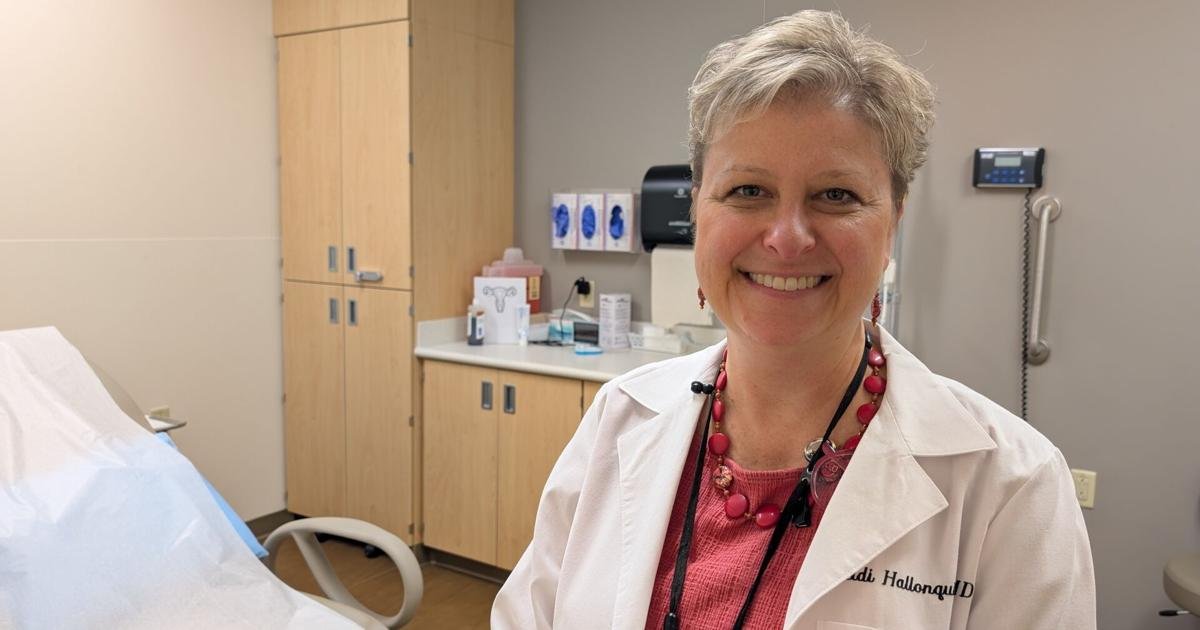
Now, women’s health care providers are having longer conversations with women about each of these symptoms a women’s health nurse practitioner at Littleton Regional Healthcare’s North Country Women’s Health and a Menopause Society Certified Practitioner
“I think for anyone who is basically mid-40s who’s having a lot of symptoms, it should be on a provider’s mind that maybe some of the symptoms are related to estrogen decline,” she said
However, Hallonquist said women should not assume every new symptom they’re having is related to hormones or menopause. Baselice said she too often sees patients who’ve begun HRT elsewhere, sometimes without a thorough discussion of whether their symptoms were caused by perimenopause
“There’s so many different things that it could be, and it’s not always going to be hormones,” she said
How does HRT work?
Hormone replacement therapy includes different combinations, dosages and delivery systems of estrogen, progesterone or testosterone. Understanding what type of HRT will work best is determined by symptoms and conversations with a health care provider, Bay said
“When I see patients, I give them a checklist of all of these symptoms. And when I look at the checklist, I can already tell if she’s deficient or out of ratio,” she said. “So, for example, if you’re quick to cry, or teary all the time, that means your estrogen is elevated or you have estrogen dominance compared to your progesterone (levels). You might need a little bit of progesterone and everything settles out.”
Blood tests can be helpful, but they can’t accurately gauge a woman’s hormone levels leading up to menopause, nor are they used to prescribe an exact formulation of any particular hormone, Bay said
“It would be nice to test estrogen and progesterone with more accuracy, but in the context of menopause care, we do not have good labs for it,” she said. “If I see a woman who hasn’t had a period in six months, I know it’s going to be low, so I don’t need to do labs.”
There are standard protocols health care providers follow when it comes to prescribing HRT. Women who get a prescription for systemic estrogen, in a patch or pill form, and still have a uterus are also prescribed progesterone or another form of uterine protection. Testosterone, which has not been approved by the FDA to treat women for menopause symptoms, can sometimes be prescribed off-label to help women suffering from low libido. Baselice does not prescribe testosterone as a first-line treatment for every menopausal woman experiencing fatigue, weight gain or brain fog.
“I usually will start people on estrogen and progesterone first,” she said. “Online, you’ll find that people want to use it to help with their athletic endurance or fatigue or (to boost) overall energy levels.”
While some women’s symptoms ease right away after beginning HRT, it’s not unusual for them to require adjustments to their medications if they aren’t getting relief or if treatments introduce new symptoms. HRT also isn’t a substitute for taking care of overall health, Kelly said
“We talk a lot about treating menopausal hormone therapy with estrogen, progesterone or testosterone. However, another big piece of that is your lifestyle stuff,” she said. “I spend an equal amount of time with patients explaining menopausal hormone therapy as a disruptive puzzle that you have to put back together again. You really need to optimize hormones and prioritize protein and weightlifting, and resistance training and cardio. One without the other doesn’t work quite as well.”
HRT may not be the answer for everyone
The National Menopause Society cites several benefits to HRT, including reduced symptoms of night sweats and hot flashes, relief from overactive bladder, increased bone protection, a lower risk of cardiovascular disease and a lower risk of developing Type 2 diabetes
Systemic HRT, in which hormones pass through the bloodstream, does pose risks, including blood clots, stroke, breast cancer and uterine cancer. These risks vary depending on the age of the woman and whether she has a uterus; her health history; the type of hormone therapy she receives; and the dosage and delivery method of her treatment. Milder effects of HRT can include breast tenderness, nausea and irregular bleeding or spotting.
“It’s a pick your risk, but I think there’s a lot of misinformation out there. Women think, ‘My grandmother had breast cancer, so I can’t do hormones,’” Kelly said. “Yet breast cancer has gone up over the years and menopausal hormone therapy has been minimal.”
If a patient has a history of breast cancer that was estrogen- or progesterone-receptor positive, Baselice discourages them from using systemic HRT. She also said she struggles to prescribe HRT to women who had a history of deep vein thrombosis while taking a birth control pill. But treatment should be individualized to the patient, she said
“To me, it’s really about individualized care, because some of these patients are suffering with these symptoms. You can try all of the non-hormonal treatments that exist and they don’t work as well,” she said
Systemic HRT differs from localized HRT, which does not enter the bloodstream. Vaginal HRT delivers a very low dose of estrogen locally to tissues to treat local dryness, painful intercourse and recurrent urinary tract infections
“I think it’s completely under-prescribed and incredibly important for people for health and basic skin care,” Kelly said. “I have patients who say, ‘Well, I’m not sexually active. I don’t need that.’ But they have urgency, frequency, overactive bladder and vaginal dryness. It’s hugely beneficial and also decreases UTIs by 50% in postmenopausal women.”
Despite the FDA’s black box warning removal, some women still find providers who are wary about prescribing HRT, which perpetuates confusion around the safety of the treatments, Hallonquist said
How to advocate
for HRT
Women are their own best advocates and should trust their instincts, but it can be difficult for them to feel heard and understood. In some cases, patients may want to make a separate appointment in addition to their annual well-woman exam to ensure they have enough time to discuss HRT treatment options
“Forty-five minutes is really barely enough time to get through all the things because I spend a lot of time talking to patients and hearing what they have to say and what their particular symptoms are,” Kelly said. “You may be sleeping great, but there might be other things associated with perimenopausal or menopausal symptoms that are really bothersome.”
As women reach midlife, they may also choose to seek health care providers with a specialty in menopause care and HRT, Bay said
Many providers choose to become Menopause Society Certified Practitioners, or MSCP, through The Menopause Society, a nonprofit organization that provides providers with the tools and resources needed to improve the health of women during the menopause transition and beyond. Women can search for Menopause Society Certified Practitioners in their area on the organization’s website, menopause .org.
“This might be a time where you’re going to see someone else in your doctor’s office, not the person who did your Pap smears for the last 20 years and caught your babies,” she said
View on unionleader.com
