

Close Menu
HealthJustFineHealthJustFine

    Subscribe to Updates

    Get the latest creative news from FooBar about art, design and business.

    What's Hot

    Sarah Daccarett Is Rewriting Women’s Hormone Care With Inner Balance – Grit Daily News

    July 21, 2026

    Secondhand smoke keeps children from getting truly restful sleep

    July 21, 2026

    Sleep Scientists Favor Year-Round Standard Time

    July 21, 2026
    Facebook X (Twitter) Instagram
    HealthJustFineHealthJustFine
    Facebook X (Twitter) Instagram
    • Home
    • General Health News
    • Sleep Health
    • Mental Wellness
    • Fitness & Recovery
    • Health Tech & Wearables
    • More
      • Longevity & Anti-Aging
      • Women’s Hormone Health
      • Gut Health & Microbiome
      • Metabolic Health & Blood Sugar
      • Nutrition & Anti-Inflammatory Foods
    HealthJustFineHealthJustFine
    Home»Gut Health & Microbiome»NIH Awards $2.8M Grant for PFAS Gut Microbiome Study
    Gut Health & Microbiome

    NIH Awards $2.8M Grant for PFAS Gut Microbiome Study

    HealthJustfine TeamBy HealthJustfine TeamJuly 20, 2026No Comments4 Mins Read
    Facebook Twitter Pinterest LinkedIn Tumblr Reddit WhatsApp Email
    NIH Awards $2.8M Grant for PFAS Gut Microbiome Study
    Share
    Facebook Twitter LinkedIn Pinterest WhatsApp Email

    Mirage News
    Mirage NewsScience20 Jul 2026 11:43 pm AESTDate Time
    Pennsylvania State University

    and polyfluoroalkyl substances, or PFAS, are seemingly everywhere. Not only is this group of more than 12,000 synthetic chemicals and compounds widely used in industrial and consumer products, the so-called “forever chemicals” are found in soil, water and air and has been detected in the blood of people and animals, according to the Agency for Toxic Substances and Disease Registry

    Studies have linked PFAS to adverse health outcomes, with most studies focused on the impact of PFAS on the body’s tissues, according to Yuan Tian, associate research professor at Penn State. However, less is known about how PFAS affects bacteria and microbes that make up the gut microbiome – which plays a key role in maintaining health of the host organism – or the relationship between the gut microbiome and its host.

    Now, with a four-year, $2.8 million grant from the National Institute of Environmental Health Sciences of the National Institutes of Health, a team of researchers, led by Tian, will investigate how PFAS interacts with microbes in the gut and influences the relationship between the host and microbiome. By examining the molecular mechanisms underlying these interactions, the team said they hope to understand how environmental chemicals affect the dynamic community of microorganisms in the gut and how those changes might influence health and contribute to disease.

    “This work will help reveal how PFAS disrupt the gut microbiome and how these changes affect host metabolism and metabolic health, providing a new framework for evaluating the safety of environmental chemicals,” Tian said

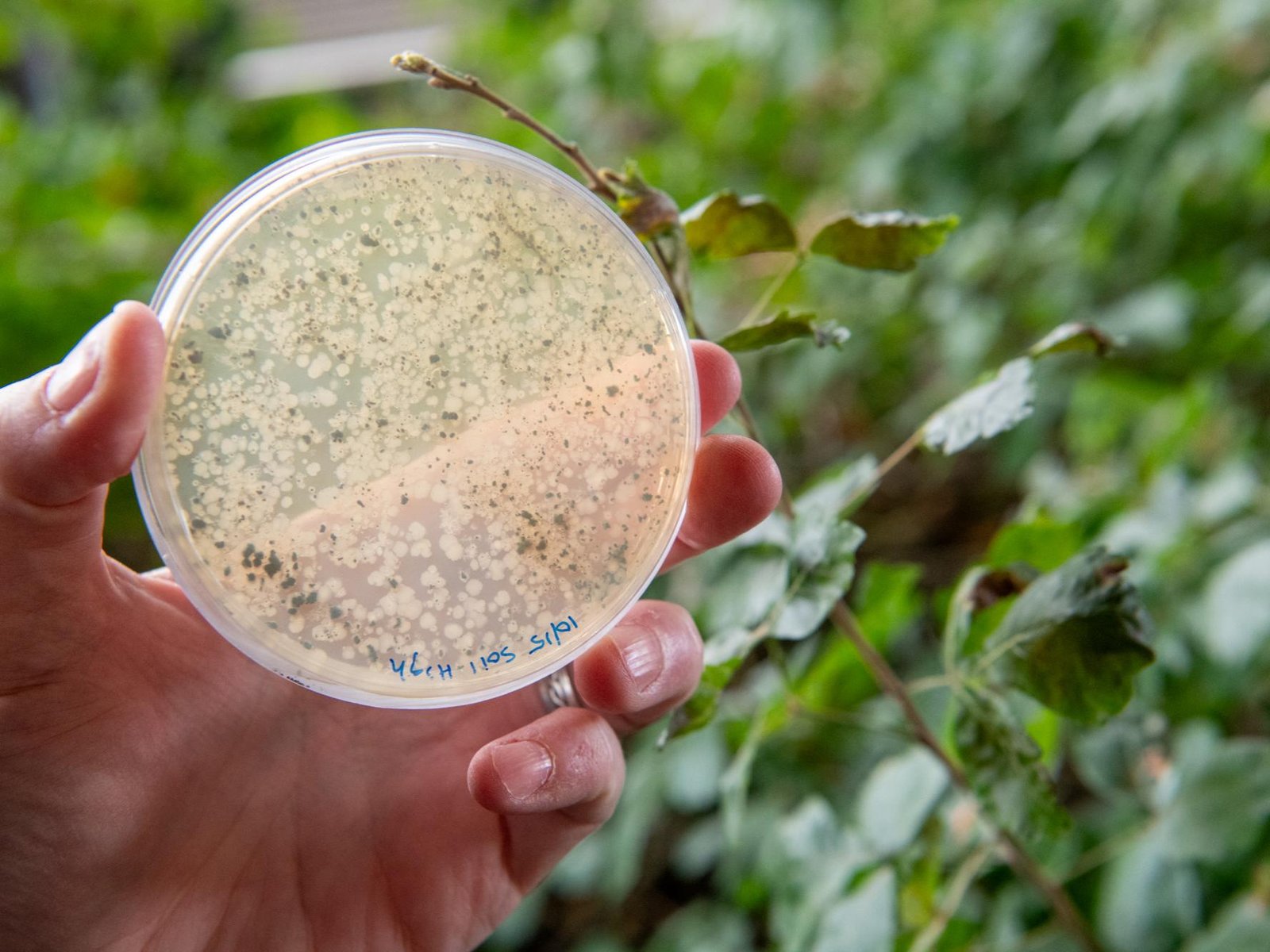
    The grant builds on a previous seed grant from the Institute of Energy and the Environment at Penn State. In that project, Tian and colleagues screened approximately 200 strains of bacteria to see how they responded to PFAS exposure using a combination of high-throughput growth screening and in vitro studies

    The preliminary findings showed that gut bacteria have varied responses to PFAS. Some microbes are highly sensitive – meaning that they are more strongly affected by PFAS and can fail to grow – while others are resistant to PFAS. This difference in sensitivity can change the balance of the gut microbiome by suppressing susceptible bacteria and allowing more resistant species to become more abundant.

    “The results suggest that gut microbes may play an important role in determining how PFAS behave in the body and how individuals respond to environmental chemicals,” Tian said. “These findings could lead to more personalized approaches for assessing environmental health risks and pave the way for microbiome-based strategies to reduce the harmful effects of PFAS.”

    With support from the new NIH grant, the researchers will expand the types of gut microbes studied and evaluate the host-microbiome interactions in mouse models. Tian said that the research team also intends to focus on PFOS and PFOA, the dominant forms of PFAS in the environment, as well as lesser-studied PFAS and PFAS precursors

    Through this work, Tian said that the researchers aim to identify specific bacteria that can be targeted to reduce PFAS impact and protect human health. In addition, they hope to identify indicators that could potentially serve as biomarkers to judge environmental toxicity levels within gut bacteria

    Penn State collaborators on the grant include Jeffrey Peters, distinguished professor of molecular toxicology and carcinogenesis; Jordan Bisanz, assistant professor of biochemistry and molecular biology and Dorothy Foehr and J. Lloyd Huck Early Career Chair in Host-Microbiome Interactions; Andrew Patterson, John T. and Paige S. Smith Professor of Molecular Toxicology and of Biochemistry and Molecular Biology; and Vonn Walter, associate professor of public health sciences and of molecular and precision medicine. Peters and Bisanz are co-principal investigators on the grant.

    At Penn State, researchers are solving real problems that impact the health, safety and quality of life of people across the commonwealth, the nation and around the world

    For decades, federal support for research has fueled innovation that makes our country safer, our industries more competitive and our economy stronger. Recent federal funding cuts threaten this progress

    Learn more about the implications of federal funding cuts to our future at Research or Regress

    /Public Release. This material from the originating organization/author(s) might be of the point-in-time nature, and edited for clarity, style and length. Mirage.News does not take institutional positions or sides, and all views, positions, and conclusions expressed herein are solely those of the author(s).View in full here.

    Awards Grant microbiome PFAS study
    HealthJustfine Team
    • Website
    • Facebook

    Related Posts

    Why gut health has become one of the biggest wellness trends

    July 20, 2026

    Frontiers | Gut microbiome–epigenetic crosstalk in obesity and type 2 diabetes: mechanisms, evidence, and translational opportunities

    July 20, 2026

    Sweeteners shown to slow growth of important gut bacteria in lab tests

    July 17, 2026
    Leave A Reply Cancel Reply

    Don't Miss
    Women's Hormone Health

    Sarah Daccarett Is Rewriting Women’s Hormone Care With Inner Balance – Grit Daily News

    By HealthJustfine TeamJuly 21, 20260

    For too long, women have walked into doctors’ offices describing brain fog, exhaustion, mood swings, low libido, and sleep that refuses to come, only to hear the same tired explanations: it’s stress, it’s your age, it’s in your head. It is a pattern documented in peer-reviewed research on gender bias in symptom reporting, where women…

    Secondhand smoke keeps children from getting truly restful sleep

    July 21, 2026

    Sleep Scientists Favor Year-Round Standard Time

    July 21, 2026

    The link between sleep, brain injury and seizures

    July 21, 2026
    Stay In Touch
    • Facebook
    • Twitter
    • Pinterest
    • Instagram
    • YouTube
    • Vimeo
    Our Picks

    Expert shares 6 tips to recover faster and stronger after intense workout sessions- Moneycontrol.com

    June 28, 2026

    These Viral Fitness & Wellness Recovery Products Are Taking Over TikTok Ahead of Prime Day

    June 28, 2026

    Life Time Has Created a Fitness and Recovery Paradise – Muscle & Fitness

    June 28, 2026

    The Movement Twenty Four: New 24-Hour Fitness and Recovery Hub Opens Down South

    June 28, 2026

    Subscribe to Updates

    Get the latest creative news from SmartMag about art & design.

    About Us

    Welcome to HealthJustFine.com, your trusted destination for reliable health news, wellness insights, and evidence-based information that empowers you to live a healthier life.
    Our mission is to make quality health information accessible, easy to understand, and relevant for everyone. We believe that staying informed is the first step toward making better decisions about your health, nutrition, fitness, and overall well-being. That’s why we deliver timely updates on the latest medical research, healthy living trends, preventive care, and wellness innovations from around the world.

    Our Picks

    Sarah Daccarett Is Rewriting Women’s Hormone Care With Inner Balance – Grit Daily News

    July 21, 2026

    Secondhand smoke keeps children from getting truly restful sleep

    July 21, 2026

    Sleep Scientists Favor Year-Round Standard Time

    July 21, 2026
    Latest Posts

    Expert shares 6 tips to recover faster and stronger after intense workout sessions- Moneycontrol.com

    June 28, 2026

    These Viral Fitness & Wellness Recovery Products Are Taking Over TikTok Ahead of Prime Day

    June 28, 2026

    Life Time Has Created a Fitness and Recovery Paradise – Muscle & Fitness

    June 28, 2026
    Facebook X (Twitter) Instagram Pinterest
    • About Us
    • Contact Us
    • Terms & Conditions
    • Privacy Policy
    • Disclaimer

    © 2026 healthjustfine.com. All rights reserved. Designed by DD.

    Type above and press Enter to search. Press Esc to cancel.