

Clinical, medical and diagnostics
Novel AI model reveals hidden sleep patterns tied to long-term health risks
12 Aug, 2026
by Alan Booth
4 min read
Share on FacebookShare on LinkedInShare on Twitter / XShare via Email
Subscribe for newsletter updates
Artificial intelligence can extract far more prognostic information from routine sleep studies than doctors currently use, identifying patient groups with markedly different risks of heart disease, cognitive decline and death
An artificial intelligence (AI) model has been shown to use information collected during routine sleep studies to identify patients’ long-term health risks. Developed by a multidisciplinary research team, the model uncovered hidden sleep patterns linked to risks including heart disease, cognitive decline and death
The findings have also suggested that routine medical tests may contain substantially more physiological information than current clinical practice is able to extract from them. In this case, the AI identified meaningful signals in standard overnight sleep study data that conventional summary measures alone do not capture
The research has revealed clinically meaningful patient subtypes with sharply different long-term health risks. Patients in the highest-risk group had twice the mortality risk in the five years that followed, compared with those in the lowest-risk group, a distinction which the standard clinical measure used to assess sleep apnoea severity – the apnoea-hypopnoea index (AHI) – did not capture
Each year, an estimated one to four million polysomnograms, or in-lab sleep studies, are performed in the US, typically to evaluate sleep apnoea. While these studies collect rich data on each patient’s brain, lungs, muscles and heart, clinicians have historically focused on only a small subset of that information to grade sleep apnoea severity
“For decades we have distilled an overnight sleep study into a handful of summary measures,” said Professor Reena Mehra, professor of medicine at the University of Washington, Seattle, USA, and the study’s senior clinical author
“AI gives us the opportunity to move beyond those summaries and learn from the full richness of sleep physiology,” she said
The model was developed by a collaborative team of sleep physicians, AI researchers, data scientists and neuroscientists brought together through the Discovery Accelerator, a ten-year joint research partnership between Cleveland Clinic, Cleveland, Ohio, USA and International Business Machines, which aims to advance the pace of discovery in life sciences through AI and quantum computing
The researchers used data from the Cleveland Clinic Sleep Signals, Testing, and Reports Linked to Patient Traits – STARLIT – registry to group patients into five risk categories. The model was shown to predict outcomes well for both men and women, whereas the AHI has historically only performed better in men. The findings were independently confirmed in a nationwide patient cohort
“Modern AI lets us recover much more of the information contained in a night’s worth of sleep physiology, revealing clinically meaningful patient groups with very different long-term health risks,” said Professor Jeffrey Rogers, the corresponding author and adjunct professor of neurosurgery at Yale School of Medicine, New Haven, Connecticut, USA
“These findings demonstrate that routine medical tests can contain substantially more physiological information than current clinical practice extracts from them,” he added
The model could also help researchers to better understand how sleep affects health outcomes. The approach looks beyond traditional measures and uses AI to detect latent physiological features previously invisible to the human eye. And to extract prognostic biomarkers that could help stratify risk for cardiovascular disease, neurological decline and survival, which could potentially open the door to both earlier and more personalised levels of care.
“Sleep is foundational to health and wellness,” said Dr Matheus Lima Diniz Araujo, a sleep researcher at Cleveland Clinic
“Nearly 70 million Americans live with chronic disorders of sleep and wakefulness, affecting daily functioning and overall health. This discovery offers a more personalised approach to sleep medicine, by potentially expanding the value of routine sleep testing and reinforcing the key role sleep plays in chronic disease,” he said
“The next step is to validate these findings in diverse populations and expand collaborations among medical and technical experts, industry partners and professional society stakeholders,” said Professor Carl Saab, professor of biomedical engineering and chief scientist of Cleveland Clinic’s Discovery Accelerator
“Sleep is increasingly recognised as a critical component of health, yet the physiological information captured during sleep remains largely underused,” said Dr Erhan Bilal, lead author of the study
“Because everyone sleeps, sleep studies offer a remarkable window into human health that extends far beyond the diagnosis of sleep disorders. Our work shows how foundation models can begin to unlock the richness of these complex signals. And this is only the beginning,” he concluded
For further reading please visit: 10.1038/s41467-026-75326-9
Latest News
Clinical, medical and diagnostics
Novel AI model reveals hidden sleep patterns ti
4 min read
Artificial intelligence can extract far more prognostic information from routine sleep studies th
Clinical, medical and diagnostics
Senolytic drugs reverse premature blood stem ce
4 min read
Researchers have found that blood stem cells in children and young adults with sickle cell diseas

Reagents
Future-proofing diagnostics: Leveraging lyophil
2 min read
As international supply chains face unprecedented pressure from geopolitical instability and risi
Analysers
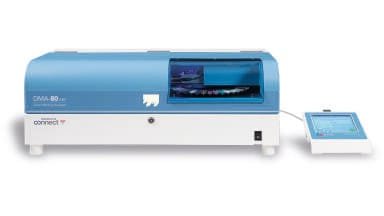
Direct mercury analysis: Weighing the cost and
1 min read
For laboratories routinely measuring mercury, technique selection can have a direct bearing on sa
Reagents
Simplifying high-sensitivity immunofluorescence
1 min read
Amsbio’s immunoMUSE® kits use enzyme-free DNA nanotechnology to simplify multiplex immunofluores
Analysers
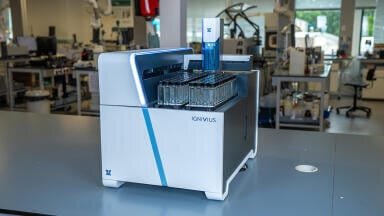
New generation TOC & TNb analyser
2 min read
Developed by TOC expertsGNIVIUS combines decades of combustion-based TOC expertise from Skalar an
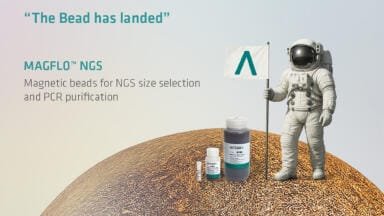
Expanded access to magnetic beads for NGS workf
1 min read
Integra Biosciences has expanded the availability of its MAGFLO™ NGS magnetic beads across Euro

DNA / RNA
MultiNA II brings simpler, smarter electrophore
2 min read
Shimadzu’s MultiNA II MCE-301 streamlines nucleic acid analysis with automated workflow, real-t
Analysers
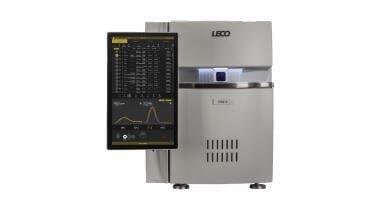
New platform accelerates carbon and moisture de
1 min read
LECO is proud to announce the launch of the new 812 Series Carbon and Moisture Phase – Determinat
Related Stories
Clinical, medical and diagnostics

Senolytic drugs reverse premature blo…
Optical imaging

Physics-based machine learning sharpe…
Research news

Immune molecule found to help cancer…
Research news
AI tool designs novel bacteriophages…
Lab Asia 33.4 – August 2026
Explore ourDigital Edition
Discover the latest news and research
View online
View all digital editions
