


content body
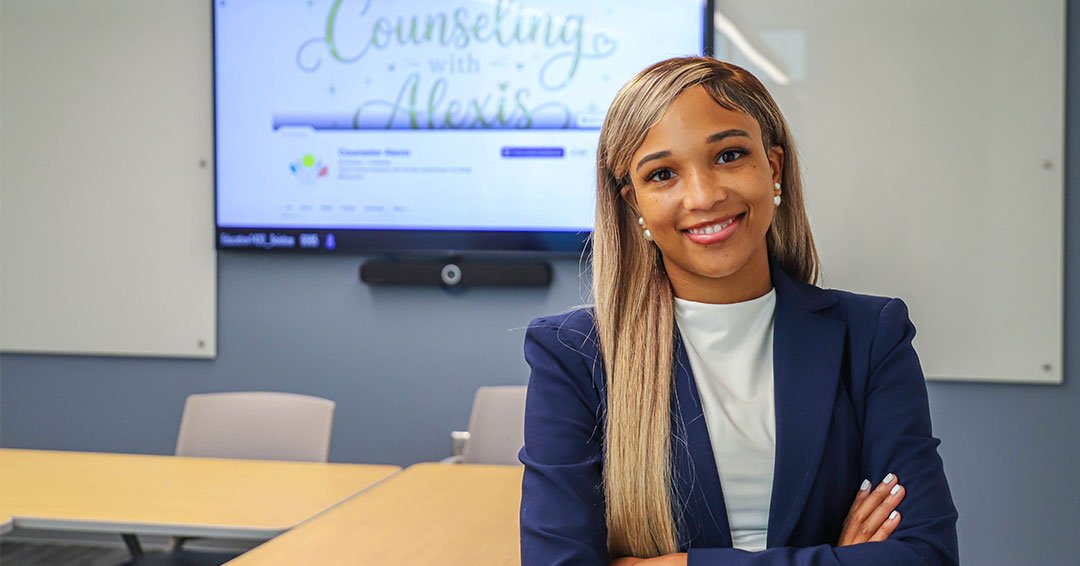
For many people, conversations about mental health can feel intimidating, uncomfortable or difficult to begin. Alexis Dowdell, a doctoral student in Auburn University’s College of Education, hopes to change that through a new educational video series designed to make mental health information more accessible, relatable and easier to understand for individuals and families across the community
Developed as part of her doctoral internship requirements, Dowdell’s Mental Health Educational Video Series is a six-part psychoeducational project aimed at increasing mental health awareness, reducing stigma and equipping viewers with practical information to support their overall well-being. The series is expected to launch online soon
A practicing therapist who supports children, adolescents and young adults, Dowdell created the series to meet people where they already spend much of their time — on social media
“The Mental Health Educational Video Series is a psychoeducational series designed to increase mental health awareness and improve access to basic mental health information within my local community,” Dowdell said. “The series was developed as a leadership and advocacy project during my doctoral internship. I chose to create this series because most of my community is on social media, so social media provides a great platform to reach community members of all ages who may have limited access to mental health resources, feel uncomfortable seeking professional support, or just don’t understand how mental health can affect us.”
For Dowdell, the project is also deeply personal and rooted in a desire to reshape how mental health is discussed in her community
“I created this series to play my part in changing the tone around mental health in my community, especially around reaching out for support when you truly need it,” Dowdell said. “So many people are suffering in silence and feeling isolated because of life challenges or stressors that are causing them to feel stressed or anxious or just really down. The purpose of this series is to say to them that I see you, you’re not alone, it’s human to struggle, and it’s OK to reach out for support when you need it. I want to normalize conversations around mental health because I think that is the pathway to true impact and support for my community.
“Hopefully, by reaching the community and starting these conversations, it’ll touch the lives of children and teens who can learn early that reaching out for support is OK and that your mental health matters.”
The project reflects Auburn’s commitment to preparing future counselor educators and mental health professionals to serve their communities through leadership, advocacy and innovation. It also builds on a year of achievement for Dowdell, who was recently recognized as the 2026 Auburn University College of Education Outstanding Graduate Student during the annual Spring 2026 Conference
Rather than focusing solely on mental illness, the series encourages viewers to think more broadly about mental health and how it influences nearly every aspect of daily life. Through short, easy-to-understand videos, Dowdell explores topics ranging from foundational definitions of mental health to self-care strategies, the impact of stigma and what individuals can expect when seeking therapy
Dowdell designed the series to reach a broad audience while also supporting those who may feel alone in their struggles
“The series is for the general population, so anyone who is interested in learning about mental health or mental wellness tips in general,” Dowdell said. “It is also for anyone who feels isolated because they’re going through something tough or struggling emotionally. Mental health stigma can make people feel weak or weird for having a human experience and reaching out for support. The whole purpose of this series is to normalize conversations around mental health in the community, to encourage people to reach out for support when needed, and to demystify the therapy process so it doesn’t seem so foreign.”
The opening video introduces viewers to the purpose of the series and establishes a welcoming environment for learning. Subsequent videos examine what mental health is and why it matters, the relationship between emotional and physical health, and the role self-care plays in maintaining wellness
Additional episodes challenge common misconceptions surrounding mental health and encourage more compassionate conversations about emotional struggles. One video focuses specifically on mental health stigma, addressing how stereotypes and negative assumptions can discourage individuals from acknowledging distress or seeking support. Another aims to demystify the counseling process by explaining what typically occurs during an initial therapy session and helping reduce fears associated with beginning therapy.
Throughout the series, Dowdell emphasizes that caring for mental health is just as important as caring for physical health. By drawing practical connections to everyday experiences, she hopes viewers will recognize emotional well-being as an essential part of overall health rather than a topic reserved only for times of crisis
The series also seeks to provide community members with tangible tools they can use in their own lives, including self-care practices, healthy coping strategies and guidance on when to seek professional support
Ultimately, Dowdell hopes the videos will inspire more open conversations about mental health while helping viewers develop a deeper understanding of its role in their daily lives — and even create opportunities for parents to begin those conversations with younger generations
“In my dream of dreams, parents would watch these videos, get something out of it for themselves, and show it to their children or teens to offer that early education on mental wellness to them,” Dowdell said. “Of course, that’s my school counselor background talking. Ultimately, I just want my community to stop suffering in silence, understand the importance of mental wellness, and not feel ashamed or different for reaching out for support.”
“The overall goal of this series is to increase community knowledge about mental health, reduce stigma, provide practical mental wellness tips, and encourage community members to seek appropriate support when needed,” Dowdell said
As the series prepares for its online debut, it stands as an example of how Auburn College of Education students are transforming classroom learning and internship experiences into meaningful outreach efforts that serve communities and improve lives
