


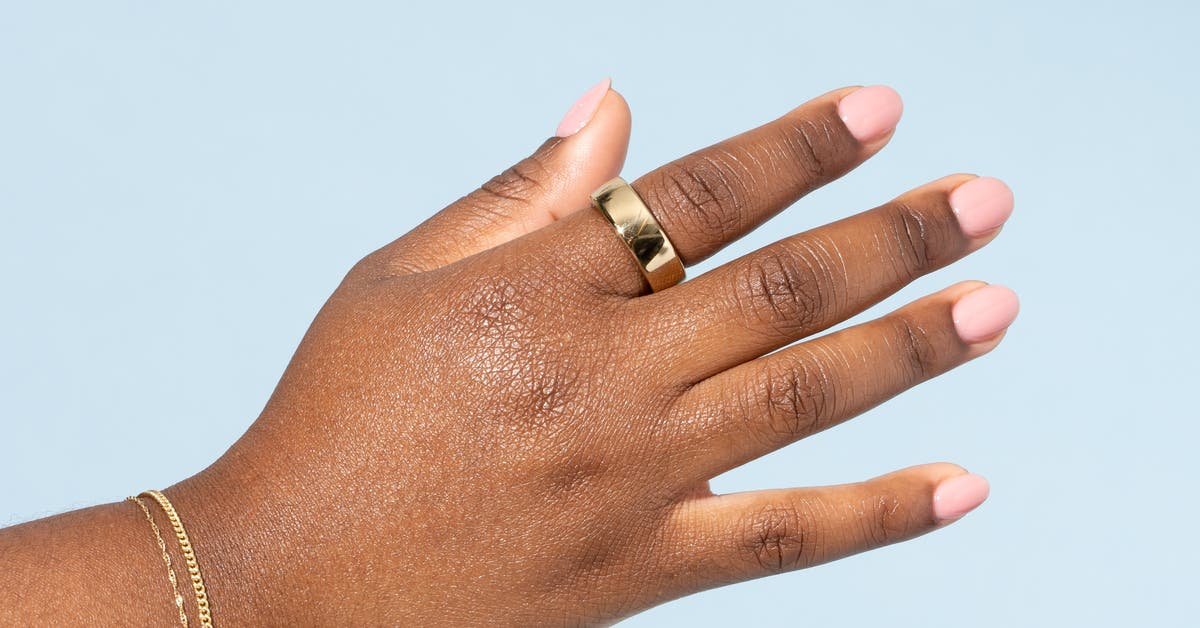
The Oura Ring, a sleek fitness and sleep tracker that passes as an unassuming piece of jewelry, is seemingly everywhere. It’s on the fingers of New York Knicks, politicians (when Senator Cory Booker of New Jersey wore it during his recent 25-hour floor speech, it logged several workouts), and a prince. You might also see it on your health-oriented relatives or friends. Maybe you know someone who is using the ring to get pregnant or to track if they’re getting sick (more on that below).
The Oura Ring has also been a top pick in our guide to the best sleep trackers since I first tested the Gen 3 version in 2023. The newest model, the Oura Ring 4, offers more features, and after six months of testing it, I’ve found that it’s a worthy upgrade
The ring’s core features and functions remain the same: It still collects a slew of physiological data, such as heart-rate variability (HRV), blood-oxygen rate, body temperature, and sleep duration. It still uses that data to give you three daily scores, tallying your Sleep score, Activity score, and Readiness score (how recovered and prepared you are for the day based on the previous day’s activity and sleep) in its accompanying app.
But the experience is more streamlined and functional, thanks to a handful of new features:
- Extended battery life: A single charge lasts up to eight days instead of seven.
- Inclusive ring sizing: The Oura Ring 4 is available in sizes 4 to 15, a wider range than that of the Gen 3.
- Smart sensing: Oura’s new “smart sensing” algorithm makes sure the ring’s sensors are optimized and working to find the best signal through your finger’s unique physiology. It pulls data from the sensor with the best window into your health, rather than burning several LEDs at once.
- Reproductive health: The upgraded app offers cycle insights and a fertility-window feature (also accessible to Gen 3 owners).
However, the new ring costs $50 more than the previous generation (depending on the style and finish), and Oura’s app still requires a $6-per-month subscription ($70 for the year if you pay up front) for you to access most of its data and reports; new members get the first month of their subscription for free. And though it’s better at activity tracking than the Gen 3, its ability to differentiate rest from sleep isn’t perfect.
The Oura Ring 4 is great for new users who want a clear, holistic view of their day-to-day physiology, heart health, and personalized sleep cycles. Its sleeker and more comfortable ring design and more robust and accurate data tracking also make it a worthwhile upgrade from the Gen 3
Why you should trust us
As a writer on Wirecutter’s sleep team, I test mattresses and gear related to getting a better night’s sleep, including wearable sleep trackers, mattress toppers, and body pillows
For this guide:
- I interviewed Seema Khosla, MD, medical director at the North Dakota Center for Sleep, about the general accuracy and usefulness of sleep trackers.
- I interviewed Oura representatives, including product manager Caroline Kryder; Rebecca Robbins, PhD, a member of Oura’s Medical Advisory Board and instructor of social and behavioral sciences at Harvard School of Public Health; and Jason Russell, the VP of consumer software product at Oura.
- I wore a fourth-generation Oura Ring for six months, tracking my sleep and health data almost continuously with that model after testing the Gen 3 for almost a year.
- Like all Wirecutter journalists, I review and test products with complete editorial independence. I’m never made aware of any business implications of my editorial recommendations. Read more about our editorial standards.
- I chose the experts I consulted for this article for their knowledge and independence. For transparency and accuracy, we have disclosed any affiliations that experts have with companies mentioned in this article.
What is the Oura Ring?
Before the Oura Ring, most health- and fitness-tracking wearables were bulky wristwatches, Fitbit and Apple Watch models chief among them. The titanium, wedding-band-like Oura Ring was the first of its kind: sleek, discreet, but with all the health tracking of its competitors
The Oura Ring 4, the latest-generation ring, works similarly to its predecessor, the Gen 3. The device shines light beams (infrared, red, and green LED) through your skin to measure your respiratory rate, heart rate, HRV, blood-oxygen levels, and body temperature. The Oura app then synthesizes that data into three scores, between 0 and 100, that greet you at the top of the homepage: Sleep (how well you slept), Activity (which you can edit to include heart rate and stress), and Readiness (how prepared your body is to take on the day).
With the latest version, Oura has significantly increased the number of sensor pathways in the ring: Whereas the Gen 3 had eight, the Oura Ring 4 has 18
Those additional sensor pathways improve the app’s core insights and help inform new metrics such as Stress Resilience, Symptom Radar, nighttime movement, fertility tracking, and menstrual tracking. An accelerometer still logs your activity and movement but is now able to track your inactivity as well
The way the Oura Ring 4 calculates your Sleep score has not changed from the previous version. It does so by analyzing your total sleep time (including naps), your sleep efficiency (time asleep versus time awake), and your time spent in REM sleep and deep sleep (the most restorative type of sleep). It also considers your sleep latency (how long you take to fall asleep) and how often you toss and turn during the night.
In addition, the Oura app determines your chronotype (effectively, whether you’re a morning person or a night owl) and body clock (your optimal sleep schedule) after you’ve used the device for 90 days
It calculates the Activity score by measuring how much you moved around during the previous day, and the score increases or decreases based on how much you continue to move. The score includes how well you’ve heeded the app’s reminders to move (which it issues if it deems that you’ve been sitting for too long), how frequently you engage in activity of medium to high intensity, and how often you meet your fitness goals.
Your Activity score rises the more consistent you are with your exercise, or if you’re able to meet your personalized baseline activity goal for each day, which is based on active calorie burn (the kilocalories you burn during daily movement and exercise). The app determines your baseline activity goal from specs such as your age, your height, and your daily Readiness score. For example, my baseline activity goal is 400 calories (my step goal is 10,000). But you can edit your baseline and step goals in the app’s Activity tab.
Your Readiness score combines elements of your Sleep and Activity scores to calculate your readiness for the day. In addition to sleep and activity data, this score considers your HRV (comparing your current week’s trend against your three-month average) and skin temperature (fluctuations in temperature could indicate illness, for example, or that menstruation will begin soon). The Readiness score also relies on data from your inactivity and recovery index (how long your heart rate takes to stabilize during the night), a new metric on the Oura Ring 4.
Scoring 85 or higher out of 100 on each metric is considered optimal; if you happen to score less, the Oura app gives you guidance on what to prioritize (more rest, intentional movement, or even taking time to daydream) without any judgy finger-wagging. You can share and compare your scores with friends
What we like about the Oura Ring 4
Oura has improved its tracker’s sensing accuracy. The most notable upgrade of the fourth-generation ring is its “smart sensing” algorithm. The sensors are now recessed and asymmetrically positioned, in contrast to the three bumps in the Gen 3. The smart sensing algorithm chooses which sensors to pull data from at any given moment, improving the accuracy of its findings. It essentially finds the path of least resistance — through your unique finger size, blood vessels, or skin tone — to deliver constant data throughout the day.
The app’s data is easier to read and digest. Oura’s app, like many fitness apps, throws a lot of data at you in the form of color-coded charts and graphs. But unlike the past iteration of its software, the updated Oura app, accessible to both Gen 3 and 4 wearers, includes explainers for anything you may not understand
The app also has Trends and Reports tabs that help to synthesize all of your collected data: The Trends tab’s graphs show you how your Sleep, Activity, Readiness, and Stress scores have averaged over a week. The Reports tab gives you that same data in monthly, quarterly, and yearly intervals
The Oura app no longer requires you to tap each score to see its details. Instead you can see your daily scores, your health metrics, and your health trends in three separate tabs: Today, Vitals, and My Health. This arrangement made it much easier for me to interpret my data at a glance
It’s lighter, sleeker, and more comfortable. The Oura Ring looks and feels like a piece of jewelry, akin to a wide wedding band. The fourth-generation version comes only in the “smooth” style, whereas the Gen 3 came in both “smooth” and “heritage,” a flat design with squared-off edges. But it’s available in multiple finishes — silver, black, matte black, stealth, gold, and rose gold — so it can fit seamlessly with your personal style. I have tested the gold and rose gold finishes and found them understated yet chic.
Thanks to the lighter, smoother design, the new ring feels more comfortable while I’m doing everyday things (such as shaking hands) and is less disruptive while I’m sleeping. I used to take off my Oura Ring Gen 3, for example, when I was cooking or doing my hair, because the thickness of the ring made gripping something like a knife or a hairbrush difficult
The Oura Ring is water-resistant, too, and it can withstand temperatures from 14 °F to 129 °F. However, I prefer to take it off while washing my hands, showering, or swimming
Oura has also expanded the size range, which now extends from 4 to 15 (in contrast to the Gen 3’s range of sizes 6 to 13)
The battery life has been improved. During our previous testing, the Oura Ring Gen 3 needed recharging every five to seven days, but the Oura Ring 4’s hardware, partly thanks to the automatic adjustment of the LED brightness, can last up to eight days before needing to recharge. (Note: The Oura Ring’s blood-oxygen monitoring can cause the battery to drain significantly faster, but you can turn that function off.)
Some Gen 3 wearers have raised concerns on Reddit about the battery’s dying faster over time, to the point where it needs recharging every 24 hours. I contacted Oura about this issue, and representatives said that the company will replace your Gen 3 ring if you have battery issues, even if it is outside of Oura’s one-year warranty. We did not encounter this issue with the Oura Ring 4
Its HRV tracking and Symptom Radar feature are impressively accurate. The Oura Ring was one of the first smart rings to measure HRV, or the regularity (or irregularity) of the time between pulses. High HRV is generally good; it suggests you’re relaxed and well. Low HRV (when the time between heartbeats is consistent, without much variability) may be associated with physical or emotional stress
When I tested the Gen 3, the ring was able to detect my very low HRV while I grieved a death in the family. With the Oura Ring 4, the HRV sensors allowed the app’s Stress Resilience feature to accurately measure my stress levels during exhausting travel days and high-intensity exercise classes
Oura’s Symptom Radar is calculated from biometrics such as body temperature, respiratory rate, resting heart rate, and HRV. It notifies you of potential strain at three severity levels: no signs, minor signs (small indicators that something may be straining your body), and major signs (stronger indicators)
Anecdotally, the Symptom Radar feature alerted me that my “biometrics showed major signs of something straining” my body long before I knew anything was wrong. Lo and behold, hours later I couldn’t stop sneezing and had to nurse a cold soon after
(Note that Oura says that the Symptom Radar feature may not work with preexisting conditions that already cause elevated biometrics. For instance, Oura’s algorithm may accurately detect real change in the body that it would identify with illness when the symptoms may actually be reflecting an underlying condition, such as pregnancy.)
Its recommendations are personalized, without being pushy. The Oura app gives suggestions for steps that you can take to be more active, to rest more, or to sleep better (and thus improve your three scores). I found that Oura’s recommendations were more personalized and more achievable than those of some other sleep tracker apps I tested. For example, instead of repeatedly telling me to be in bed by 10 p.m. (something that was never going to happen), the app adapted to my sleep habits and recommended a new, more realistic bedtime and wake-up goal for my “chronotype.”
If I woke up feeling groggy, the app might suggest that I enter Rest Mode. Caroline Kryder, product manager and women’s health lead at Oura, explained that the app will encourage Rest Mode if your temperature is elevated, your heart rate looks off, or your body is showing signs of strain
I took it as a delightful cue to head back to Wordle or, even better, go for a nap. Then, when the app had noted that I had logged some downtime, it would nudge me to put my newfound energy into action — in other words, to take a walk. After a while, I started feeling like I had developed better habits with these bits of gentle encouragement, rather than scolding
Flaws and potential dealbreakers
It regularly tracks rest as sleep. The Oura Ring 4’s smart-sensing capabilities often mistake restful activities, such as doing computer work, watching a movie, or hanging out at home, as a “nap” when it prompts you to input your activity. One colleague who is also testing the Oura Ring 4 noted that the ring logs her wake-up time as later than accurate
However, Oura has improved the fitness-tracking capabilities of its software, making it capable of identifying more activities while tracking at a continuous rate (something we had issues with when we tested the Gen 3 with an older version of the app)
My colleague wore her Oura Ring while swimming, and it correctly logged her activity as such. It also noted her elevated heart rate while she was in the sauna. Oura’s Automatic Activity Detection tends to recognize cardio better than other forms of exercise or movement. But if the tracker does log the wrong exercise, it will learn from its mistake either on its own or after you go in and edit your activity retroactively. For example, my colleague has noticed that her ring has improved at differentiating walking from “housework” without her having to tell it so.
The Oura Ring also integrates with the Strava fitness-tracking app and social media platform, but it’s not seamless: You have to be signed in to the Strava app and select the activity you want to track
It’s expensive, and it’s better with a monthly subscription. The Oura Ring costs $350 to $550, depending on the design and finish (the technology and features are the same in all models). The app used to be free, and it still is for the first month for new users, but now it requires a $6 monthly subscription (or $70 if you pay up front for a year) for you to access most of Oura’s data and analysis. The cost of the ring and subscription are eligible for reimbursement through a flexible spending account (FSA) or health spending account (HSA).
And it’s still easy to lose. The Oura app for iOS has a Find My Ring feature, which shows the last location at which your Oura Ring connected to your phone. As someone who looks at the Oura app only maybe twice a day, this feature is hardly helpful for me. The last time I couldn’t find my ring while at home, Find My Ring told me it was at Wirecutter’s office — when in fact, it was at home on the bathroom sink, where I tend to leave everything.
Should you get the Oura Ring 4?
The Oura Ring is an effective and easy-to-use health tracker, and it’s our top pick specifically for sleep tracking. But it isn’t for everyone. If you’re already anxious or hypervigilant about your health, a tracker like the Oura Ring might just exacerbate your anxiety
You can also get some of the same basic functionality out of a much cheaper fitness tracker, such as the Fitbit Inspire 3, our top-pick fitness tracker. If you go this route, be prepared to miss out on accurately tracked sleep and wake times, the ability to easily access your sleep data in an app, or the general comfort of wearing a lightweight ring to bed
If you like the idea of an unassuming accessory gentle-parenting you into a more restorative sleep, tracking your health metrics in order to alert you if you’re getting ill, aiding in fertility tracking, or helping you stay on top of your fitness goals, go ahead and put a ring on it
What to look forward to
Oura has officially announced its next-generation smart ring, the $400 Oura Ring 5, which has a slimmer profile, redesigned sensors for improved tracking, and new software features. It will be available in sizes 6 through 13 in a variety of finishes, including silver, black, gold, and deep rose. The company also introduced a new $100 charging case for the Ring 5 that delivers up to five full charges. Both the Oura Ring 5 and the Oura Ring 5 charging case are currently available for preorder and will officially go on sale on June 4.
The Oura Ring 5 is thinner and lighter than previous versions — the company says it’s 40% smaller than the Oura Ring 4 — which means it looks more like traditional jewelry and less like a standard, chunky smart ring. To achieve this, Oura redesigned the low-profile sensor domes for better skin contact, enhanced the LEDs for more consistent readings, and added 12 stronger skin pathways for better accuracy across skin tones and finger types. It also promises to be more durable, with a new coating for improved scratch resistance and an IP68 rating for full dust and water protection. Even with its smaller frame, the Oura Ring packs a week of battery life (you’ll get 6 to 9 days, depending on the ring size and usage). This is slightly longer than the battery life on the Ring 4, which lasts 5 to 8 days depending on size and usage.
Oura announced a slew of new health and fitness tracking features, though you won’t need to upgrade to the Ring 5 to get access to them — Gen 3 and 4 will be updated with the same new tools. Oura is calling its biggest health-related update Health Radar, which is a suite of capabilities focused on understanding changes in your cardiovascular and respiratory health. These new features include Nighttime Breathing and Blood Pressure Signals. With Nighttime Breathing, Oura will track your breathing patterns and disturbances throughout the night to identify when changes in breathing might be affecting your sleep and, depending on the results, whether you should be further evaluated by a doctor. And Blood Pressure Signals track your blood pressure patterns throughout the night to detect warning signs of cardiovascular risk that might not otherwise be caught during the day, due to additional factors like activity, stress, posture, and caffeine. You can also log third-party blood-pressure cuff readings in the Oura app to detect additional ongoing trends throughout the day and night.
Additional features include Live Activity Tracking, which displays your metrics during your workouts in real time on the Oura app, such as pace and distance while running, cycling, or strength training; and GLP-1 Insights, which allows users to log doses and schedules along with weight and body changes and Oura metrics (like sleep, readiness, activity, and stress) to better understand your weight loss progress over a long period of time.
Oura will continue to sell the Ring 4 and Ring 4 Ceramic, which are available in a wider range of sizes (4-15) than the Gen 5. The company reduced the price of the older ring by $50-$100, depending on the finish. The Oura Ring 4 and Oura Ring 4 Ceramic in gold, navy, and blue will cost $400 (the same starting price as the Ring 5), while the silver and matte black models will be slightly more affordable at $350.
We plan to test the Gen 5 when it launches to see how it compares to previous Oura models, so stay tuned for our full impressions in the coming weeks
Brenda Stolyar contributed reporting. This article was edited by Christina Colizza and Marguerite Preston
Meet your guide
What I Cover
I research and report on everything from cosmetics to self-tanners, and most hair products in between
The Oura Ring 4 Is Our New Top Pick for Sleep Tracking
After testing six wearable sleep trackers, we’ve found that the Oura Ring 4 and the Whoop 4.0 offer the best combination of accuracy, user experience, and comfort.
Your Fitness Tracker Comes With Lots of Sleep Data. Here’s How to Make It Work for You
by Rose Maura Lorre
You may already own a fitness tracker to monitor your exercise—but here’s how you can also use it to improve your sleep
Can a Fitness or Sleep Tracker Tell If You’re Sick?
by Justin Redman
Several studies have touted the ability of sleep and fitness trackers to detect COVID-19 and other illnesses. But there are caveats
We’ve Tested 52 Fitness Trackers to Find the Best
by Seth Berkman
After putting more than 50 wrist-worn fitness trackers through their paces — on the move and at rest — we have three to recommend.
