
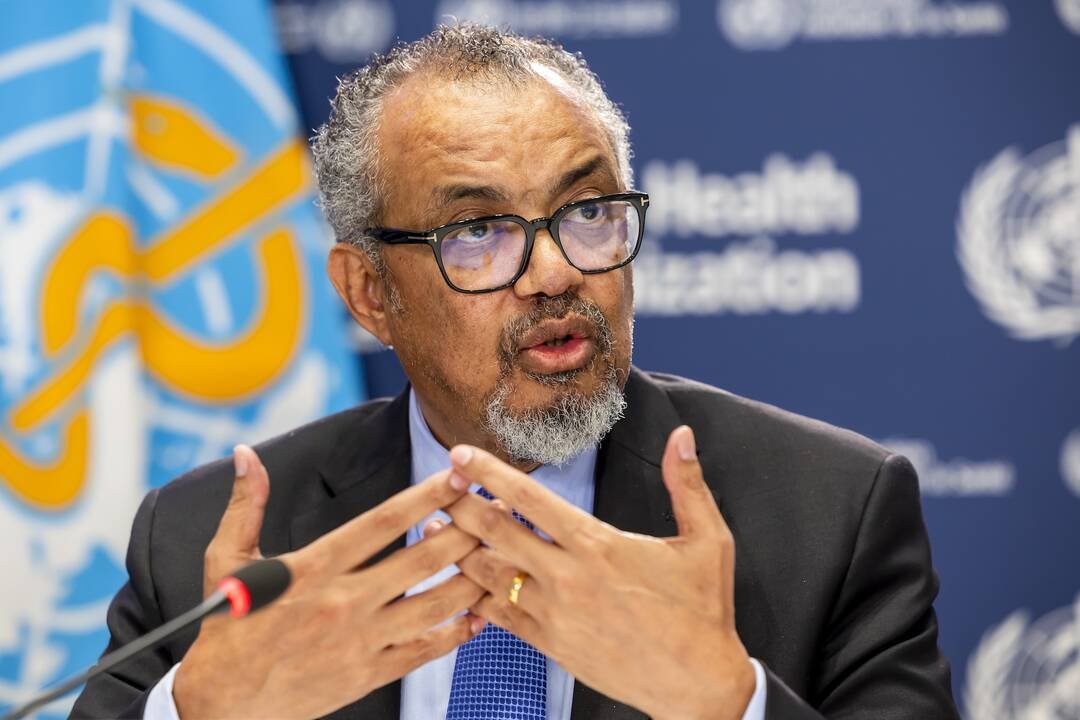

Nearly two weeks after the US withdrawal, the UN health agency’s executive board meeting will be anything but business as usual. The board, convening in Geneva from 2 to 7 February, will wade through a packed agenda with typical items ranging from immunisation to mental health to governance
But more critically, the board’s 34 member states will grapple with a gaping funding shortfall as its once largest benefactor dashes for the exit door without settling the bill
Despite sweeping spending cuts in 2025 and increased donor pledges, the WHO is still bracing for a $660 million funding gap for 2026-2027*, equivalent to 15 per cent of its budget. Last week, director general Tedros Adhanom Ghebreyesus told the executive board’s budget committee that the agency had “reached a position of stability and we are moving forward”. He admitted, however, that it had been a “difficult and painful process”.
The biannual board meeting comes three months ahead of the World Health Assembly, where countries are expected to endorse the executive board’s decisions. Last year, countries approved the first of a series of increases in mandatory contributions, in a push to shore up the financial deficit
UNpaid dues
Delegates will also wrestle with Washington’s murky exit from the organisation, as its refusal to settle its outstanding dues plunges it into a legal Catch-22. A joint resolution by the US Congress in 1948 requires Washington to pay its financial obligations to the WHO in case of a withdrawal, says Stat News. But the Trump administration has refused to pay arrears estimated at roughly $260 million – even as it said last week it was “terminating” its WHO membership and the funding that came with it.
At a press briefing in Geneva on Friday, Daniel Argaw Dagne, team lead for malaria and neglected tropical diseases (NTDs) at the WHO, estimated funding needed to sustain programmes to control and eliminate NTDs at nearly half a billion dollars alone. NTDs affect roughly 1.4 billion people worldwide
“With the US withdrawal, the overseas development assistance to this area has decreased by 41 per cent from 2018,” he said
A WHO spokesperson couldn’t say whether a US representative would participate in the executive meeting. The board is also set to debate Argentina’s notice of withdrawal, announced in March 2025. Given that the WHO constitution doesn’t contain an explicit withdrawal clause, Buenos Aires’s attempt to follow the US also falls into legal limbo territory. A WHO legal report concluded that the notification “should not be accepted as effective”. Both withdrawals are set to be addressed on Friday.
Power shifts and reform
The WHO is due to brief countries on its restructuring efforts carried out over the past year, including merging departments and divisions and halving the number of directors. In a report, it says some 1,200 posts are expected to go by June 2026, leaving the agency with a workforce of 7,360, a 22 per cent drop from January 2025
Lives and careers have been upended as a result. The report acknowledges the human cost. “Preventive measures” or mutually agreed early exits were implemented where possible, while more “invasive” measures will still be required in a significant number of cases, according to an analysis by Geneva Health Files
Staff associations, meanwhile, have complained that the process has lacked transparency and that information has been slow, particularly on the “rationale for certain decisions” and “job losses by grade and contract type”, according to a statement
Beyond internal restructuring, states will also be preoccupied with broader health governance debates. Tedros will present a report on the secretary general António Guterres’s UN80 reform push and how the WHO fits in it. Some proposals coming from New York, such as absorbing UNAids, would have significant implications for the UN health agency
States are also doing some soul-searching of their own. A report on governance reform, expected to be discussed on Friday, shows members are weighing reforms that would tighten controls over resolutions and bloated agendas, in a bid to rein in “unchecked and unsustainable budgetary growth and workload for WHO”. Proposals include blocking half-baked resolutions, attaching cost estimates at the earliest stages and granting a small cohort of board officers greater influence over which initiatives move forward – a shift that could rebalance power within the agency.
* This article has been updated with the WHO’s latest funding shortfall projections
