


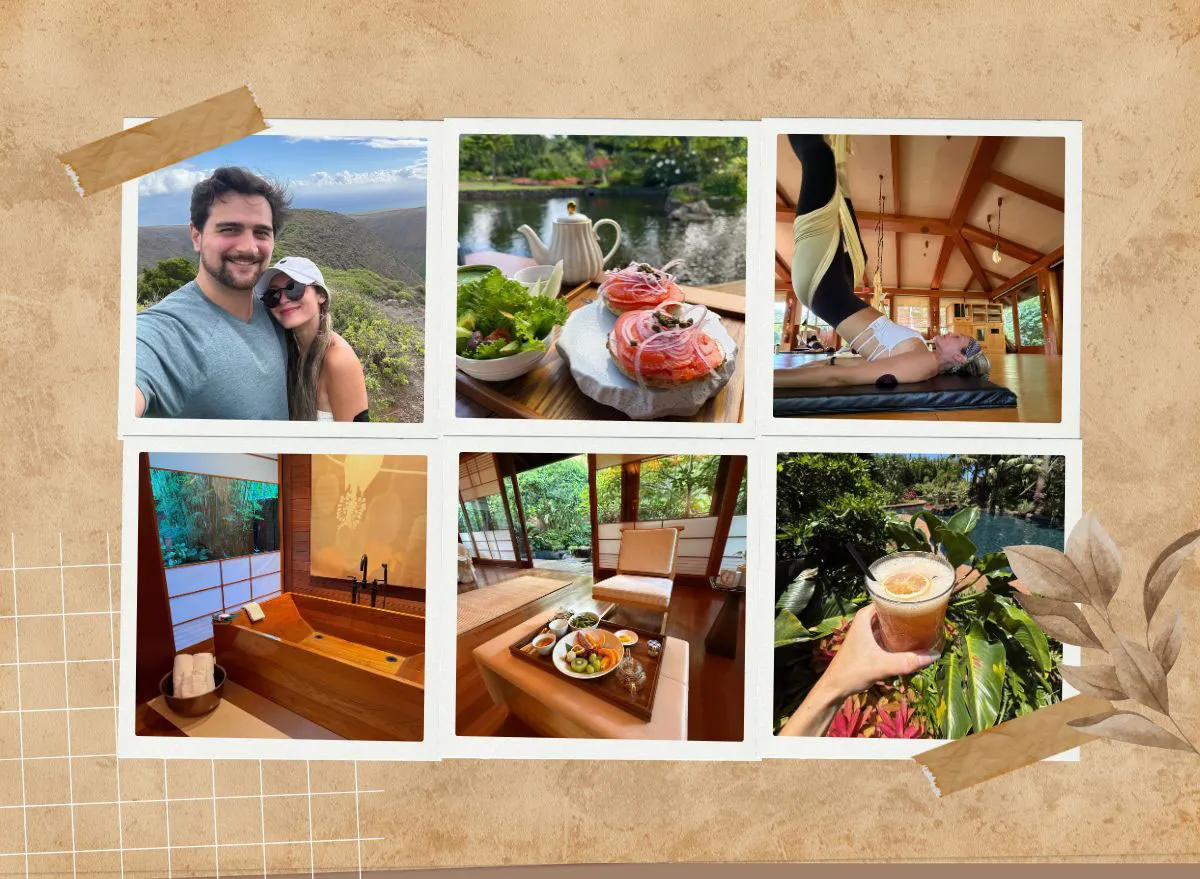
Picture this: You wake up cocooned in plush Four Seasons bedding, raise the shades with the touch of a button, and enjoy a soothing pot of vanilla rooibos tea on your balcony overlooking the lush landscape. You then head downstairs for breakfast to savor a bagel and lox topped with house-cured Ora King salmon and yuzu fennel cream cheese, or whole wheat blueberry pancakes with mixed berry compote, whipped cream, and lemon zest alongside a beautiful koi pond.
From there, your day is filled with rejuvenating activities, from taking a dip in the property’s onsen garden plunge pools to stretching it out in an aerial yoga class to nestling under a cozy blanket and meditating. Of course, you simply can’t miss out on watching the sunset cast the dreamiest glow over the horse farm fields before strolling to dinner, where entrees like grilled ribeye with white truffle butter sauce, crispy Maui onions, sage, and thyme await.
If you’re looking for a serene escape, then Sensei Lanai, a Four Season Resort, tucked away in Cook pine-covered uplands of Kōʻele and lush gardens of Lāna’i, Hawaii, should be your next wellness retreat. The brand offers curated stays for couples retreats, babymoons, mother-daughter getaways, solo adventures, wellness deep dives, and more
Wellness and longevity travel has grown in popularity—and Sensei is truly onto something good. The brand provides guests with the right tools to optimize their well-being and explore an in-depth analysis of their health with a structured five-night program personalized to guests’ desired outcomes
What Is Metabolic Health?
I’ve had the pleasure of visiting all three of the Sensei properties, and I can tell you firsthand that this is truly a one-of-a-kind luxury wellness retreat. This time around, I tested out the brand’s new Metabolic Health Program, which includes three private 60-minute sessions: Foundations of Metabolic Health, My Metabolic Edge, and Virtual Nutrition. The final 1:1 takes place after you return home to help establish lasting, better-for-you habits.
Going into my first session, I thought I knew a little bit about metabolic health—but I quickly learned that there’s so much more to it than diet
According to Sensei, “Metabolic health is not defined by what you eat alone. It reflects how your body produces, uses, and stores energy, and how daily practices like sleep, stress, movement, and diet interact to influence that process.”
The programming aims to help guests gather a better understanding of their metabolic patterns through an evidence-led experience
My husband and I were each given a Continuous Glucose Monitor (CGM) to wear throughout our time and Sensei—and when we returned home—to see how our daily lifestyle habits impact our metabolic health. Here’s what I learned
What Is a Continuous Glucose Monitor and What Can You Learn From It?
According to Sensei Guide Danielle Hildreth, Registered Dietitian and Certified Holistic Nutritionist, one of the key benefits of wearing a CGM is that it offers a real-time look into how your body responds throughout the day, rather than providing just one snapshot in time. As a Sensei Guide, Hildreth teaches individuals about the value of proper nutrition by taking a deep dive into their everyday habits.
“While fasting glucose and routine blood work can offer valuable information about overall health, a CGM can help uncover the day-to-day patterns behind those numbers,” Hildreth explains. “For example, many people are surprised to learn that not all carbohydrates affect them the same way. A CGM can show how your body responds to foods like sweet potatoes versus rice, or how these same items paired with protein and fiber may lead to a different glucose response. This personalized feedback can help move nutrition beyond general recommendations and toward what works best for the individual.”
One of the most valuable aspects of a CGM is that it allows you to see how certain lifestyle habits impact your glucose levels. For example, taking a brisk stroll after a meal, starting your day with a protein-packed breakfast, prioritizing a rejuvenating bedtime routine, or implementing stress-management techniques can be reflected in your glucose monitor data
“For many people, seeing those changes in real time creates a powerful connection between their daily choices and their health, making behavior change feel more tangible and motivating,” Hildreth adds
Related:This Beer Spa Will Calm Your Anxiety and Renew Your Skin
My Experience Wearing a Glucose Monitor
While wearing my very own CGM, I learned so much about how physical activity and diet can impact my glucose
Physical Activity
For the first full day wearing my monitor, I kicked off the morning with a homemade granola bar and a large cup of coffee with milk and experienced a modest rise in glucose. I then embarked on a two-hour hike up and down Koloiki Ridge, a 4.9-mile trail that delivers stunning panoramic views from the top. Despite the physical activity, my glucose remained pretty stable rather than showing a major spike.
“A stable rise in blood sugar during your hike isn’t necessarily a bad thing and can actually be a normal response to prolonged physical activity. One factor to consider is the fuel you consumed beforehand. Granola is typically rich in carbohydrates, which are broken down into glucose and provide a readily available energy source for exercise. If your coffee included sugar, honey, flavored creamer, or milk, that could have contributed additional carbohydrates as well,” Hildreth says.
During exercise—especially workouts that involve higher-intensity periods or elevation gain—the body increases its energy demands
“To meet those demands, it utilizes a combination of fuel ity changes throughout the hike, your body may release glucose into the bloodstream to ensure your muscles have adequate fuel available. This can sometimes appear as a stable elevation in glucose rather than a decline,” Hildreth adds
Related:7 Best Fitness & Wellness Adventures in San Luis Obispo
Diet
I had worked up quite the appetite and enjoyed mushroom toast with a poached egg and iced matcha latte. Breakfast resulted in a more significant glucose spike, which returned roughly to my baseline in about an hour. In the afternoon, I noticed another rise when I took a dip in the warm onsen pools. I think the heat—or external “stress” on my body—could have potentially contributed to the increase.
It was so interesting seeing how my glucose responded differently to various meals, movements, and activities throughout the day—and as I continue to track my stats at home
For instance, this past weekend, I headed to the beach for a sunset picnic and had a California roll. I noticed my glucose rose fairly quickly and even crossed the 140 mg/dL threshold. On another evening, I had steak fajitas with vegetables, rice, and beans for dinner; my glucose rose to about 123 mg/dL before beginning to come down within an hour
“There are many factors that could have contributed to the different glucose responses you observed. Looking at the meals themselves, the type and quality of the carbohydrates, as well as the amount of protein, fat, and fiber present, can all influence how quickly glucose enters the bloodstream,” explains Hildreth
For instance, steak fajitas have fiber from the sautéed vegetables and protein from the steak, which can help slow down the digestive process and promote a more gradual rise in blood sugar. The type of tortilla also impacts glucose responses, as flour, whole wheat, and corn tortillas each contain varying levels of processing and amounts of fiber
“In the case of California rolls, white rice is typically the primary carbohydrate erally digested more quickly, which can lead to a larger or faster rise in blood sugar. Portion size may also play a role, as sushi often contains a concentrated amount of rice relative to protein and vegetables,” Hildreth explains
As for my chicken, sweet potato, and avocado bowl, it likely had a solid balance of healthy fats, protein, and fiber-rich carbohydrates
“Sweet potatoes are a whole-food carbohydrate hat can help slow digestion. Together, these components may create a more stable blood sugar response compared to a meal that is higher in refined carbohydrates,” Hildreth adds
These different responses gave me further insight into how certain types of foods can impact my body, helping me make more informed decisions about how and what I eat
Takeaways
I went into this process with intention rather than making drastic changes. Hildreth notes that I was consistently mindful of how my choices affected how I felt; from there, I responded to the information I learned throughout the program. That awareness helped me make beneficial adjustments and establish lasting habits that are well-suited for my lifestyle
“You also approached the experience with curiosity and a willingness to experiment,” Hildreth says. “By observing patterns and making small, sustainable changes, you were able to identify strategies that supported more stable blood sugar levels, consistent energy, and overall well-being. In many ways, your success came from being engaged in the process and using the insights from the program to make choices that were personalized to you.”
Filed Under
