


https://p.dw.com/p/5OCV9
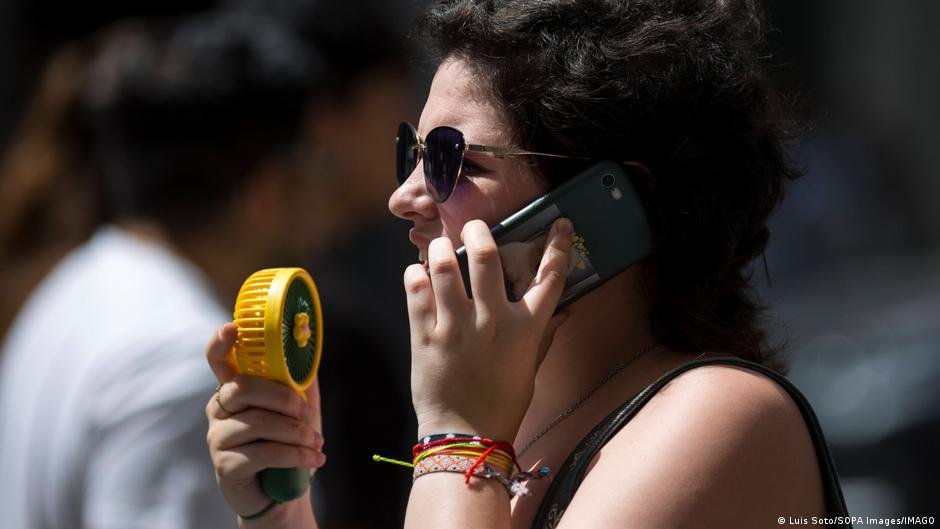
From mini fans and the cheap chargers to smartwatches bought as part of a New Year’s health kick, some 44% of Europeans own at least six “fast-tech” gadgets. And more than half say they keep unused and broken e-waste items languishing at home or throw them in the regular trash instead of recycling.
That’s according to a new report by Brussels-based e-waste association WEEE Forum. It describes fast tech, which is booming, as charging and lighting devices under €10 (circa $11), high-tech items like power banks and fitness trackers, and gadgets and lifestyle appliances like cheap mini blenders and fans, as well as single-use electronic vapes.
“So, these electronics are a bit like fast fashion,” Magdalena Charytanowicz, WEEE Forum’s Communication Manager, told DW
Nearly 40% of buyers recalled discarding a fast-tech item without using it at all or within a month of buying it, and nearly 60% said they had used a product for no longer than six months. Yet the vast majority of respondents were generally satisfied with their gadgets despite short-lived functionality.
This suggests consumers accept the “fast-tech bargain” of poor quality that “does the job for a while” and is easily replaced — similar to fast fashion — according to the report.
The Great Wall of e-waste and what to do about it
About 62 million tons of electronics are discarded worldwide annually. “That’s the Great Wall of China of e-waste that is produced every year,” noted Charytanowicz, adding that the figure is set to grow to 82 million by 2030.
In Europe, roughly 40% of electronic waste is recycled, yet the rate worldwide is just 17%. This means valuable materials are lost, while electronic waste ends up polluting the environment.
In 2022, a million tons of critical raw materials were embedded in the 10.7 million tons of e-waste generated across Europe, including manganese, gold, copper and aluminum
These materials are at “the center of geopolitical tensions,” Charytanowicz said, referring to escalating global tensions over access to rare earths and other critical minerals
“Even the smallest” devices are worth recycling if they contain a circuit board or battery, she said
Groups like WEEE Forum say more awareness raising is needed on how to dispose of cheap electronic devices, and that recycling should be made as easy as possible
But the best way to reduce a product’s environmental impact is to extend its lifespan through better design and repair, as recycling raw materials is energy intensive.
Charytonawicz said clearer, harmonized EU rules now under consideration could help improve e-waste collection. The bloc’s 20-year-old directive is “not really adapted to the changing reality,” she said
Healthcare’s increasing digital waste problem
Another growing area of e-waste is digital healthcare. While devices such as diabetes sensors and blood pressure monitors are “transforming healthcare,” many are designed to be disposable
A study published in Nature in December 2025 found sales of wearable healthcare electronics, for example, could reach 2 billion devices annually by 2050, and generate a million tons of e-waste
Jeremy Faludi, associate professor of sustainable design engineering at TU Delft in the Netherlands, says making health tech — particularly digital devices used in, or issued by hospitals — recyclable or reusable comes with some “much bigger challenges” than normal electronics
That’s in part due to the potential for patient contamination, particularly with digital surgical devices that come into contact with blood or other bodily fluids
“The way that a lot of things are designed now, you can’t recover the stuff because it can’t be easily sterilized without the electronics,” said Faludi.
He worked on the Digital Health in Circular Economy (DiCE) project, an EU-funded initiative, to help redesign digital healthcare devices to “recover critical materials and reduce environmental impacts without compromising patient safety.”
A modular design, for example, allows electronic components to be separated from the parts that need to be replaced between patients, making devices easier to reuse
The four-year DiCE project, which included citizens, hospitals and manufacturers across nine EU countries, found reusable ECG cables — which connect patients to heart-monitoring equipment — cut environmental impacts by up to 81-94%, for example. The sets are usually designed for single use.
Rules around medical waste can also make reuse and recycling more difficult, particularly when requirements differ between countries and often come down to perceived rather than actual risk, Faludi added. He says some 85% of hospital trash is not infectious but everything ends up in the same bins. Better sorting as well as EU-wide regulations around treating non-infectious hospital waste would help here.
‘Green nudges’ help citizens to recycle
Like with other tech, consumer health devices such as blood pressure and glucose monitors often risk being forgotten in drawers or ending up in the wrong waste, simply because people do not know how to dispose of them, said Charytanowicz of WEEE Forum, which is also involved in DiCE.
Pilot schemes in Belgium, Spain and Slovenia that offered free postal returns and collection machines in public places found that more than 60% of people were willing to return unwanted devices if it was a straightforward process
“What’s really important is the convenience so that it can be integrated in your daily routines,” said Charytanowicz, adding that “nudges” such as messages that recycling a device could help the health of another person motivate people to “do the right thing.”
Edited by: Tamsin Walker
