



News
A gut doctor explains how to minimize spooking your helpful bacteria
Each October, as the days shorten and the air grows crisp, millions of Americans prepare for the beloved – and often sugar-fueled – tradition of Halloween. From jack-o’-lanterns glowing on porches to costumes ranging from the whimsical to the gory, Halloween is a time of playful scares, childhood memories and, of course, candy

It’s probably best to enjoy your Halloween spoils in moderation.
But as the wrappers pile up and the sugar rush hits, there’s something far more sinister brewing beneath the surface: the negative effects of candy on your gut health
Sugar and other ingredients in Halloween treats can cast a sickly spell on the trillions of microorganisms that reside in your gut, collectively known as the gut microbiome. As a gastroenterologist and gut microbiome researcher at the University of Washington School of Medicine, I have dedicated my career to decoding the cipher of how food affects this microbial community within your gut
While no candy is truly healthy, some options are better for your gut than others. And there are ways you can help wake your gut from its sugar “spell” after holiday indulgence
Gut-busting treats
What does all this candy do to your gut?
In a healthy state, your gut microbiome acts like a microbial factory. It digests nutrients your body can’t – such as fiber and colorful, health-conferring plant compounds called polyphenols – and produces important molecules called metabolites that protect against infection and support brain health. It also regulates metabolism, or the transformation of food into useful components that power and grow cells.
A balanced diet keeps your gut’s microbial cauldron churning smoothly. But the concentrated sugar, saturated fat and additives in candy can throw things into disarray by feeding inflammatory microbes that weaken your gut barrier – the protective lining that separates your microbiome from the rest of the body
Once the gut barrier is breached, even friendly microbes can stir up inflammation, causing health issues ranging from overweight to obesity, infections to autoimmune disease, and mild cognitive impairment to Alzheimer’s
The food you eat shapes your gut microbes, which in turn shape your overall health.
Sugar and inflammation impair your microbiome’s ability to digest food and regulate metabolism. Instead of producing healthy byproducts – such as butyrate from fiber and urolithin A from polyphenols – candy lacking these nutrients may trick your system into storing more fat, providing less energy for your muscles and brain
Too much candy can also affect your immune system. A healthy gut microbiome helps your immune system distinguish between friend and foe, reducing the risk of infections and autoimmune disorders. Sugar and inflammation undermine the microbiome’s role in training the immune system to distinguish between harmful invaders and harmless substances. Without a carefully calibrated immune system, your body may not effectively clear infections or may strongly react to its own cells.
Neurologically, excess sweets can also affect the gut-brain axis, the two-way communication between the gut and brain. A healthy microbiome normally produces neurotransmitters and metabolites, such as serotonin and butyrate, that influence mood and cognitive performance. Sugar and inflammation adversely affects the microbiome’s role in mental health and cognitive function, contributing to depression, anxiety and memory troubles.
The candy conundrum
Not all Halloween treats are created equal, especially when it comes to their nutritional value and effects on gut health. Sugar-coated nuts and fruit such as honey-roasted almonds and candy apples rank among the top, offering whole food benefits just beneath the sugary coating. Packed with fiber and polyphenols, they help support gut health and healthy metabolism
On the opposite end of the spectrum are chewy treats such as candy corn, Skittles, Starbursts and Twizzlers. These sugar-laden confections are mostly made of high fructose corn syrup, saturated fat and additives. They can increase the unsavory bacterial species in your gut and lead to inflammation, making them one of the least healthy Halloween choices
Chocolate-based candies, however, stand out as a more microbiome-friendly option. While varieties such as Twix, Three Musketeers and Milky Way contain only a small amount of chocolate, pure chocolate bars – especially dark chocolate – are rich in fiber and polyphenols. In moderation, dark chocolate with at least 80% to 85% cacao may even benefit your gut microbiome and mood by encouraging beneficial bacterial species to grow.
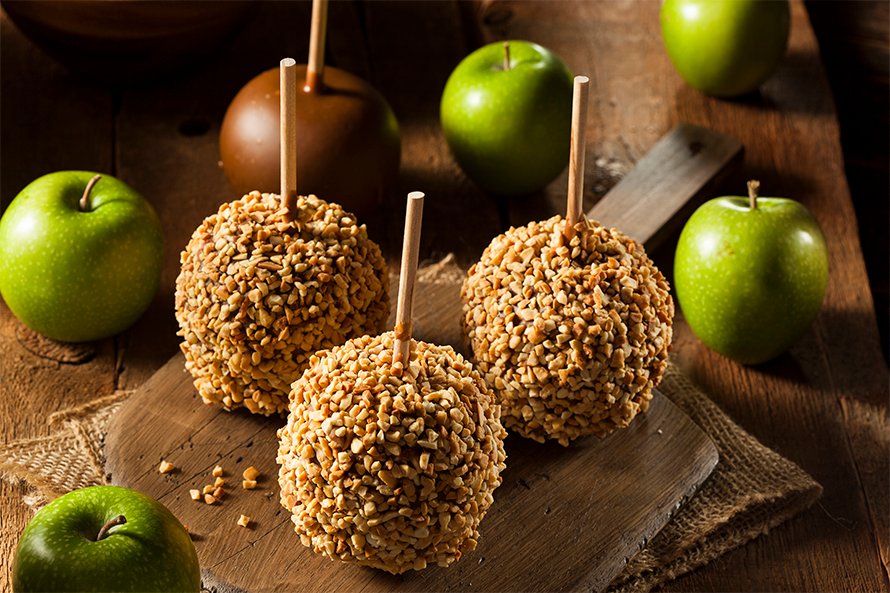
Candy apples usually provide a serving of fruit and nuts.
Chocolates with whole nuts, such as almonds or peanuts, offer a boost of fiber, protein and omega-3 fats, making them a healthier choice. Dark chocolate with nuts is best. But when sorting through Halloween treats, Peanut M&Ms, 100 Grands and Almond Joys may be better options over Rolos, Krackels and Crunches. Even candies with processed nuts, such as Reese’s Peanut Butter Cups and Butterfingers, retain small amounts of fiber and protein, making them preferable to nut-free options.
At the bottom of the list, along with chewy sugar candies, are pure sugar candies such as lollipops, Jolly Ranchers, gummies and Smarties. These sweets lack nutritional value, and their high sugar content can contribute to the growth of unhealthy bacteria in your gut microbiome
In the end, all candies are high in sugar, which can be harmful when consumed in large quantities. Moderation and an otherwise balanced diet is key to enjoying Halloween treats
Rebalancing after indulgence
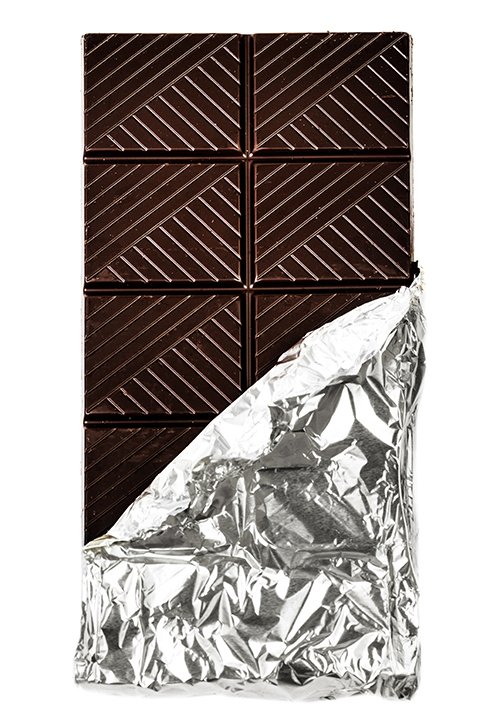
Dark chocolate is a treat that may offer some health benefits.
If the microbiome is critical for health, and candy can disrupt its balance, how can you restore gut health after Halloween?
One simple strategy is focusing on the four F’s of food: fiber, phytochemicals, unsaturated fats and fermented foods. These food components can help support gut health
Fiber-rich foods such as whole grains, nuts, seeds, beans, fruits and vegetables regulate digestion and nourish beneficial gut bacteria
Polyphenol-rich foods such as dark chocolate, berries, red grapes, green tea and extra virgin olive oil help reduce inflammation and encourage the growth of healthy gut bacteria
Unsaturated fats such as omega-3 fats, walnuts, chia seeds, flaxseed, avocados and fatty fish such as salmon can also support a healthy microbiome
Fermented foods such as sauerkraut, kimchi, yogurt, kefir and miso help replenish beneficial bacteria and restore gut balance
To make tracking your diet easier, consider using a food calculator to measure how well your meals align with the four F’s and microbiome friendly options. Like a virtual “spellbook,” an online tool can help ensure your food choices support your gut health and ward off the effects of sugar overload
As my daughters often remind me, it’s perfectly fine to indulge every now and then in a few tricks and treats. But remember, moderation is key. With a balanced diet, you’ll keep your gut healthy and strong long after the Halloween season ends
This article is republished from The Conversation under a Creative Commons license. Read the original article
Enjoy reading ASBMB Today?
Become a member to receive the print edition four times a year and the digital edition monthly
Learn more
Contribute your story
Enter your email address, and we’ll send you a weekly email with recent articles, interviews and more
Journal News
Mutations linked to a possible new congenital disorder
Nov. 10, 2026
Using patient-derived cells and computational models, researchers suggest that enzyme mutations may cause a previously unrecognized congenital disorder
Journal News
How dying cells avoid triggering excessive inflammation
Nov. 5, 2026
Researchers find that a lipid damage signal both activates and limits the complement system during cell death, helping prevent excessive inflammation
Journal News
How the gut senses acidity to stay healthy
Oct. 30, 2026
Researchers at Shanghai Jiao Tong University identify a proton channel that helps cells sense acidity and may play an important role in protecting the gut from inflammation
Journal News
One antibody, three targets: New strategy against triple-negative breast cancer
Oct. 27, 2026
Researchers at Tavotek Biotherapeutics develop a tri-specific antibody that attacks triple-negative breast cancer by blocking several tumor growth pathways at once
Journal News
Hidden tumor antigens could expand colorectal cancer immunotherapy
Oct. 22, 2026
A new study from scientists at the University of Montreal uncovers overlooked tumor antigens that could help expand immunotherapy options for colorectal cancer
Journal News
How stress hormones slow gut motility
Oct. 21, 2026
Researchers from Harvard Medical School uncover how stress hormones suppress BDNF–TrkB signaling in the gut’s nervous system, slowing gut motility and revealing a pathway that may be targeted to treat stress-related digestive disorders
