


Beyond 10,000 steps: Fitness wearables get smarter about recovery
From watches and screenless bands that track heart rate variability, VO₂ max and sleep to physiological testing, fitness is moving beyond simply working out, but what consumers want to know is if all
premium
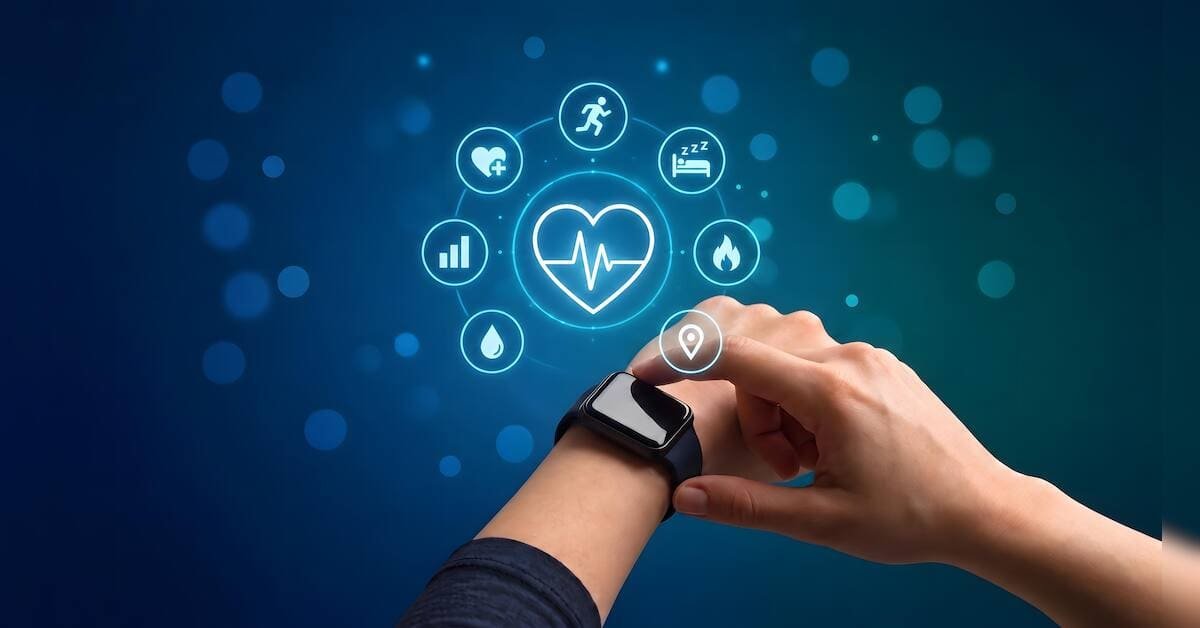
Representative image for fitness wearable
Namrata Kohli7 min read Last Updated : Sep 03 2026 | 6:18 PM IST
Listen to This Article
You wake up after what seemed like a perfectly good night’s sleep, but your watch isn’t convinced. While you slept, it was keeping tabs on you — heart rate, sleep duration, stress and heart rate variability (HRV). Add your recent workouts and training load, and the device may suggest whether today is a day to push harder or take it easy.
Welcome to the new world of fitness, where breaking a sweat is only the beginning. Until recently, consumer fitness revolved around relatively simple markers: weight, calories, kilometres, and the ubiquitous 10,000 steps. The first wave of smartwatches brought those numbers conveniently to the wrist. Now the question is changing from ‘How much did I exercise?’ to ‘What did that exercise actually do to my body?’.
A growing ecosystem of smartwatches, screenless bands, apps, physiological assessments and recovery services is allowing consumers to measure everything from sleep and heart rate variability (HRV) to VO₂ (the highest amount of oxygen your body can take in and use during a workout), training load and recovery. In other words, like so many other things, fitness, too, is increasingly becoming a data game.
Beyond the 10,000 steps
India’s smartwatch boom was initially driven by affordable devices offering step counts, heart-rate tracking, workout modes, and smartphone notifications. Those functions haven’t disappeared, but expectations are evolving from simply counting activity to interpreting what it means.
“The shift is definitely happening, but I wouldn’t describe it as consumers moving away from the fundamentals. It’s more of an evolution in what they expect from wearables,” says Gaurav Khatri, co-founder of smart wearables maker Noise.
Consumers still care about steps and heart rate, he says, but increasingly want to understand sleep quality, recovery and how everyday stress affects their wellbeing. And that curiosity isn’t confined to marathon runners. “What is interesting is that this demand isn’t coming only from athletes or fitness enthusiasts. It is increasingly coming from everyday consumers who simply want a better understanding of their health,” he says.
The change is subtle but significant. “People don’t just want data anymore; they want context and guidance that helps them make better decisions in their day-to-day lives,” says Khatri. To provide that context, however, a wearable needs to know what happens outside the gym too.
“You need to wear a watch 24×7,” says Deepak Raina, director, AMIT GPS & Navigation LLP, Garmin’s official distributor in India. A 45-minute run is only one piece of information. How you slept before it, how your heart responded and how well you recovered afterwards can provide a fuller picture. That is also why a new vocabulary is entering everyday fitness conversations. Take HRV, the tiny variations in time between successive heartbeats, and you can now track how your own readings change over time. Then there is VO₂ max, an indicator of cardiorespiratory fitness that reflects how effectively the body can take in and use oxygen during strenuous exercise.
Garmin’s devices combine various measures to provide insights such as training load, recovery, and training readiness to answer a simple question: Is this a day to push harder or ease off? Raina puts it another way: “To up your game, you need to recover your soreness and then go ahead.” The old assumption that a harder workout must be a better workout is giving way to something more nuanced. The body needs to be challenged to improve, but it also needs time to recover. Rest and recovery, in other words, is becoming part of the fitness regimen and everything is now measured and calibrated.
Less screen, more tracking
Even as consumers want more information about their bodies, some want less technology demanding their attention — hence the growing appeal of screenless fitness bands. Raina says Garmin has offered screenless fitness trackers for around 15 years. One kind of user, he says, still prefers an analogue watch but wants basic health tracking in the background. “They don’t want to get into the details every day or every hour,” he says. Instead, they may look back after a few weeks to understand how their body has responded to activity, stress and everyday life. And the data now goes well beyond steps. Depending on the device, wearables can track measures such as heart rate, blood-oxygen saturation and skin temperature, helping users observe patterns in how their bodies respond over time.
Noise identified a similar consumer while developing its REP Band. Khatri describes this group as “health-curious” — interested in sleep, recovery and wellbeing without necessarily wanting to live like professional athletes. “Many of them told us they didn’t want another screen competing for their attention throughout the day,” he says. REP therefore tracks continuously without putting calls, messages or app notifications on the wrist; users view the information through the NoiseFit app.
It is an intriguing reversal: after years of putting more information on our wrists, the wearable industry is discovering a market for more tracking with less screen time.
When a wearable becomes a lifeline
Wearables can also prove useful when fitness turns into an emergency. Raina recalls an incident involving a mountaineer who became stranded and could not be located for nearly 24 hours. “He was conscious but couldn’t walk and had no other way to communicate,” he says. The mountaineer used the SOS function on his Garmin device to send his location to a rescue centre, following which a helicopter was dispatched to evacuate him.
For trekkers, mountaineers and endurance athletes venturing into remote terrain, such features can take a wearable beyond tracking performance. “In situations like these, the device isn’t just telling you how your body is performing,” says Raina. “It can become your connection to help.”
When the gym starts looking like a lab
But the datafication of fitness is moving beyond the wrist. At fitness centres like Gurugram based Drive FITT, which describes itself as India’s first performance-led sports club, technology is integrated into how members train. A cricket enthusiast, for instance, can practise against an AI-driven bowling machine programmed to deliver different speeds, lengths, swing and spin. Camera technology can capture parameters such as a bowler’s line, length, pace and speed, allowing performance to be analysed rather than relying solely on observation.
“Nothing is gut feel here; it’s pure science and data,” says Vikram Aditya Bhatia, CEO and co-founder. For those more interested in understanding their fitness than perfecting their cover drive, the club offers a baseline assessment which includes body-composition assessment and VO₂ max testing. While a wearable can follow you every day, actual physical testing can provide a deeper snapshot. Together, they point towards a new fitness cycle: Measure the baseline, train, track, and reassess.
However, consumer wearables are not substitutes for medical diagnosis. Many of the sophisticated numbers appearing on our wrists are estimates, and their value can lie more in observing patterns over time than reacting to a single reading. The challenge for the new fitness consumer may therefore be knowing when to listen to the numbers, and when to listen to the body.
But perhaps the smartest use of fitness technology isn’t collecting every possible number. It’s knowing which numbers actually matter. The first generation of fitness trackers asked: How much did you move today? The new fitness economy is asking a much bigger question: How is your body responding?
| Brand | Broad price positioning | Premium |
| boAt | ₹1,500–₹4,500 for many smartwatches | Around ₹4,000+ for some premium models |
| Noise | ₹1,500–₹6,000 broadly | Higher-spec models can approach ₹10,000 |
| GOQii | ₹2,000–₹7,000 broadly | Health-service bundles can cost more |
| Apple | Around ₹40,000 upwards | Premium configurations can move towards ₹80,000–₹90,000 |
| Garmin | Around ₹25,000 upwards | Advanced sports/outdoor watches can exceed ₹1 lakh |
Source: Market Research
Topics :fitness wearablesWearable Device
