


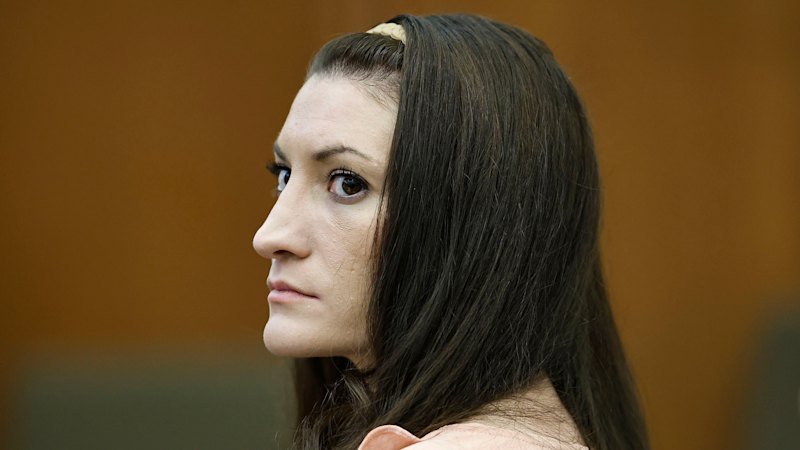
Lindsay Clancy doesn’t fit the stereotypes. She doesn’t look “crazy”. She could be any one of us
The 36-year-old Massachusetts nurse has been described as a high-achiever from a loving family who was – before killing her three children and attempting to take her own life in 2023 – a loving wife and mother
The appearance of having it all together, according to the prosecution’s closing argument, meant she could not have been in the grips of psychosis when she took the lives of her children: five-year-old Cora, three-year-old Dawson and eight-month-old Callan
“If we asked you: pick out the woman who is depressed. Pick out the woman who wants to kill herself. Pick out the woman who’s about to kill her kids. You couldn’t pick her out. She’s completely calm,” said Plymouth County Assistant District Attorneys Jennifer Sprague
This comment from Sprague strikes at the stigma around mental illness: how it looks and behaves, and who it happens to
Mental health stereotypes are caricatures
“[Mental illness affects] people who are board members and employees and violin players and soccer players and mums and dads and brothers and sisters and kids and adults,” SANE Australia chief executive Rachel Green says
“The fixed stereotype in everyone’s head of mentally ill people are caricatures.”
These caricatures come from a basic human instinct to “other” people, says Professor Nicola Reavley, deputy director of the Centre for Mental Health and Community Wellbeing at the University of Melbourne
If we believe that someone who is unwell or commits an act like Clancy did is fundamentally differently to us, it’s easier to distance ourselves
“Stigmatising and discriminating against people with mental illness has a very long history,” Reavley says. “The word [stigma] comes from a Greek word for tattoo because people were branded.”
But stigmatising attitudes are improving. Australian research published in April found that beliefs about the dangerousness of mental illness have reduced – depression from 22.5 to 4.8 per cent and schizophrenia from 37.1 to 18.1 per cent between 2011 and 2024 – although the willingness to interact with someone with depression did not change during this time period and actually worsened for schizophrenia
According to the National Mental Health Commission’s 2026 Stigma and Discrimination Report Card, 70 per cent of people with mental health challenges have experienced discrimination and 68 per cent said that living with stigma and discrimination was worse than living with the symptoms of the mental illness itself
There remains fear around mental illness, which can limit people from getting help earlier and, by virtue of that, change the way their illness manifests
Of course, most people who experience mental illness don’t harm anyone
Postpartum psychosis is rare – it affects between 0.089 and 2.6 out of every 1000 births – and most women who experience it never hurt their children
The condition is associated with a 4 per cent infanticide rate if untreated or inadequately treated
‘I lost touch with reality’
Brisbane-based former veterinarian Anita Link, 53, was diagnosed with postpartum psychosis 20 years ago
She strongly believes that her own outcome was deeply influenced by the access she had to an early, accurate diagnosis; consistency of care and appropriate treatment by mental health professionals trained in perinatal mood disorders
When a midwife found Link, then 32, curled up on the hospital floor crying, five days after giving birth to her first child, she wasn’t dismissed as having baby blues. Rather, she was checked into the mother and baby unit of a private psychiatric facility
Two days later, she had her first psychotic episode
“I lost touch with reality and denied all knowledge of my husband and baby,” she recalls. “I thought I was being tortured.”
On that same day, she recalls switching between delusion and calm reality from one moment to the next
This experience makes her question the claim that Clancy couldn’t have been suffering from psychosis because, earlier that day in January 2023, she was calm and caring for her children
“Based on my experience of the illness that doesn’t hold water,” says Link, a mother-of-two. “You can’t generalise when it comes to how mental illness presents in individuals.”
Link also questions those who say that Clancy’s psychosis is no excuse for her actions: “You can’t think your way out of symptoms of severe mental illness like psychosis … it’s like trying to think your way out of vomiting if you have gastro.”
She is thankful that, when she experienced psychosis, she was in a safe place where she was quickly diagnosed, supported and treated
With no prior history of mental illness, she felt “sheer terror” at what was happening to her. “And that was with rapid treatment, in the safety of a hospital with a supportive, loving husband and parents around me.”
Too unwell to stay in the mother and baby unit, she was put in the special care section of the hospital and treated with high-dose anti-psychotics. One week later, she was reunited with her daughter
Link counts herself as lucky
‘It could have been me’
Perhaps the tragic outcome of Lindsay Clancy and her three children could have been different if she had also had appropriate care. This possibility may help explain the wave of support for Clancy and why it has hit a nerve for so many people around the world
During the trial, hundreds of supporters in pink have gathered outside the courthouse and shared their own stories of isolation and desperation, of being failed by the healthcare system or dismissed when they were in crisis
“That could have been me,” said one
Thankfully, very few people can imagine how Clancy felt that day and how it led her to do what she did, but her supporters touch on something the prosecution misses: that mental illness, including psychosis, can happen to anyone
The caricatures and stereotypes comes from inequity and disadvantage, poverty and homelessness, Green says. “It comes from being socially excluded and unsupported.”
Caricatures aside, it doesn’t just happen to those on the fringe of society, she adds. “Psychosis can happen to any person at any point given the right circumstances: dehydrate them, deprive them of sleep, certain other injuries or traumatic events.”
If we find ourselves falling back on stereotypes and stigma about who can experience mental illness or what it looks like, she suggests doing this: “Hold up a mirror and that’s a person who could experience psychosis.”
Make the most of your health, relationships, fitness and nutrition with ourLive Well newsletter.Get it in your inbox every Monday
More:
Sarah Berry is a lifestyle and health writer at The Sydney Morning Herald and The Age.Connect via Xoremail.
