



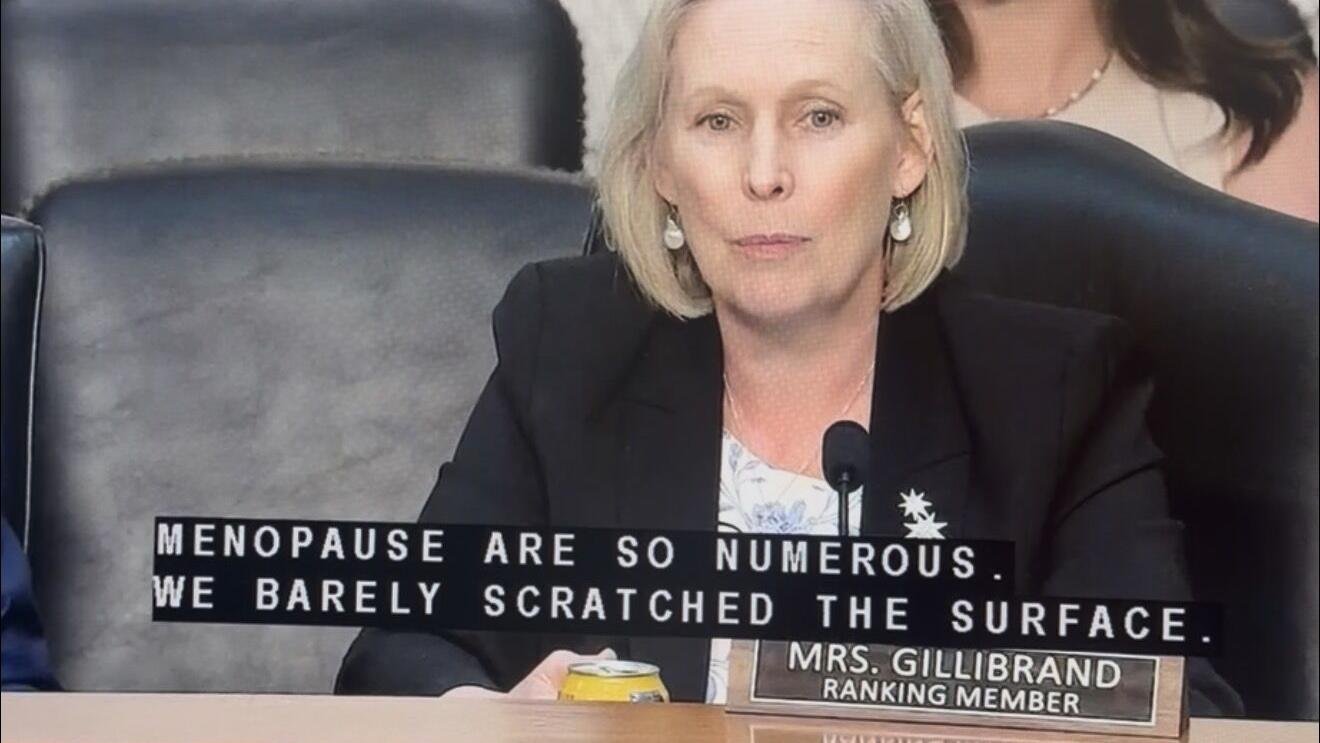
On Wednesday, Sept. 16, I (virtually) attended the Senate Special Committee on Aging hearing titled “Half the Country, Zero Hearings: Meeting the Moment to End the Menopause Care Gap in America.” This bipartisan meeting led by Chairman Rick Scott (R-FL) and Ranking Member Kirsten Gillibrand (D-NY) featured an expert panel to discuss many of the major issues surrounding women’s health and menopause care.
As a Family Medicine and Menopause Society Certified physician with a local practice dedicated to women’s hormone health, it was both validating and frustrating to hear the issues my patients and I (as a clinician) face every day finally being advocated for in the Senate
I appreciated the vast concerns raised, including the lack of clinicians trained in menopause and hormone therapy, insufficient research funding and prioritization, inappropriate FDA labeling that caused decades of prescribing fear, lack of drug availability and issues with insurance coverage and more. In case you missed it, the FDA initiated removal of most black box warnings on estrogen products in November 2025.
These issues ultimately create a massive care gap for half of our population (typically over 40, though sometimes younger). The gap is even larger for those who were declined hormone therapy for the last 24 years (and are now wondering what they can or should do), those with more complicated medical histories (various chronic diseases including hormone sensitive cancer), low-resourced or low-income persons and more.
Then on Thursday, Sept. 17, I (virtually) attended the FDA’s public workshop on testosterone for women. This was a long day featuring expert panelists and presenters — like Dr. Rachel Rubin (and many others) — who discussed many issues surrounding this topic
For background, testosterone was created in the 1930s and first given to women around the 1940s. Despite this use, large research gaps remain, and there is no FDA-approved product in the U.S. Of note there is an approved product from Australia that is also used in the UK. Here in the U.S., however, all use is off-label (typically using around one-tenth the male dose of FDA-approved male products) or compounded (pellets, creams, etc.). Despite the lack of an FDA-approved product, major societies like The Menopause Society and the International Society for the Study of Women’s Sexual Health support the use of some testosterone products (primarily male FDA-approved products at female doses) for treating Hypoactive Sexual Desire Disorder in postmenopausal women.
Topics discussed included research gaps, such as long-term randomized controlled trials (which require huge funding and support), studies on breast cancer survivors and breast cancer risk (consider that breast cancer survivors are excluded from randomized controlled trials on this, so research is complicated and limited), the impact on the uterine lining, studies looking at estrogen plus testosterone therapy and more.
While estrogen and progesterone production sharply declines around menopause and stays very low, testosterone in women peaks in our 20s and declines earlier in our 30s and 40s. Testosterone does not have a sharp decrease around menopause. More research around using testosterone in women before menopause was also advocated for
As a practitioner who prescribes hormone therapy, including testosterone, to women, I also appreciated the advocacy for research into other clinical benefits we see when restoring women to normal physiologic range levels during perimenopause and menopause, such as improved cognition, energy and other commonly reported benefits. Emerging observational data supports this, but more research is needed as discussed above to confirm safety and appropriateness for patients.
While this discussion and attention to these topics is infuriatingly late, I’m encouraged that it is finally happening, that patients are demanding better care, that more clinicians are receiving training (despite lack of medical school and residency curriculum requirements), and that we have fierce leaders advocating for women’s hormone health, sexual health, preventive health and cancer survivorship, among other important topics.
Kelly Baxter, M.D., DABFM, MSCP
Kelly is the co-owner of Ovella Health (ovellahealth.com) and lives near Bozeman
Ovella Health is a telehealth and patient/clinician education company providing access to menopause-certified clinicians in MT, WY, CO and ID
Disclosure: I have no financial relationship with the people or products I name here
TestosteroneMenopauseWomen’s HealthEstrogenResearchBreast CancerEndocrine SystemHealth CareMedicineMedical SpecialtiesClinical MedicineHealthHormone Replacement TherapyEndocrinology
