


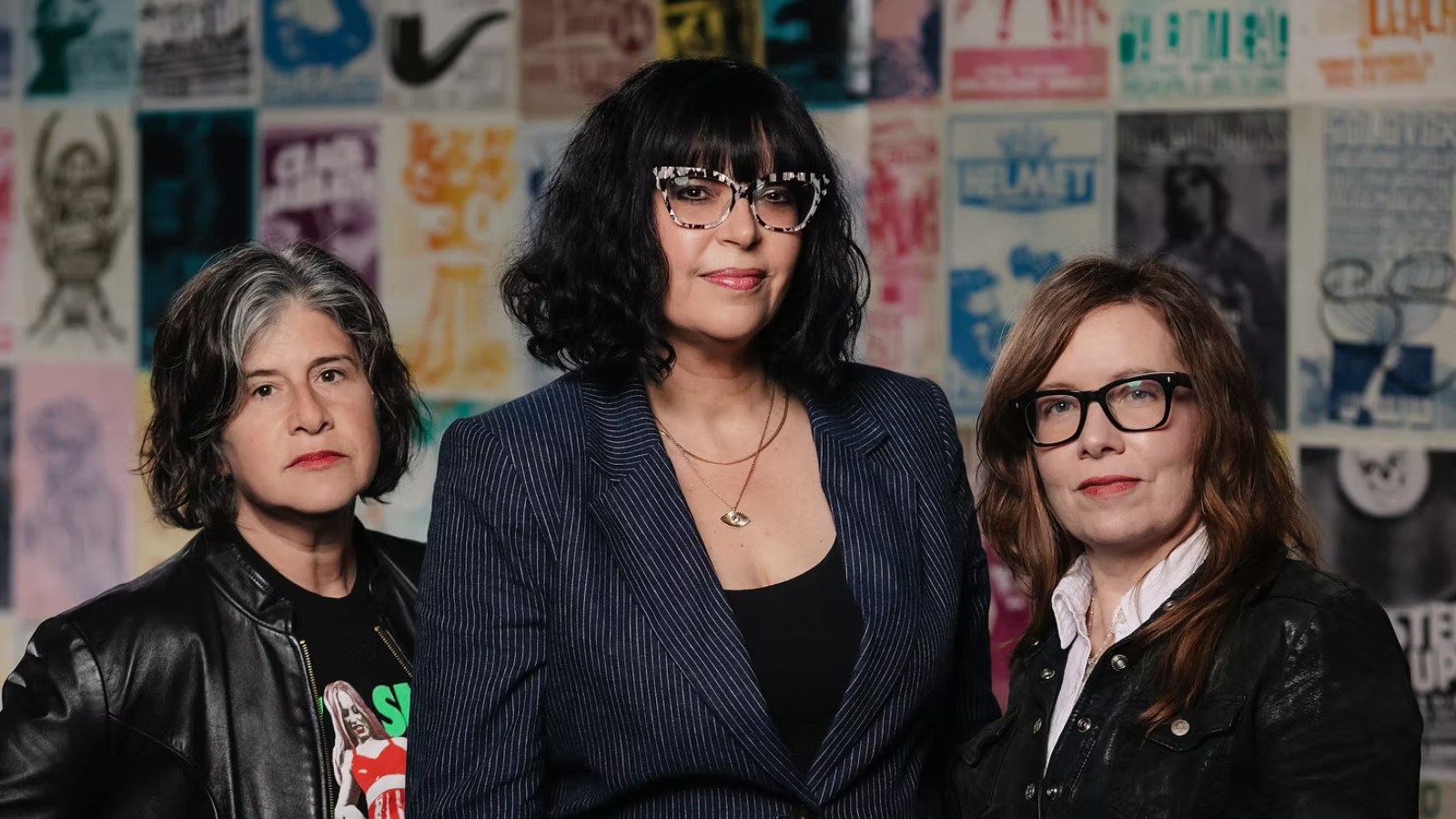
When I began making a documentary about women musicians and menopause, my goal was to forge community with empowered action at its core
A little more than a year later, with the film in production and a weekly podcast, Menopunks feels like something bigger. It has become a movement for hormonal justice
In November 2025, the U.S. Food and Drug Administration (FDA) announced that the boxed-warning label would be removed from all estrogen menopause hormone products. Explaining the decision, the then-FDA commissioner stated:
“Tragically, tens of millions of women have been denied the life-changing and long-term health benefits of hormone replacement therapy because of a medical dogma rooted in a distortion of risk. For too long, issues of women’s health have been underrecognized. Women and their physicians should make decisions based on data, not fear.”
Instead of blindly accepting this “mistake,” Menopunks asks why this “distortion” occurred, how it happened and what accountability will there be? As Menopunks, we refuse to stay quiet about the importance of hormone access
Our 10-article Menopunks Bill of Rights is an effort to acknowledge and redress what was never a mistake, but rather a generational injustice
We, the People navigating perimenopause, menopause and the decades beyond, in pursuit of health, dignity, bodily autonomy and truth, declare these rights to be self-evident and non-negotiable
For too long, midlife symptoms of women have been minimized; our concerns dismissed, our suffering normalized and our voices overlooked. We reject the notion that hormonal decline is simply something to endure
We affirm that every human deserves access to evidence-based care, informed choice and a medical system that sees a person’s health not as a problem to manage, but as a life to champion with the aid of basic hormonal healthcare.
Women are entitled to seek treatment not only for disease, but for well-being. Sleep, sexual health, mental clarity, emotional stability, energy, mobility and vitality are not luxuries; they are essential components of health, longevity and quality of life for everyone
Every woman has the right to have her symptoms acknowledged, investigated and treated without dismissal, ridicule or minimization. No woman shall be told that debilitating symptoms are merely “part of aging” or that their doctors “don’t believe in hormone treatment” without being offered meaningful options for relief support
Every woman has the right to accurate, current, evidence-based education regarding perimenopause, menopause, hormonal health and healthy aging. Information about all forms of treatment shall not be withheld, obscured or distorted by stigma, outdated research, mass mediation or institutional neglect.
Every person has the right to discuss, consider and access hormone replacement therapy when medically appropriate. All hormones known or heretofore unknown shall be accessible as basic preventative healthcare and prescribed accordingly. The decision to use or decline hormone therapy shall belong to the informed person, guided by science and supported by qualified healthcare professionals.
Every person has the right to healthcare providers who are educated and passionate about the complexities of hormonal health across the human lifespan .Lack of clinician training must not become a barrier to competent care
Health research must be intersectional, including and prioritizing the experience of midlife and aging women and others marginalized by institutional norms. Production of hormone therapy products must be prioritized, not minimized.
Women have the right to work in environments that recognize the realities of the hormonal spectrum and support health without stigma or penalty. Hormonal transition, gender transition and any issue related to a person’s health shall not become grounds for discrimination, diminished opportunity or silence.
Menopause is not an expiration date. The hormonal care choices we make in midlife are instrumental in defining our quality of life as we age. Every woman has the right to define aging on their own terms, pursuing strength, purpose, leadership, sexuality, adventure, creativity and joy throughout their life.
All people shall be supported by a medical establishment that supports hormonal healthcare. Both the medical establishment and insurance providers will recognize hormonal care as preventative care with robust education and full coverage
When the medical system fails to serve us, we have the right to revolt and demand change
Until every person has access to informed care, science-based treatment, bodily autonomy and the freedom to thrive through every stage of life, this bill of rights remains unfinished business
No one should navigate this transition alone
Everyone has the right to connection, support, shared knowledge, honest conversation free from shame and community in search of quality of life
To ask questions
To demand answers
To require equal research
To expect better healthcare
To defy patriarchal control
To hormonally radicalize the world
A note from Ms. editors: We want to hear from you for The Majority, a new campaign collecting stories about how reproductive freedom has enabled readers to build the lives they want and need
Poll after poll shows a majority of Americans support reproductive healthcare access. Yet public debate overlooks the lives shaped by abortion access, contraception, IVF, miscarriage care, maternal healthcare or comprehensive sex education—countless women who chose to pursue an education, have children, not have children, protect their health and chart their own future. What’s your reproductive freedom story?Add your voice. Together, these stories will help show not only why reproductive freedom remains a majority value, but also what it makes possible.
Tagged: Activism, Healthcare, Medical Sexism, Menopause and Perimenopause, Older Women and Aging, Reproductive Justice, Sexual and Reproductive Health, Women Workers, Women’s Health, Workers’ Rights, Workplace Discrimination and Harassment
