


Add Us On GoogleAdd as a preferred source on Google
ST. LOUIS, Mo. (First Alert 4) – Do you wear a watch or a ring to track your health and workouts?
Thirty percent of adults now use wearables
The wearables industry is booming, and AI is enabling people to monitor a wider variety of health information
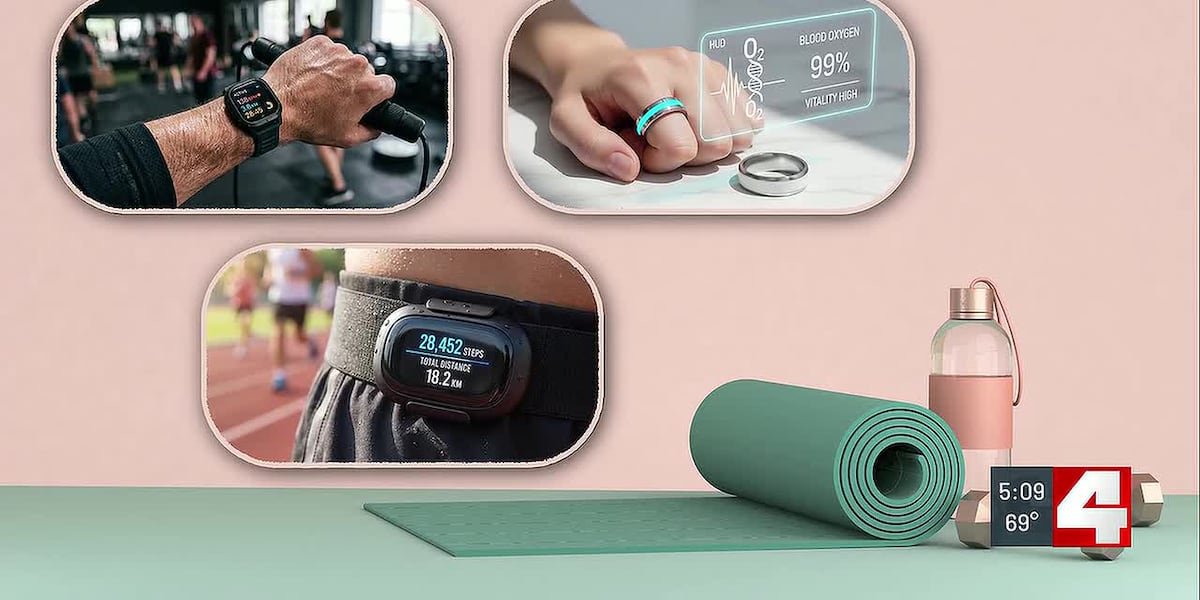
They’re on our wrists, on our fingers, on bodies in motion. Apple Watch, FitBit, Garmin, Whoop, Luna, Oura Ring and more
The wearables market is exploding with new tech to monitor things like heart rate, sleep patterns, stress levels and some even track fertility
Can watching all this data really help us with our health and fitness?
“They can be some motivation to get you up and moving. Moving is one of the best things anybody can do for their health,” said Dr. Jennifer Schmidt with Wash U Medicine
We asked Dr. Schmidt, who says wearables can help people reach their health and athletic goals. And she says some allow wearers to share data with their doctor, like an abnormal heart rhythm, but are not usually considered a medical-grade test
“Now, we won’t take that and say, oh, well, here’s all the diagnostics we’re going to do. But it does help us to figure out, do we need to do next steps if there’s something that is kind of funky that’s going on,” said Schmidt
With artificial intelligence, wearables are getting more advanced. So we tried one of the latest models
The Luna Band is a non-subscription fitness tracker made by the makers of the Luna Ring. The company says it creates personalized suggestions to help wearers reach their goals, monitoring things like stress, sleep, heart rate and more, through an app called LifeOS
Swapnil Vats, Luna Co-founder, described an example of suggestions the Luna Band might make for a wearer:
“Do zone two running at 7 a.m., take creatin supplement at 8 a.m., you are traveling, so you don’t need to have coffee after 3 p.m. today,” he said
We asked First Alert 4 news intern Elizabeth Boaz to wear the Luna Band for two weeks
When her stress level rose, it suggested for her to “consider integrating a short break.”
It tracked her sleep patterns
“It would score my sleep on how effective it was,” said Boaz
It suggested, “keep your bedtime consistent.”
And the Luna Band tracked her heart rate and suggested that she “aim for a ten-minute easy walk to distribute movement through the day.”
“If you click into it, it can show you the weeks, if you’re comparing weeks, or months, as well,” said Boaz
Luna says it plans to add a supplement planner, a hydration analyzer, a caffeine cutoff, and a nutrition planner, and users will be able to integrate lab reports, prescriptions and even their daily calendar
“Which might mean, hey, I’ve had a cup of coffee, I’ve a very long day. It would connect with my Google calendar, and understand which kind of schedule I’m on, whether I’m traveling, whether I’m not traveling,” explained Vats
Boaz says it helped her learn how to optimize her sleep and exercise
“It was fun. I can set little goals that I can try to beat,” said Boaz
Luna says it does not share or sell the health data it collects
Different wearables have different policies on health data. Wearers may want to check the manufacturer’s policy on data sharing and whether you can opt out if you wish
Copyright 2026 KMOV. All rights reserved
