


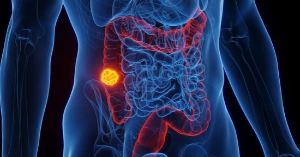
USF Health researchers, working in collaboration with Tampa General Hospital and Hokkaido
University in Japan, have identified a hidden mechanism that enables metastatic colorectal
cancer to resist the body’s immune defenses, offering a promising target for future
therapies for the world’s second-leading cause of cancer-related deaths
The international study, published in the Journal of Experimental & Clinical Cancer Research, found that a biological process long thought to occur primarily inside cancer cells
instead appears to play a central role in the environment surrounding metastatic tumors,
where it is associated with immune suppression, more advanced disease and poorer patient
survival.
In laboratory experiments, researchers blocked two key components of the pathway,
allowing healthy killer T cells to return and successfully attack the cancer cells
again. The findings could explain why most metastatic colorectal cancers respond poorly
to certain immunotherapies and point toward strategies for making those treatments
more effective.
“For decades, we have thought of this pathway largely in terms of what happens inside
the cancer cell,” said Dr. Timothy J. Yeatman, professor of Surgery at the USF Health
Morsani College of Medicine, associate center director for Translational Research and Innovation at the TGH Cancer
Institute, and senior author of the study. “What we found suggests that much of the
important activity is actually happening in the tumor microenvironment, where it creates
conditions that prevent the immune system from effectively attacking the cancer.”
About thirty years ago, the “rheostat” model proposed that elevated sphingosine-1-phosphate
(S1P) promotes tumor cell growth, whereas higher ceramide levels trigger cell death.
Under this traditional model, scientists thought that cancer cells used this internal
mechanism to control their own fate, turning up S1P to grow uncontrollably or turning
down ceramide to avoid dying, just like a physical rheostat, or dimmer switch, controls
electrical current by increasing or decreasing resistance.
The new, multi-institute study showed that an important part of that balancing act
occurs outside the cancer cells themselves in immune cells called macrophages
The prevailing theory assumed this chemical balancing act was happening inside the
tumor cells. But advanced spatial mapping showed that the molecules that make and
receive these “stay alive” signals are concentrated in the surrounding healthy-looking
support tissue and specialized immune cells. This creates a state of ongoing, unhealthy
inflammation that blocks killer immune cells, preventing them from getting close enough
to fight and destroy the tumor.
The researchers also identified a specific three-gene signature that acts as a warning
of aggressive cancer. High activity of this gene signature is strongly linked to late-stage
cancer, tumors spreading into lymph nodes, lower patient survival rates and poor responses
to standard immunotherapy drugs. The lab experiments support further investigation
into whether targeting the pathway could alter the immune environment surrounding
a tumor and help immune cells function more effectively.
Hokkaido University researchers (from left): Dr. Divyavani Gowda, Prof. Shu-Ping Hui
and Dr. Siddabasave Gowda (Photo courtesy of Dr. Gowda)
USF researchers (from left): Dr. Ramani Soundararajan, Dr. Tim Yeatman and Dr. Michelle
M. Maurin (Photo courtesy of Dr. Maurin)
Colorectal cancer remains one of the most challenging cancers to treat, with five-year
survival rates of about 14% once the disease spreads. While immune therapies have
revolutionized treatment for several cancers, most colorectal tumors at this stage
are resistant to these treatments. Understanding why is a major clinical challenge
The findings suggest that targeting the S1P/S1PR3 pathway could help overcome that
resistance and improve the effectiveness of immunotherapy for patients with advanced
colorectal cancer.
