


For years, smartwatch makers have promised to make our wrists the next frontier in health monitoring. Heart rate, ECGs, blood oxygen, sleep tracking, and body temperature have all found their way into modern wearables. Blood sugar is widely expected to be next
The catch? The revolution has already started, just not in the way many people think
Despite years of rumors about companies like Apple and Samsung, no mainstream smartwatch can independently measure blood glucose without an external sensor. Instead, today’s progress is coming from continuous glucose monitors, artificial intelligence, and tighter integrations between medical devices and consumer wearables
For IT leaders, healthcare organizations, and businesses investing in digital health, understanding where the technology stands today is just as important as knowing where it’s headed
The revolution isn’t about the watch
Search for “blood sugar smartwatch,” and you’ll find countless products claiming to measure glucose from your wrist
Most of those claims deserve skepticism
TheFDA has warned consumers against relying on smartwatches or smart rings that claim to measure blood glucose without skin penetration, noting that inaccurate readings could lead to inappropriate treatment decisions. The warning does not apply to watches that simply display readings from an FDA-authorized continuous glucose monitor
Instead, today’s ecosystem looks different
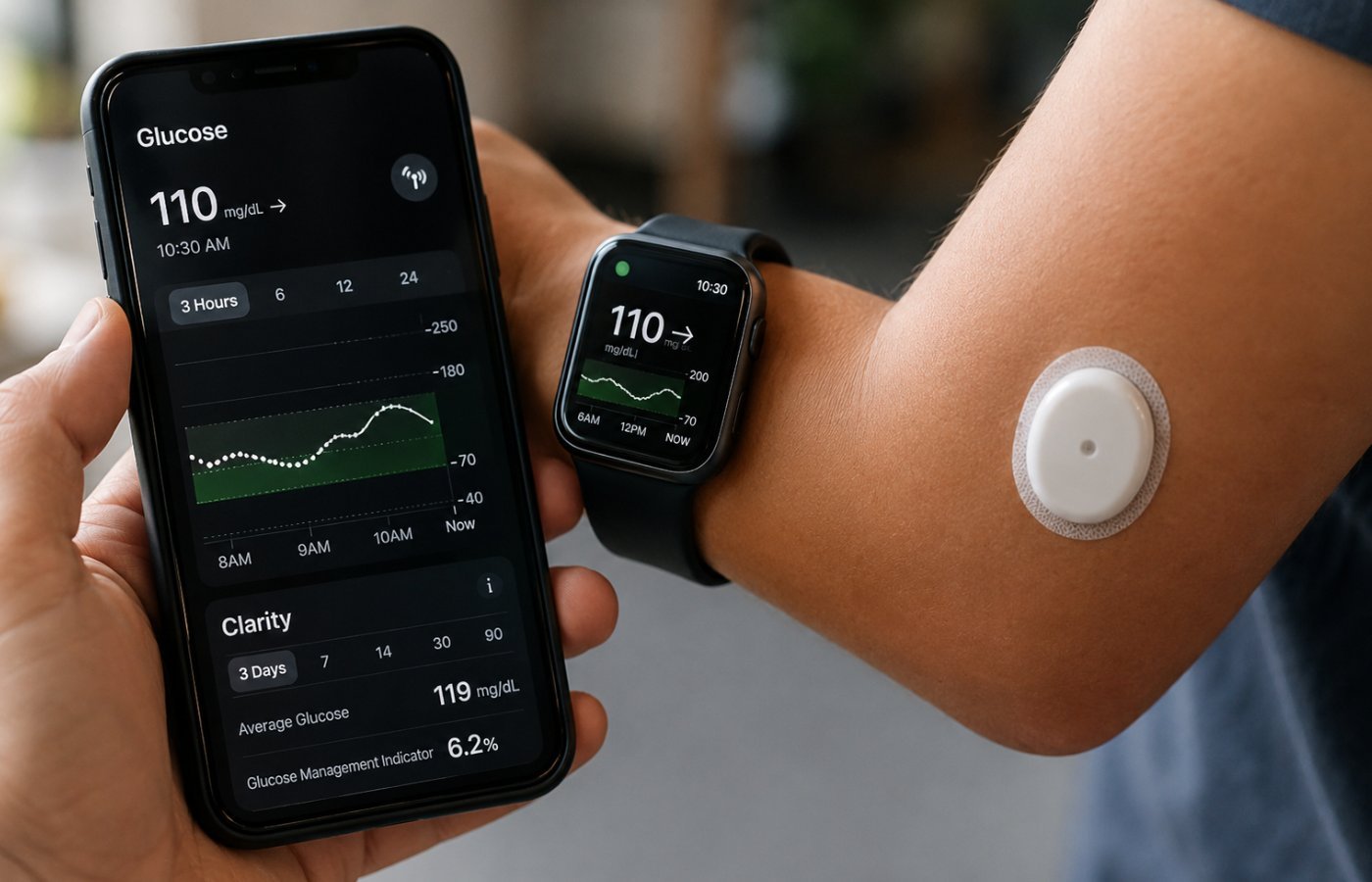
A wearable glucose sensor continuously measures glucose levels beneath the skin. That sensor sends information to a smartphone, which can then relay the data to a smartwatch. The watch becomes a convenient dashboard rather than the device performing the measurement
It’s an important distinction because it represents a shift from consumer electronics trying to become medical devices toward consumer devices becoming smarter companions for regulated healthcare technology
Continuous glucose monitors are becoming mainstream
Continuous glucose monitors have traditionally been associated with people managing diabetes. That audience is now expanding
In 2024, theFDA cleared Dexcom’s Stelo as the first over-the-counter continuous glucose monitor in the United States, opening the door for adults with Type 2 diabetes who do not use insulin, as well as some consumers interested in understanding how food, exercise, and sleep affect their glucose levels
Hardware manufacturers are also making these devices easier to use alongside wearables
Dexcom’s G7 now supports direct connectivity with Apple Watch, allowing users to view glucose readings even when their iPhone isn’t nearby. Abbott has continued expanding smartwatch support for its FreeStyle Libre platform, making glucose data more accessible throughout the day
The result is a growing ecosystem in which medical-grade sensors, smartphones, and smartwatches work together rather than compete
Advertisement
AI could become the biggest breakthrough
While headlines often focus on futuristic sensors, artificial intelligence may have a greater impact on glucose monitoring over the next several years
Continuous glucose monitors can generate hundreds of readings every day. Dexcom’s FDA-cleared G7, for example, provides real-time glucose readings every five minutes, or roughly 288 readings over a 24-hour period. AI can help transform those numbers into practical insights by identifying trends, predicting potential highs or lows, and highlighting how meals, exercise, stress, or sleep affect glucose patterns.
Several digital health companies are already incorporating AI-powered coaching into their glucose platforms, while researchers continue to explore machine learning models to improve glucose prediction and personalized recommendations
For businesses, this shift reflects a broader trend in connected healthcare: collecting data is becoming less valuable than effectively interpreting it
Why Apple, Samsung, and others are chasing noninvasive monitoring
Rumors surrounding Apple’s long-running glucose monitoring project surface almost every year. Samsung has also discussed its research into noninvasive health sensors
The opportunity is enormous
More than 600 million people worldwide are projected to have diabetes by 2030, according to the International Diabetes Federation, while millions more monitor their metabolic health for preventive reasons. A smartwatch capable of accurately measuring blood glucose without needles would represent one of the biggest advances in consumer health technology
The challenge is equally significant
Unlike heart rate or blood oxygen, glucose cannot currently be measured through the skin with the accuracy required for medical decisions using today’s smartwatch hardware. Researchers continue experimenting with optical sensing, spectroscopy, and other techniques, but none have yet produced a consumer smartwatch approved for that purpose
That’s why most industry observers believe the first company to solve the problem won’t simply launch another smartwatch feature. It will fundamentally change how people monitor chronic conditions
Advertisement
What businesses should watch
The smartwatch blood sugar revolution isn’t just about consumers
Employers are increasingly investing in digital wellness programs. Healthcare providers are expanding remote patient monitoring initiatives. Health insurers continue exploring technology that encourages preventive care
As glucose monitoring becomes more accessible, organizations should pay attention to several factors:
- Integration between CGMs, wearables, and electronic health records.
- Privacy and security protections for increasingly sensitive health data.
- AI transparency and how health recommendations are generated.
- Regulatory approval rather than marketing claims.
- Long-term costs and reimbursement models.
The organizations that benefit most may not be those buying the newest smartwatch, but those building systems that can securely collect, interpret, and act on wearable health data
The next chapter
The smartwatch blood sugar revolution has already begun, but today’s breakthrough isn’t a watch that magically reads glucose from your wrist
Instead, it’s the convergence of medical sensors, AI, cloud connectivity, and wearable computing into a more complete health ecosystem
Eventually, noninvasive glucose monitoring may arrive as another built-in smartwatch feature. Until then, the biggest advances are happening behind the scenes, where regulated medical devices and intelligent software are quietly changing how people understand one of the body’s most important health signals
