
April 22, 2026
- Reviewed byHoward E. LeWine, MD,
Chief Medical Editor, Harvard Health Publishing; Editorial Advisory Board Member, Harvard Health Publishing
Share
Print This Page
If there were a pill that lowered blood pressure, improved cholesterol, reduced blood sugar, helped control weight, preserved muscle and bone, sharpened thinking, lifted mood, and cut the risk of at least eight different cancers—without a prescription and with minimal side effects—it would likely be front page news
We already have something that does all of that. It’s called physical activity
What happens to your body when you slow down
Starting in midlife, most people slowly lose strength, stamina, and flexibility—even if they feel generally well. Muscle tissue shrinks, especially in the legs and hips. Power, the ability to exert force quickly (think of stepping up onto a curb or catching yourself when you trip), declines. Joints stiffen, balance becomes shakier, and it takes more effort to walk the same distance you once covered easily.
Some of these changes are part of natural aging. But they are also powerfully influenced by how much we move—or don’t move
In the United States, adults over 60 spend the majority of their waking hours sitting. Prolonged sitting has been linked to higher risks of heart disease, stroke, diabetes, certain cancers, depression, and earlier death. In fact, some experts have called chronic inactivity “the new smoking” because its health impact is so widespread
The encouraging flip side is that when older adults increase their activity—even modestly—the trajectory can shift. Muscles become stronger, balance improves, energy returns, and many health risks go down
Why fitness predicts longevity so well
Large studies following tens of thousands of people over many years have found that cardiorespiratory fitness—how well your heart, lungs, and circulation keep up during sustained activity—is one of the strongest predictors of how long you’ll live
In one such study, participants underwent treadmill testing and were grouped by fitness level. Over the following years, the people with the lowest fitness had the highest death rates, comparable to or worse than those with chronic illnesses. Those in the fittest group had dramatically better survival—several times better than the least fit—even after accounting for age and other risk factors.
Unlike age or genetics, fitness is modifiable. Even if you’ve been sedentary for years, gradually increasing your activity can improve how your heart and lungs function. In many cases, the body responds more robustly than people expect, especially when changes are consistent
How much movement do you really need?
Official guidelines for adults recommend at least:
150 minutes per week of moderate intensity aerobic activity(such as brisk walking), or
75 minutes per week of vigorous activity (such as jogging or fast cycling), or a mix of the two
plus muscle strengthening exercises at least two days per week that work the major muscle groups
For older adults, activities that challenge balance—like tai chi, yoga, or simply practicing standing on one leg—are also recommended, because they reduce fall risk
If those numbers feel overwhelming, it’s important to know: some is far better than none. In studies, people who went from hardly moving at all to doing even small amounts of regular activity significantly lowered their risk of dying early. The biggest “jump” in benefit comes when you move from completely sedentary to lightly active
One example: research tracking daily step counts found that people who averaged around 7,000 steps per day had substantially lower risk of cardiovascular disease and death than those who only reached about 2,000, even though 7,000 is well short of the popular (and somewhat arbitrary) 10,000 step target
Building a movement plan that supports healthspan
For the sake of healthy aging, it helps to think of activity in three broad categories—aerobic, strength, and balance—and to include a bit of each over the course of a week
Aerobic activity
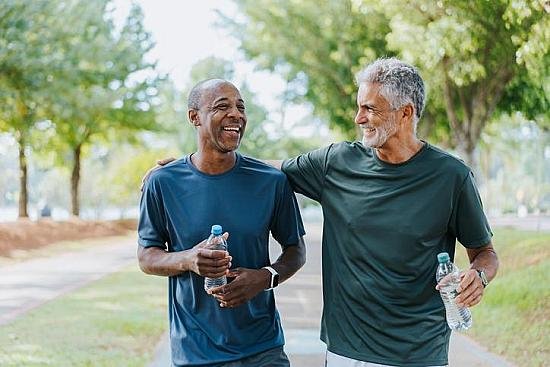
Anything that raises your heart rate and makes breathing a bit faster counts: brisk walking, gardening, dancing, swimming, cycling, water aerobics, playing with grandchildren, even vigorous housework. You should be able to talk but not sing during moderate activity; during vigorous activity, you’ll only get out a few words at a time
Strength training
Losing muscle is not inevitable. Two or three times a week, do exercises that challenge the major muscle groups in your legs, hips, chest, back, abdomen, and arms. That might mean using resistance bands, free weights, weight machines, or even your own body weight (for example, wall push ups or chair squats). Aim for 8–12 repetitions of each exercise, resting briefly between sets
Strength training pays off in several ways: it makes everyday tasks easier, supports joint health, helps preserve bone density, and improves blood sugar regulation
Balance and functional movements
Activities such as tai chi, yoga, and simple drills like heel to toe walking, standing on one leg, or rising from a chair without using your hands all help maintain stability and coordination. They resemble the movements you rely on in daily life—getting into and out of a car, stepping over a curb, turning quickly if someone calls your name. Practicing them reduces your risk of falls, one of the biggest threats to health and independence in later life.
Fitting activity into real life
You don’t need a gym membership or special clothing to reap these benefits. Here are a few practical strategies:
Break it up. Several short bouts of 5–10 minutes throughout the day can be as effective as longer sessions. Take a walk after meals, pace while on the phone, climb stairs instead of waiting for the elevator
- Use “exercise snacks.”Set a timer once an hour as a reminder to stand, stretch, and move—even if only around the room.
- Make weekends count. If weekdays are packed, doing more activity on Saturday and Sunday can still provide similar health benefits, as long as you don’t overdo it and you warm up properly.
- Tie movement to existing habits. Walk while you listen to the news, do a few strength exercises after brushing your teeth at night, or stretch while the coffee brews. Tiny anchors like these make activity easier to stick with.
If you have chronic conditions, joint pain, or have been inactive for a long time, check with your health care provider before starting a new routine. They can help you find safe starting points and adjust medications if needed
The long view
Physical activity is not about chasing athletic perfection. It’s about protecting your ability to live life on your own terms: to walk at a pace that feels comfortable, to carry your own bags, to get off the floor without help, to stay steady on your feet, to keep up with family and friends
From a longevity perspective, activity is one of the most powerful tools we know. It acts on many of the same biological pathways that experimental “longevity drugs” target—improving mitochondrial function, reducing chronic inflammation, maintaining muscle and bone, supporting brain health—without waiting for future breakthroughs
You cannot control every aspect of aging. But by choosing to move your body regularly, in ways that fit your abilities and preferences, you give yourself a better chance of adding not just years to your life, but life to your years
For more information on science-backed strategies to move with ease, age well, and extend your healthspan, check out Pathways to Longevity: Science and strategies in pursuit of a longer, healthier life, a Special Health Report from Harvard Medical School
Image: © andreswd/GettyImages
Share
Print This Page
