


© RioPatuca Images – stock.adobe.com
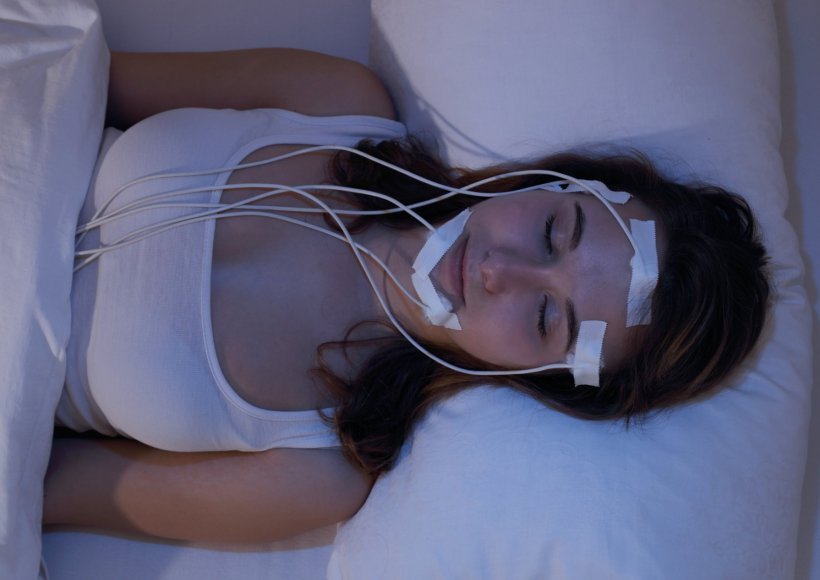
A team of scientists from the University of Liège (GIGA Neurosciences), supported by the Stop Alzheimer’s Foundation, has analysed the sleep patterns of more than 500 healthy people. Among middle-aged participants, a higher frequency of nocturnal micro-awakenings was found to be associated with a greater genetic risk of developing Alzheimer’s disease, whereas this link was not observed in young adults. This research, published in the journal Sleep, suggests that the study of sleep could, in the long term, contribute to the early identification of vulnerable individuals.
These micro-awakenings are not insignificant – certain profiles could promote the accumulation of proteins involved in Alzheimer’s disease and be associated with increased vulnerability
For several years, scientists around the world have been investigating the link between sleep disorders and neurodegenerative diseases. A recent study conducted by scientists at the University of Liège offers a new perspective by suggesting that this link may establish itself before any clinical symptoms of the disease appear. To establish this, the researchers exploited the partly genetic nature of the disease (Alzheimer’s disease is neither purely hereditary nor entirely independent of genes) to calculate a polygenic risk (i.e. summarising the combined influence of your genes on your probability of developing a given disease in a single figure) in over 500 healthy individuals, the majority of whom were young adults (aged 18 to 31), but also included older people (aged 50 to 69). Before continuing, it is important to note that the polygenic risk remains low and cannot predict who will develop the disease. Using this risk estimate, the team looked for correlations with the participants’ sleep characteristics.
The results show that, in this case, the genetic risk of developing Alzheimer’s disease is linked to the frequency of nocturnal micro-awakenings – brief periods of brain activity that do not fully wake the sleeper but can disrupt the sleep cycle. No such link was found among the younger participants. Among older participants, however, more frequent micro-awakenings go hand in hand with a higher genetic risk, even though they are still relatively young and show no signs of the disease. “These micro-awakenings are therefore not insignificant,” emphasises Puneet Talwar, a researcher at the GIGA ULiège laboratory, “certain profiles could promote the accumulation of proteins involved in Alzheimer’s disease and be associated with increased vulnerability.”
The researchers also focused on the coeruleus locus, a region nestled in the brainstem, about the size of a grain of rice, which is involved in wakefulness, attention and sleep regulation. “This region is difficult to observe, but it appears to play a role in the early mechanisms linked to the disease,” explains Gilles Vandewalle, co-director of the GIGA CRC In Vivo Imaging technology platform and Fund for Scientific Research – FNRS Research Director at ULiège. As early as 2025, in a preliminary study published in the Journal of Biomedical Science, using the 7-Tesla MRI scanner installed at the ULiège platform, the team had been able to analyse the locus coeruleus in detail and demonstrate that sleep quality (speed of falling asleep, depth) was linked to the state of the brainstem from a young age, and that the proper functioning of the locus coeruleus depended on the quality of REM sleep, a phase that is important for memory. Indeed, the locus coeruleus is of particular interest: it is one of the first regions where abnormal protein deposits appear, sometimes as early as adolescence, although the implications of this are not yet fully understood.
These compiled observations open up new avenues for screening and prevention. Ultimately, sleep analysis could complement the tools used to identify people at risk before symptoms appear. “Sleep could become an accessible marker for the early identification of vulnerable individuals,” adds Gilles Vandewalle. Another avenue involves improving sleep quality in an attempt to prevent or slow the progression of the disease in genetically predisposed individuals. “This research shows that sleep is not only an indicator of health, but also a potential lever for intervention,” adds Lucie Leroux, head of French-speaking activities at the Stop Alzheimer’s Foundation.
Whilst Alzheimer’s disease affects more than 220,000 people in Belgium, these findings remain statistical associations that require confirmation and do not, at this stage, allow the disease to be predicted in an individual. Nevertheless, they highlight the importance of basic research in better understanding and, one day, anticipating the disease.
12.08.2026
More on the subject:
