
For years, many women have learned to live with symptoms they assume are simply part of being female
A missed period is blamed on stress
Persistent fatigue is put down to a hectic lifestyle
Weight gain is dismissed as a lack of discipline, while painful periods are endured in silence
But what if these symptoms are not normal at all?
Many hormonal health conditions are frequently overlooked or misdiagnosed, leaving women struggling with symptoms that can affect fertility, metabolism, mood, energy levels and overall well-being
According to clinical research associate Karen Kumar, women’s health has long been overlooked
Many women likely noticed warning signs long before receiving a diagnosis, but those symptoms were often dismissed or normalised
“While we have access to healthcare, there is still insufficient focus on women’s health issues,” says Karen, who is also pursuing a PhD in public health with a focus on metabolic syndrome
“Even obtaining a diagnosis can take years
“It is rarely as simple as visiting a clinic and saying, ‘I’m gaining weight’ or ‘I’m struggling to lose weight.’
“More often than not, women are advised to exercise more and watch their diet, but time constraints within the healthcare system can make it difficult to provide detailed guidance.”
As artificial intelligence (AI) becomes increasingly integrated into healthcare, she believes technology could help women recognise potential warning signs earlier and shorten the often lengthy path to diagnosis
Why are hormonal disorders often missed?
Despite affecting millions of women worldwide, hormonal disorders remain under- recognised and frequently misunderstood
According to Karen, one of the biggest barriers to diagnosis is that women’s symptoms are often dismissed or tri
“There is still a tendency to minimise concerns related to hormonal health,” she says
“For example, when a woman is emotional, irritable or experiencing severe menstrual symptoms, people often respond with stereotypes or dismissive remarks.”
As a result, many women are expected to continue functioning normally despite experiencing significant physical discomfort
“If I’m in severe pain during my period, I’m still expected to work, manage household responsibilities and fulfil my usual obligations,” says Karen
“Then, if I become frustrated or emotional, people immediately attribute it to hormones in a dismissive way.”
She believes this mindset can prevent women from recognising when symptoms warrant medical attention
“We’ve normalised pain to such an extent that many women assume severe discomfort is simply part of being female,” she says
“But pain is not normal … it’s a signal that something may be wrong.”Acne in women with PMOS is primarily driven by hyperandrogenism (excess androgens like testosterone) and insulin resistance. It frequently presents as stubborn, moderate-to-severe hormonal acne localised along the jawline, chin and neck
Her PMOS journey
Karen reflects on her experience before being diagnosed with Polyendocrine Metabolic Ovarian Syndrome (PMOS) in 2023
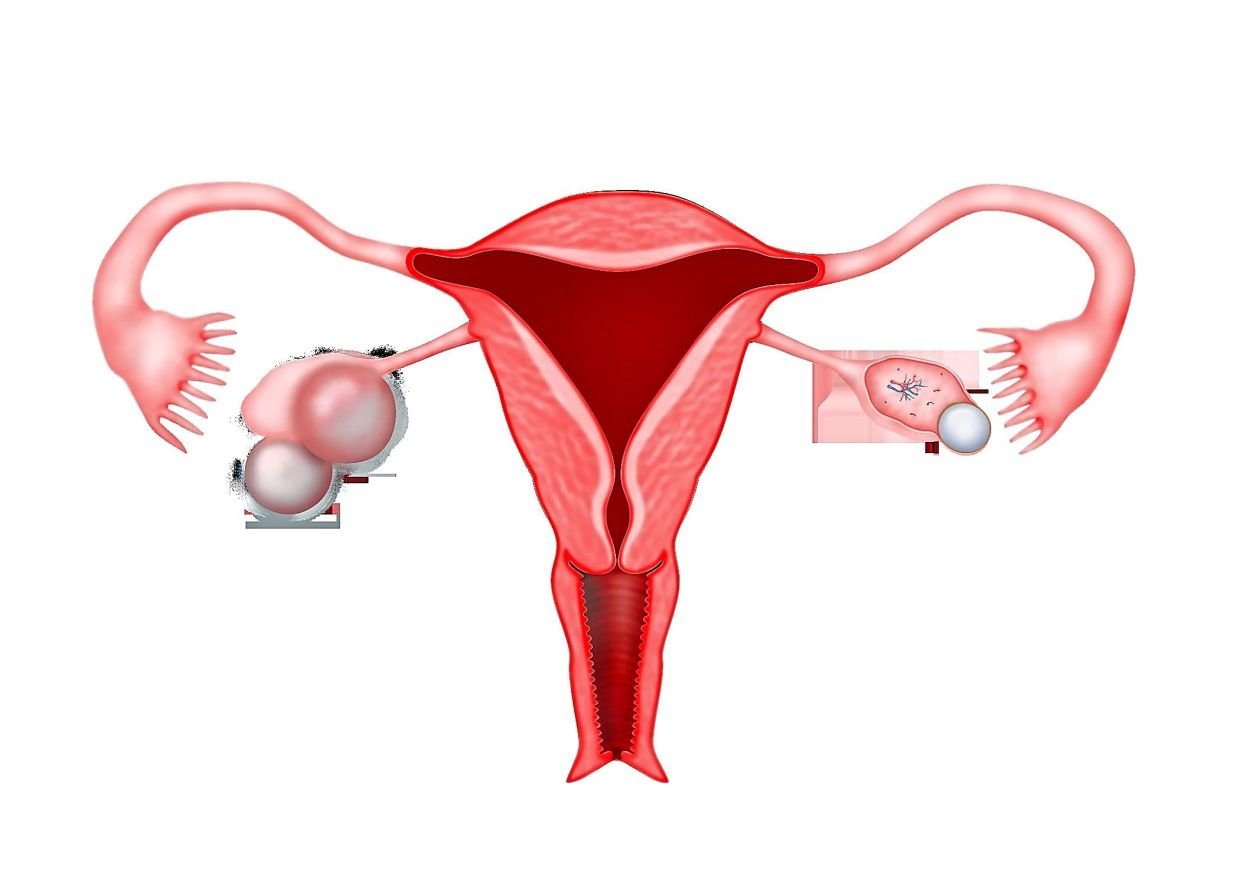
PMOS, previously known as Polycystic Ovary Syndrome (PCOS), is characterised by an imbalance of reproductive hormones, which leads to irregular periods, elevated levels of “male” hormones (androgens), and small fluid-filled sacs (cysts) in the ovaries
Despite her healthcare background, obtaining a diagnosis was not straightforward
“If I – as someone working in a healthcare setting – found it difficult to obtain a diagnosis, imagine how challenging it must be for someone without a medical background,” she says
She became increasingly concerned when her menstrual periods stopped for nearly three months and she started getting acne
“I kept asking myself, ‘Why is this happening?’
“At the same time, I was experiencing severe acne. I knew something wasn’t right.”
Seeking answers, Karen consulted a gynaecologist at a private hospital
Following an ultrasound scan, she was told her ovaries appeared polycystic and that her symptoms, especially acne, were consistent with PMOS
She was subsequently prescribed oral contraceptive pills (OCPs) to help manage her symptoms
However, Karen says she was initially hesitant to start treatment because fertility was already a concern
“I’m not married, I don’t have children yet, and I’m not getting any younger
“Naturally, fertility was something I thought about seriously,” she says
“Because of that, I wasn’t particularly keen on going on OCPs
“But I was desperate because I hadn’t had my period for almost three months.”
Karen took the pills and suffered some side effects
Looking back, she wishes there had been a broader discussion about some of the circumstances she was experiencing at the time
“I had just lost my father. I was under tremendous stress, and work wasn’t getting any easier,” Karen says
“Imagine trying to cope with grief while studying and working full-time
“Your body isn’t going to function the same way under those circumstances.”
In hindsight, she believes these factors may also have influenced her overall health and well-being
Her experience shaped the way she views women’s healthcare today
“If I had to go through this, imagine how many other women out there are facing the same challenges.”
Turning health data into insights
As healthcare systems increasingly embrace digital technologies, Karen believes AI could help bridge gaps in women’s healthcare by identifying patterns that might otherwise go unnoticed
AI is no longer a futuristic concept; it is already embedded in many aspects of modern healthcare
According to Karen, the shift from paper-based records to electronic medical records is one example of how technology has transformed healthcare delivery
“Digitalisation has improved access to healthcare, streamlined information sharing and helped bridge gaps for people who may otherwise struggle to access medical services,” she says
“As healthcare systems continue to evolve, many countries are moving towards digital healthcare ecosystems
“They are building large language models (LLMs) and predictive algorithms that can analyse health data and generate valuable insights.”
Karen points to hormonal testing as one area where these technologies could prove valuable
“While hormone levels naturally fluctuate throughout the day, the value lies not in a single test result but in establishing a baseline and tracking changes over time,” she says
These trends can then be used for predictive analysis, helping to forecast how hormonal patterns may evolve in future cycles or over the coming year
“This is where AI comes into the picture,” says Karen
She points to menstrual cycle tracking as a simple example
Healthcare professionals routinely ask women about the date of their last menstrual period, yet many struggle to recall it accurately because they do not regularly track their cycles
For Karen, this highlights the value of collecting personal health data over time
“When women begin tracking their cycles consistently, AI can use that information to identify patterns and help predict ovulation windows.”
Importantly, Karen says these insights are generated using an individual’s own health data, reflecting a broader shift towards personalised medicine, where healthcare decisions are increasingly tailored to the individual
“Personalised medicine is not very cheap,” she says
“But in small ways, we can integrate personalised medicine with the use of AI.”
Building a platform for earlier detection
For Karen, one of the biggest challenges in women’s hormonal health is that many of them do not recognise when something may be wrong
Symptoms such as irregular periods, persistent fatigue, unexplained weight gain or severe acne are often dismissed as stress or lifestyle-related issues, delaying diagnosis and treatment
To help address this gap, Karen has developed a digital platform (website) designed to guide users through the early stages of identifying potential hormonal and metabolic health concerns
“First, recognise that something may be abnormal,” she says
“Ask yourself: Is this normal for me? Has something changed?”
Users answer a series of questions about their symptoms and health status, after which the system generates a predictive report based on their responses
Combined with laboratory data, the platform uses predictive analytics to identify patterns that may warrant further investigation
According to Karen, the aim is to encourage people to seek help sooner and make more informed decisions about their health
“The important thing is to understand what’s happening inside your body before deciding on the next course of action,” she says
However, she stresses that the platform is intended to support, rather than replace, professional medical care
“The report is predictive, not diagnostic,” she says
“If you want confirmation, you still need proper testing and consultation with a healthcare professional.”
She adds that the reliability of the process comes from accredited laboratory testing, while AI serves as a tool to interpret data and identify trends
“The role of AI is simply to connect the dots. It gathers and analyses information based on the available data.”
While AI may help flag potential concerns, Karen emphasises that clinical judgement remains essential
“You cannot rely solely on AI-generated reports
“Healthcare professionals will always play an important role in diagnosis and treatment,” she says
