


How your smartwatch and AI might detect early signs of illness
Some features are more clinically useful than others
Smartwatches and other wearables have moved far beyond just tracking your steps and heart rate. Many of today’s versions can monitor everything from sleep and skin temperature to respiratory rate, blood oxygen, heart rate variability and even alert you to possible signs of sleep apnea. If you took Big Tech’s marketing at face value, you might conclude that your smartwatch is on the verge of becoming a real-life Star Trek Tricorder. But how reliable are wearables for spotting early signs of illnesses or other medical conditions?
A smartwatch receiving FDA clearance for a new health feature is often accompanied by enthusiastic marketing campaigns implying that it tells you more than it does. It wouldn’t be a fall Apple event without heartwarming stories of the latest Apple Watch saving lives, for instance. Even the Trump administration has joined the hype, with Health Secretary (and misinformation super-spreader) Robert F. Kennedy Jr. calling wearable tech products “a key” to his agenda.
So, is wearable health tech hype just another example of smoke being blown up our collective keisters? Well, not quite. While some can flag possible signs of a developing illness, smartwatches generally aren’t so hot at diagnosing underlying conditions. And some features are more useful than others.
What actually works
What wearables are best at is noticing breaks from your body’s usual patterns. Those outliers can hint that something warrants further investigation with your doctor
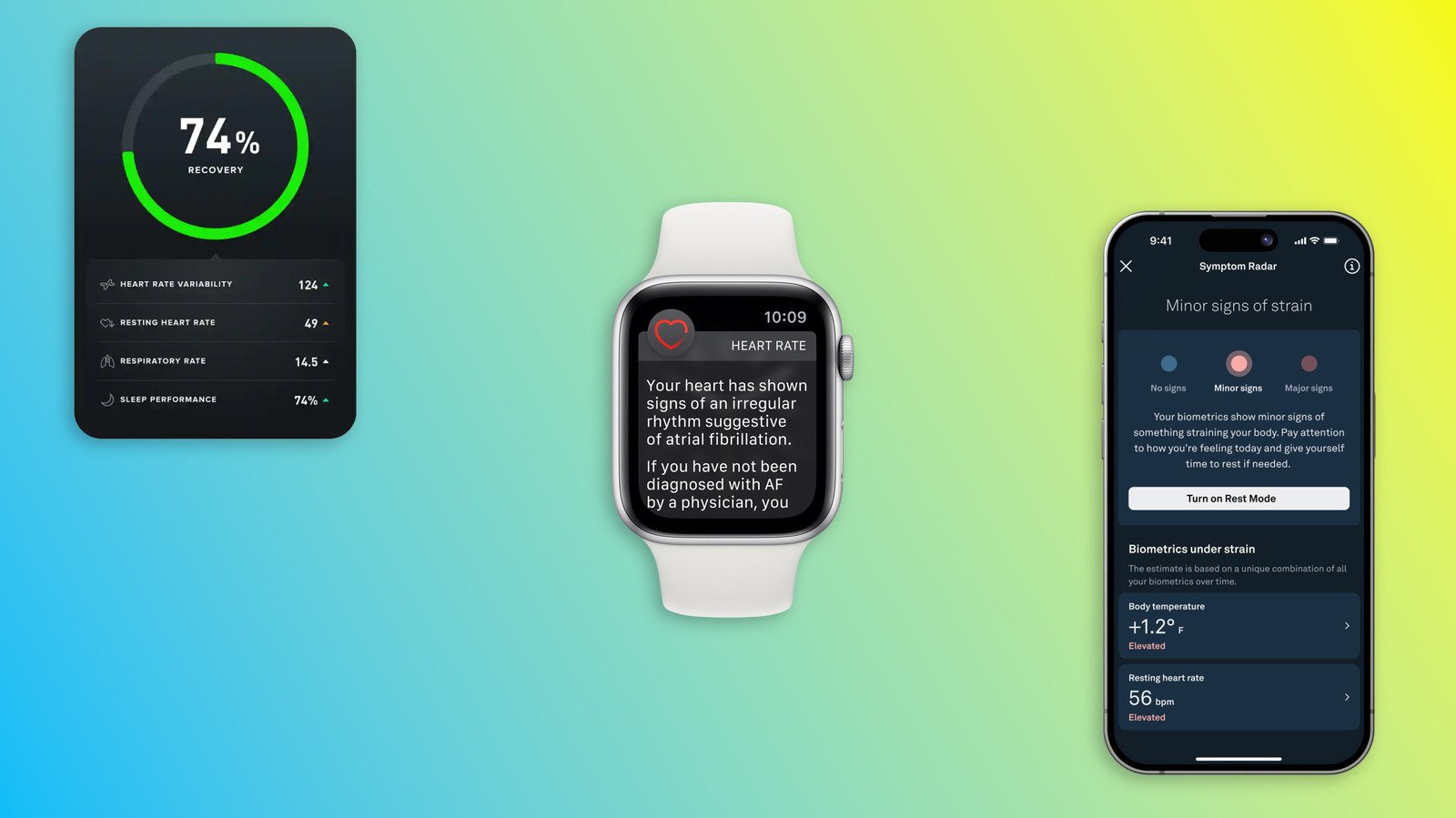
One area where they’ve already proved themselves is in detecting atrial fibrillation (AFib), an abnormal heart rhythm associated with an increased risk of stroke. In one Apple Watch study, the device’s irregular pulse alerts were confirmed to be AFib 84 percent of the time
That’s good enough to make it one of the few smartwatch features that many doctors consider clinically useful. Why? Because AFib has a clear physiological signature that’s relatively straightforward for a consumer wearable to detect
As for other “high-confidence” metrics, well, the list is pretty short. Physicians recently toldThe New York Times that basic sleep patterns (less so sleep stages) and step counts are also among the more reliable metrics from a medical standpoint. In other words, the clinically useful features are the exception, not the rule
Knowing the limits
Apple
Other smartwatch metrics aren’t accurate enough to use for medical decisions. Blood pressure alerts, calorie estimates and detailed sleep-stage tracking aren’t considered reliable enough for doctors to act on. Meanwhile, VO2 max and heart rate variability only offer rough estimates of fitness and recovery. And daily wellness scores, like Oura’s Readiness and Whoop’s Recovery, rely on proprietary algorithms. That leaves clinicians without much to work with.
Even the more reliable metrics could trigger false positives. For example, a spike in your resting heart rate could be a sign that your body is fighting an infection. But then again, it might just mean you slept like crap or had a bit more to drink than usual
Today’s devices are pretty good at noticing problems. They’re not so hot at telling you exactly what those are or what caused them. That’s why doctors tend to focus less on individual readings and more on broader trends
Combining data
Long before you notice the symptoms of, say, the flu or COVID-19, your body starts changing in subtle ways. Taken individually, changes to your skin temperature, resting heart rate or respiratory patterns may not mean much. But when combined and compared to your baseline, they may hint that you’re coming down with something
Research has shown that wearables can detect physiological changes from respiratory infections before symptoms appear. (It’s worth noting that they’re detecting the body’s response to an infection, not the virus or bacteria itself.) A recent study from Texas A&M and Stanford found that smartwatches may detect early signs of COVID-19 and influenza within hours of infection. The researchers estimated that encouraging people to isolate, get tested and seek treatment earlier could reduce pandemic transmission by up to 50 percent.
Of course, wearables, pandemics and the seasonal flu have been around for many years, but recent developments in AI and sensor technology could push things forward. Companies like Google, Oura and Whoop have all introduced some version of an AI coach or advisor in their apps, helping users make sense of their data.
There are also features that aren’t labeled “AI,” like Oura’s Symptom Radar and Apple’s Vitals that piece together information from multiple sensors and compare it with your baseline. And the processing ability of the latest AI language models, like Google’s Gemini in the company’s Health Coach, will likely play an increasingly important role in tying it all together and suggesting actionable steps. But like proprietary recovery scores, much of that AI analysis will happen behind the scenes, offering little that doctors can reliably act on.
At best, AI health analyses will nudge people to seek treatment earlier. At worst, they might encourage people to substitute computer-generated advice for consultations with medical professionals.
While today’s AI systems come with warnings to check with real-world doctors, there is still the risk of people taking wearable data or app insights as the be-all and end-all verdict on their health. Whether it’s information from a miniaturized sensor on your wrist or advice given by a chatbot on your phone, nothing can replace regular physical health checkups with doctors and medical professionals.
The future of wearable health probably won’t be a smartwatch that diagnoses disease from your wrist — the fabled wrist Tricorder. Instead, it’s more likely to be a device that quietly watches for patterns, nudges you when something looks off and gives you another piece of useful information to discuss with your doctor
