

Close Menu
HealthJustFineHealthJustFine

    Subscribe to Updates

    Get the latest creative news from FooBar about art, design and business.

    What's Hot

    Advanced hormone testing could be the next frontier in women’s health

    August 7, 2026

    Digital Health Provider Launches Women’s Health & Sleep Solutions

    August 7, 2026

    Back-to-school sleep tips: What parents should know before the first bell

    August 7, 2026
    Facebook X (Twitter) Instagram
    HealthJustFineHealthJustFine
    Facebook X (Twitter) Instagram
    • Home
    • General Health News
    • Sleep Health
    • Mental Wellness
    • Fitness & Recovery
    • Health Tech & Wearables
    • More
      • Longevity & Anti-Aging
      • Women’s Hormone Health
      • Gut Health & Microbiome
      • Metabolic Health & Blood Sugar
      • Nutrition & Anti-Inflammatory Foods
    HealthJustFineHealthJustFine
    Home»Health Tech & Wearables»Your smartwatch might be making your sleep worse, experts say
    Health Tech & Wearables

    Your smartwatch might be making your sleep worse, experts say

    HealthJustfine TeamBy HealthJustfine TeamJuly 12, 2026No Comments5 Mins Read
    Facebook Twitter Pinterest LinkedIn Tumblr Reddit WhatsApp Email
    Your smartwatch might be making your sleep worse, experts say
    Share
    Facebook Twitter LinkedIn Pinterest WhatsApp Email
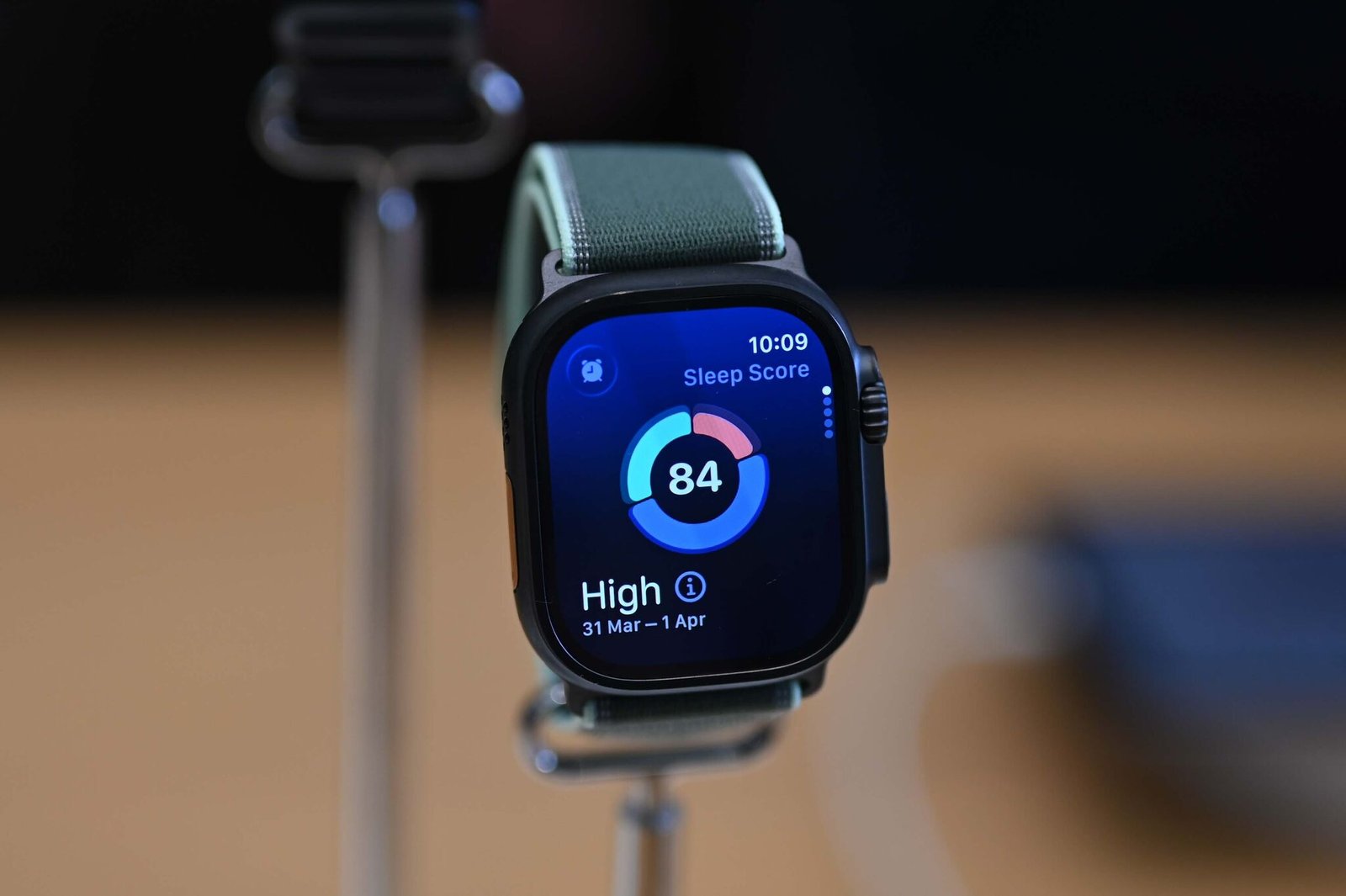
    An Apple Watch Series 11 is displayed at an Apple Store in September 2025. Wearables and sleep-tracking devices have grown increasingly popular, but sleep experts say some of the data they collect — including sleep scores and sleep-stage breakdowns — can be misleading.Anadolu via Getty Images

    The use of sleep tracking devices is exploding, with nearly half of U.S. adults saying they’ve used a smartwatch, app or other device to monitor their sleep — up from 35% in 2023, according to the American Academy of Sleep Medicine. 

    The uptick is part of a growing interest in sleep among researchers and the public, which is helping drive the recent “sleepmaxxing” trend on social media. 

    The trend is especially visible in the Bay Area, whose tech-heavy, fitness-oriented population fits the national profile of consumers most likely to adopt wearables like the Apple Watch, Garmin watches and Oura ring to track sleep. 

    Article continues below this ad

    But not all of the data these devices collect is meaningful, sleep medicine experts said. And they add that people who use them obsessively — including those who seek optimal sleep, driven by wearables data — may be the least likely to benefit from them

    Here’s what the technology is most and least helpful for:

    What they’re good at

    Make us a Preferred Source to get more of our news when you search.
    Add Preferred Source

    Some devices also claim to measure how much time you spend in each stage of sleep (light sleep, deep sleep and REM sleep). The technology is reasonably good at telling when you’re in REM sleep because that stage of sleep tends to have more heart rate variability, which sensors pick up on. 

    Article continues below this ad

    What they’re not as good at

    But these devices are less reliable at measuring deep versus light sleep. 

    The only way to tell if someone is in deep sleep — when the brain goes into slow synchronous activity — is when they’re in a lab study and their brain activity is being monitored by an electroencephalogram, or EEG, Malcolm said

    Patients will sometimes use information from their trackers about how much time they’re spending in each stage of sleep, and interpret it incorrectly, she said. 

    “People are like, ‘I had a bad night, I was in a lot of light sleep,’” she said. “That’s an incorrect way to look at it. You should be spending a lot of time in light sleep. It’s very important for your brain.”

    Article continues below this ad

    In fact, the majority of the night, up to 55%, can be in light sleep, she said. Different things occur during the different stages of sleep — including memory consolidation, the clearing out of proteins that are associated with Alzheimer’s and hormone secretion — and some functions take place over multiple stages. A person with a normal, healthy brain should have all stages in a good night’s sleep, she said.

    Some devices also generate a “sleep score,” and each company has its own “black box” algorithm that comes up with that score, said Stanford sleep medicine specialist Dr. Rafael Pelayo. 

    A sleep score in and of itself is not objective or meaningful, experts said. They are not standardized the way, say, an oximeter reading is standardized across different brands, Pelayo said. 

    But it may be a useful tool to track changes over time — the same way your bathroom scale can show changes in your weight over time, but only when compared to your previous weight on the same scale, Pelayo said. 

    “A hotel scale might be slightly off, but if your own scale went up or down, you trust it more,” he said. 

    Article continues below this ad

    If you’ve had high scores for a while and it suddenly drops, you can look into what may have changed, such as a new mattress or a new medication, he said

    Who should and shouldn’t use them

    Wearable sleep devices are more helpful for some than others, and some people should probably avoid them altogether, experts said

    If you drink alcohol some nights and not others, for instance, you may notice differences in sleep patterns that might compel you to drink less alcohol — a known sleep disrupter that can cause fragmented sleep. 

    “It might cause a behavioral change because you realize alcohol impacts your sleep,” Malcolm said. “That’s a helpful way to use a tracker.”

    Article continues below this ad

    The people that get the least benefit from sleep trackers, she said, are people with insomnia or orthosomnia — a relatively new term to describe someone with an unhealthy obsession with attaining “perfect” sleep. 

    “We see (orthosomnia) a lot in our clinic,” she said. “They’re tracking their sleep obsessively and bring me a huge data download and say, ‘I feel fine during the day but I get a sleep score of 50 or 60.’ This obsession with having perfect sleep, based on a wearable that’s an imperfect measure of sleep, is a difficult way to use them.” 

    Malcolm also recommends people with insomnia not use sleep trackers because it stresses them out even more. 

    “If someone presents to me with insomnia and brings me their tracking device, I tell them to throw it away,” she said. “You have to stop tracking your sleep. This is not a healthy behavior for you.”

    Some devices like the Apple Watch can flag certain medical conditions like sleep apnea and atrial fibrillation with relative accuracy, Pelayo said, but they can’t replace a formal medical diagnosis. 

    “We’re blurring the line between consumer electronics and medical devices,” he said. 

    making might smartwatch Your
    HealthJustfine Team
    • Website
    • Facebook

    Related Posts

    Accessible Healthcare and Assistive Technology with Wearables

    August 7, 2026

    Your next primary care doctor could be online only, accessed through an AI tool

    August 7, 2026

    How to increase your chances of avoiding dementia; a possible human lifespan of 194 years; the biggest factors affecting sleep; plus other stories with Vanderbilt Health sources

    August 6, 2026
    Leave A Reply Cancel Reply

    Don't Miss
    Women's Hormone Health

    Advanced hormone testing could be the next frontier in women’s health

    By HealthJustfine TeamAugust 7, 20260

    Hormone-related symptoms are widely recognized in clinical literature as a common experience among women of reproductive age, particularly in relation to premenstrual syndrome. Research in the National Library of Medicine highlights symptoms such as fatigue, mood changes, and physical discomfort as frequently occurring in the days leading up to menstruation, with the potential to interfere…

    Digital Health Provider Launches Women’s Health & Sleep Solutions

    August 7, 2026

    Back-to-school sleep tips: What parents should know before the first bell

    August 7, 2026

    Back-to-school brain health: Expert tips to boost learning and memory

    August 7, 2026
    Stay In Touch
    • Facebook
    • Twitter
    • Pinterest
    • Instagram
    • YouTube
    • Vimeo
    Our Picks

    Expert shares 6 tips to recover faster and stronger after intense workout sessions- Moneycontrol.com

    June 28, 2026

    These Viral Fitness & Wellness Recovery Products Are Taking Over TikTok Ahead of Prime Day

    June 28, 2026

    Life Time Has Created a Fitness and Recovery Paradise – Muscle & Fitness

    June 28, 2026

    The Movement Twenty Four: New 24-Hour Fitness and Recovery Hub Opens Down South

    June 28, 2026

    Subscribe to Updates

    Get the latest creative news from SmartMag about art & design.

    About Us

    Welcome to HealthJustFine.com, your trusted destination for reliable health news, wellness insights, and evidence-based information that empowers you to live a healthier life.
    Our mission is to make quality health information accessible, easy to understand, and relevant for everyone. We believe that staying informed is the first step toward making better decisions about your health, nutrition, fitness, and overall well-being. That’s why we deliver timely updates on the latest medical research, healthy living trends, preventive care, and wellness innovations from around the world.

    Our Picks

    Advanced hormone testing could be the next frontier in women’s health

    August 7, 2026

    Digital Health Provider Launches Women’s Health & Sleep Solutions

    August 7, 2026

    Back-to-school sleep tips: What parents should know before the first bell

    August 7, 2026
    Latest Posts

    Expert shares 6 tips to recover faster and stronger after intense workout sessions- Moneycontrol.com

    June 28, 2026

    These Viral Fitness & Wellness Recovery Products Are Taking Over TikTok Ahead of Prime Day

    June 28, 2026

    Life Time Has Created a Fitness and Recovery Paradise – Muscle & Fitness

    June 28, 2026
    Facebook X (Twitter) Instagram Pinterest
    • About Us
    • Contact Us
    • Terms & Conditions
    • Privacy Policy
    • Disclaimer

    © 2026 healthjustfine.com. All rights reserved. Designed by DD.

    Type above and press Enter to search. Press Esc to cancel.