


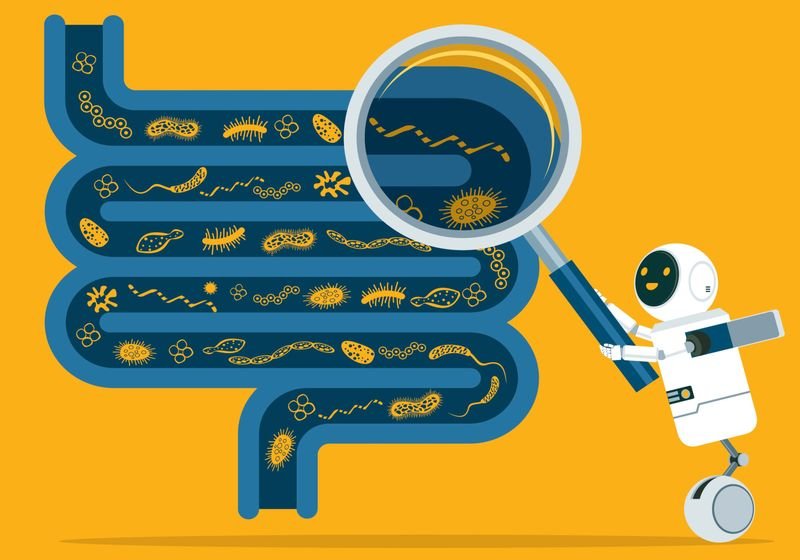
The microbiome has been associated with gut health, risks of cardiac and metabolic disease, and even mental health, where the bacterial communities and the products that they produce influence human biology.1-4 Yet, in part because of the microbiome’s complexity, many of these studies have been limited to characterizing these populations broadly or investigating the impacts of single interactions. So far, scientists have struggled to study the full range of microbial interactions and how different changes impact these processes.
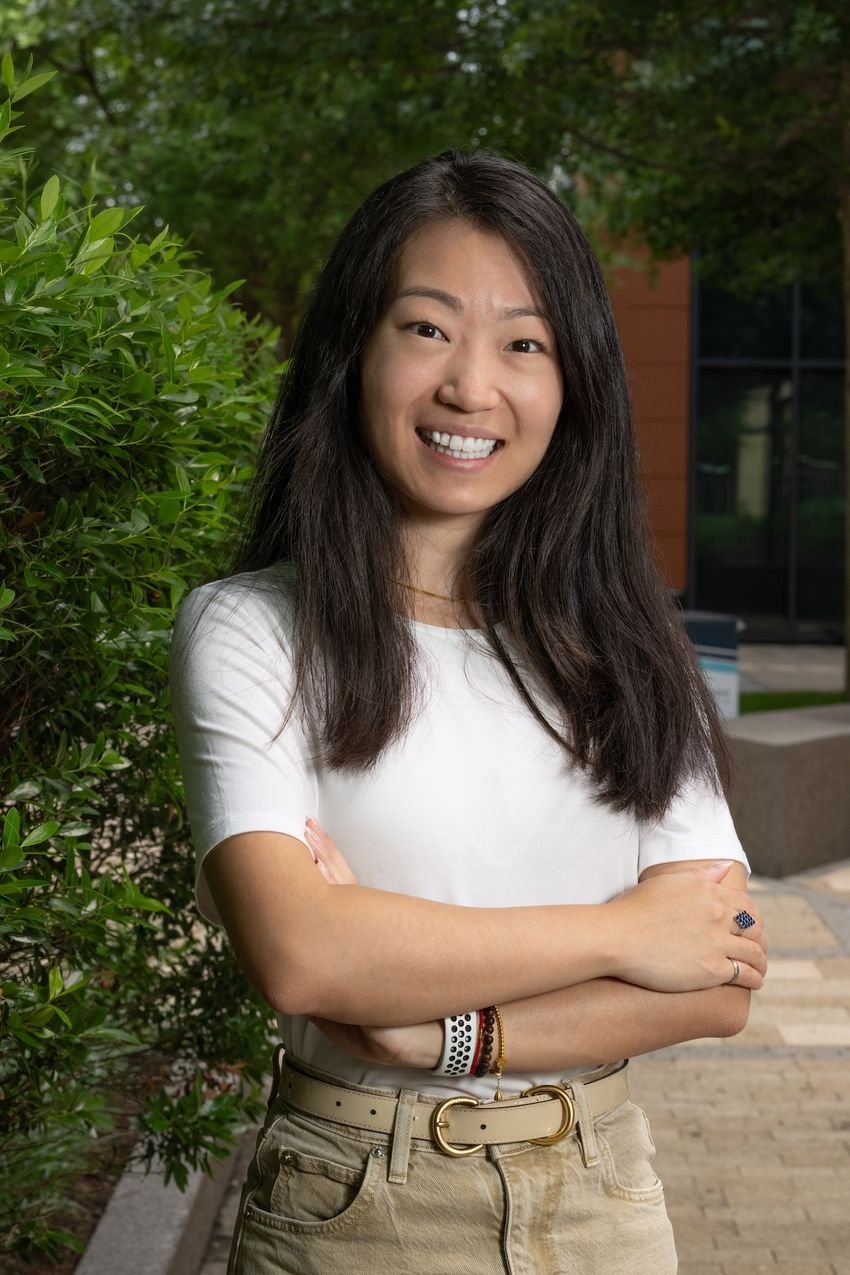
Cancer genomicist Jenny Yang became interested in the microbiome after studying cancer genetics and personalized medicine for her PhD research. She wanted to explore the nonhuman contributors to human health. “I feel like it’s quite a complex world that hasn’t been decoded yet, so it’s a really, really interesting challenge to jump into now,” she said. As part of her graduate research at the University of Oxford, she also worked alongside clinicians to develop translational AI tools for personalized medicine.
Given the enormous complexity of the microbiome, she thought that machine learning models were a perfect fit to provide insights into how different perturbations like drugs and diet influence the human microbiome. Teaming up with computational scientist Alex Merwin, the two cofounded Outpost Bio as an AI-centered biotechnology company to study the microbial interactions of the human body. “We are trying to bring something new to the field,” said Yang, the company’s chief executive officer.
She thought that studying how drugs affect the microbiome and how people’s diverse microbiomes affect how they metabolize drugs could improve drug development. However, these types of analyses are not routine parts of the pharmaceutical development process. Yang said, though, that with so much evidence pointing to the effect of the microbiome on health and drug responses, pharmaceutical companies should standardize these studies in the drug pipeline. “This would hopefully lead to the development of both drugs that work across more people and better patient drug matching,” she said. She added that another issue is that, when scientists do look at how certain drugs affect the microbiome, they often rely on mouse data that poorly translates to humans.
To address this, Yang and her team set out to develop an in vitro, human model of the microbiome with the goal of being able to use their platform to test how these communities respond to different perturbations. “The most easily accessible [human sample] is stool,” Yang said. “So, stool felt like a very great place to start, and it does capture a lot of the diversity of bacteria.”
One of the major challenges in human microbiome studies is the variation between individuals, so the researchers are focused on building their biobank with samples from people living in geographically diverse areas. Yang added that they are aiming to collect thousands, if not tens of thousands, of samples so that they can more easily identify meaningful patterns
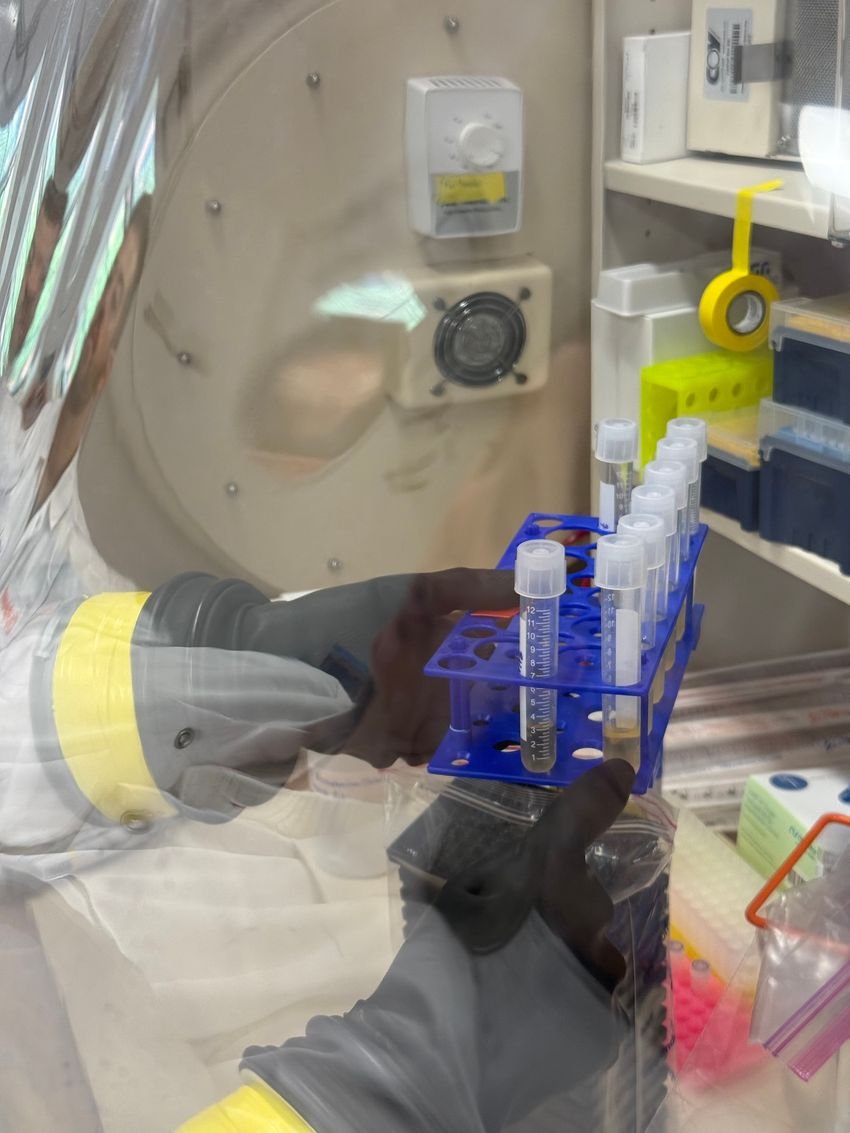
Using these collected samples, the researchers culture the stool microbiome communities in vitro, creating “gut in a tube” samples. Yang said that the team focused on creating protocols to consistently handle, store, and culture these communities, and they work to confirm that the composition of these populations is consistent with the original stool sample. The researchers utilize genomic and metabolomic analyses as a window into these communities’ interactions and population makeups, with the hope of further characterizing them with AI. Yang said that they will use these baselines to confirm that changes they observe in later studies with drug or dietary perturbations are in fact from the intervention and not a result of the cultured samples drifting from their original characteristics.
For their AI model, the team used publicly available human gut microbiome genomics data. One of their first models, released as an open mmunities.5 They are currently refining this model with more data
Another challenge in modeling the human microbiome is reproducibility, which Yang attributed to biases that emerge from differences in the exact reagents and procedures that groups use. Because of this, after deciding to collect stool samples, the Outpost Bio scientists chose to collect these specimens on their own and analyze their data in-house, as opposed to outsourcing it, to maintain standardization. They shared their procedures with two external groups, one in academia and the second a clinical research organization, to validate their microbiome model. They’ve also collaborated with other groups who create their own datasets and run similar experiments to compare their findings to determine if their model is generalizable.
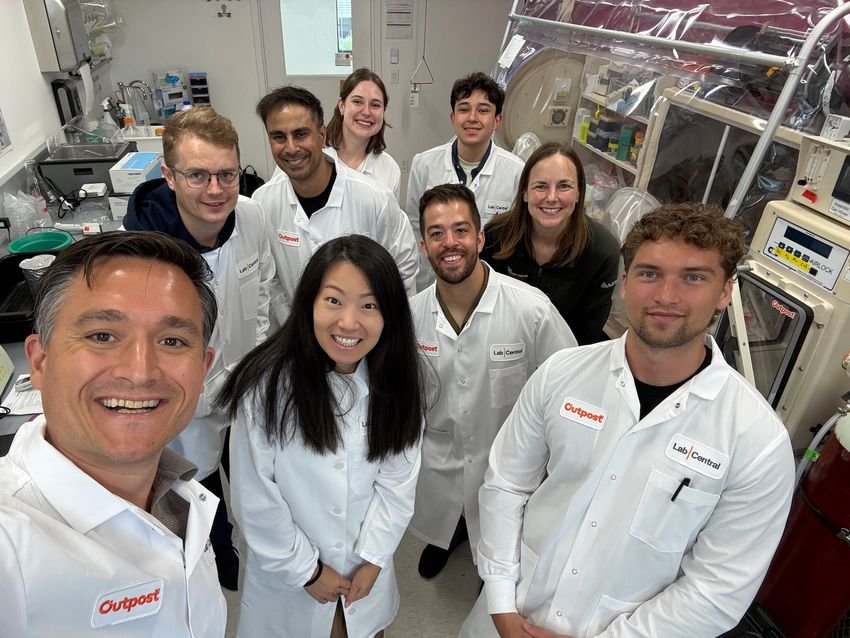
Yang said that recently, the team showed that their in vitro models replicated the communities and interactions seen in actual stool. “So that was one win,” Yang said. They’ve also seen comparable results from different batches of experimental data, indicating their system’s reproducibility. The long-term goal for these in vitro stool models is to provide a system to study how various perturbations, be they drugs or dietary compounds, affect the human microbiome.
Currently, the team is working with clinical trial operators and clinicians to obtain clinical specimens so that they can validate their in vitro and in silico models. In the future, Yang said that the team hopes to be able to use their current model and translate lessons from its training to apply it to other microbiomes, such as the skin
- Asnicar F, et al. Gut micro-organisms associated with health, nutrition and dietary interventions. Nature. 2026;650(8101):450-458.
- Fan Y, Pedersen O. Gut microbiota in human metabolic health and disease. Nat Rev Microbiol. 2020; 19(1):55-71.
- Berding K, et al. Diet and the microbiota–gut–brain axis: Sowing the seeds of good mental health. Adv Nutr. 2021;12(4):1239-1285.
- Wu G, et al. A core microbiome signature as an indicator of health. Cell. 2024;187(25):6550-6565.e11.
- Treloar NJ, et al. Learning the language of the microbiome with transformers. bioRxiv. 2026.05.02.722381.
