


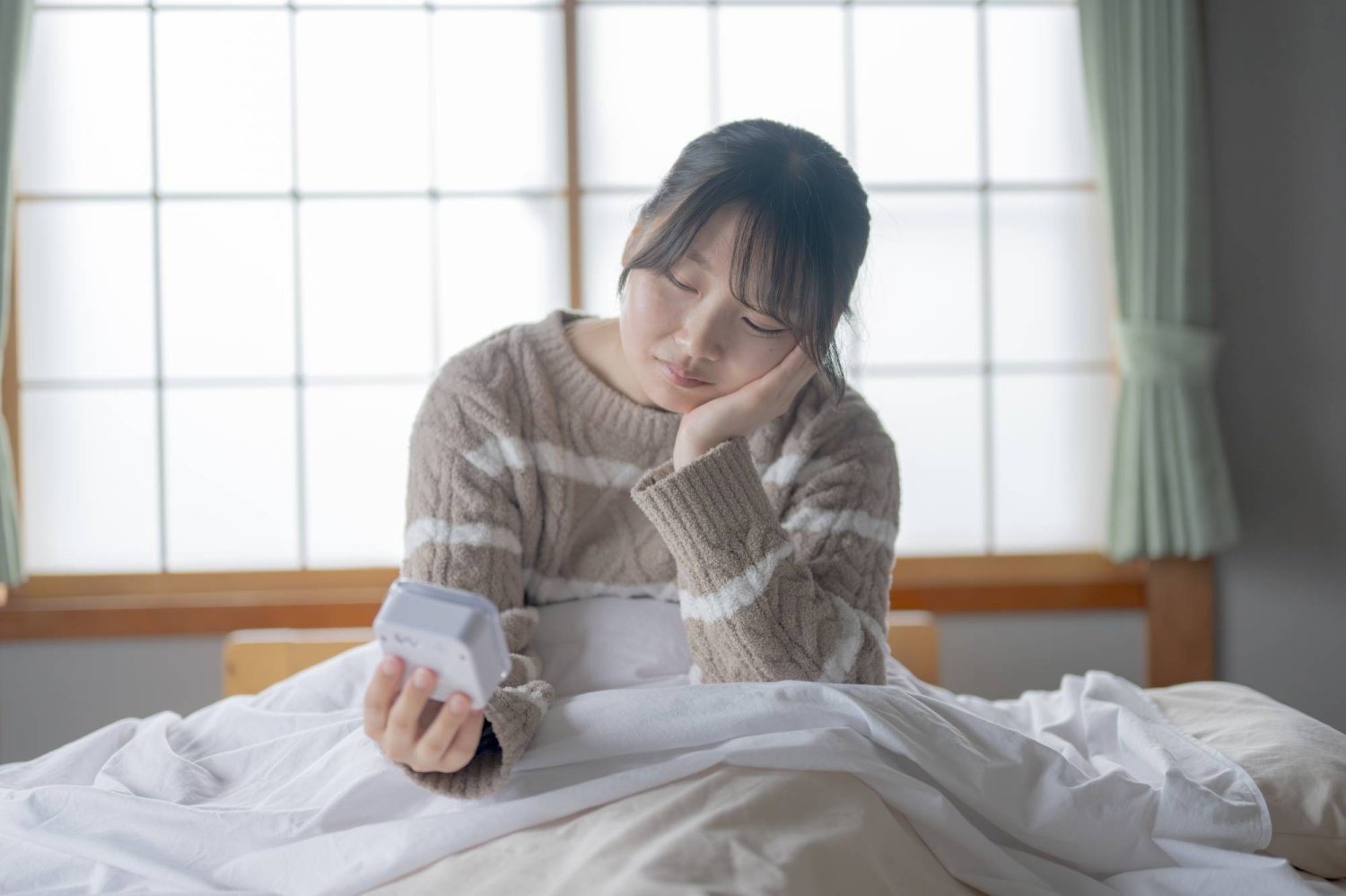
Our sleep is under siege
With the rainy season ending in many parts of Japan over the past few weeks, summer has arrived with a sudden surge in both daytime and nighttime temperatures
The hot, humid air, combined with heat radiating from concrete and asphalt in cities, can easily turn urban homes into de facto saunas with no off switch, making a good night’s sleep increasingly elusive without the heavy use of air conditioning
And human-induced climate change is at least partly to blame for the growing sleep deficit, according to an analysis released last week by the U.S.-based research group Climate Central
Based on an analysis of 1,338 cities around the world, the group found that the amount of temperature-related sleep loss linked to climate change had at least doubled since the early 1970s, severely straining people’s health
The analysis showed that over five years through 2025, the average person globally lost nearly 56 hours of sleep per year because of high temperatures. More than 10% of that sleep loss was attributed to climate change, primarily caused by burning fossil fuels like coal, oil, and gas, and cutting down forests, the group said
“This analysis reveals how climate change is translating into measurable hours of lost sleep for people around the world,” said Kristina Dahl, Climate Central’s vice president for science. “(The) impacts of fossil fuel-driven warming extend beyond extreme weather to undermine one of the most fundamental requirements for human health.”
The group estimated sleep loss due to higher nighttime temperatures based on a model published in 2022 by Denmark-based scientist Kelton Minor. He quantified the relationship between nighttime temperatures and sleep loss worldwide by tracking the sleep data of over 47,000 people across 68 countries who wore fitness wristbands, and matched the data to local weather records
He found that, once the outdoor nighttime temperature rises above 10 degrees Celsius, sleep duration begins to decline sharply. When it exceeds 25 C, the share of people sleeping less than seven hours a night — and therefore considered sleep-deprived — increases by 3.5%. He also estimated the number of minutes of sleep lost across different groups, including by age, gender and the income level of the countries they lived in.
Climate Central combined these findings with its own estimates of what temperatures would have been in a world without climate change, and calculated the amount of sleep lost in each of the 1,338 cities.
Dahl cautioned, however, that sleep loss is caused by a mix of factors not covered in the study, which looked just at temperature changes’ impact on sleep
“Aside from temperature, there are many things that can affect sleep duration and quality, including work schedules, stress, health, caffeine, light, noise, bedroom conditions, and humidity,” the scientist said. “Our study didn’t look at any of those factors, but as many of us have experienced, they can be very important as well.”
Sleep and health
Sleeplessness can cause a variety of health issues, including poor concentration, lower productivity, weaker immune systems, depression and anger
A chronic sleep shortage raises the risk of diabetes, high blood pressure and severe brain and heart conditions such as strokes and heart attacks, experts say
In addition, sleep deprivation is a major cause of traffic accidents. The U.S. National Highway Traffic Safety Administration estimates 91,000 crashes reported to police in 2017 involved drowsy drivers. These crashes led to nearly 800 deaths and an estimated 50,000 people injured, though experts agree that the figures underestimate the impact of drowsy driving.
Japan’s National Police Agency statistics show that December sees the highest number of traffic accidents in Japan due to worsening road conditions and shorter daylight hours. But experts say drivers fatigued by extreme summer heat tend to cause serious crashes resulting in deaths or severe injuries, as such incidents often involve motorists drifting out of their lanes, colliding head-on with oncoming vehicles or crashing into utility poles.
 A chronic sleep shortage raises the risk of diabetes, high blood pressure and severe brain and heart conditions, experts say.
| Getty Images
The effects of climate-attributed sleep loss are not evenly distributed.
The Climate Central study showed sleep loss affects vulnerable demographics such as infants, older adults and pregnant women more severely. Tropical cities in lower-income countries are hit harder, too
For example, cities in Saudi Arabia, Oman, and the United Arab Emirates lost between 55 and 87 hours of sleep per year due to higher nighttime temperatures, with 12 to 16 of these lost hours due to climate change.
People in southern India and several countries in Southeast Asia lost 78 to 91 hours of sleep annually due to higher nighttime temperatures, including about eight to nine hours due to climate change, the study found
Impact on Japan
The research covers 36 municipalities in Japan with populations of half a million or more. It showed people in Japanese cities lost 34 hours to 50 hours per year from 2020 to 2025, and 9% to 14% of that was attributable to climate change
Tomohiko Ihara, associate professor of environmental social systems at the University of Tokyo, has also tracked the impact of rising temperatures on sleep quality and health. In a study published in 2022, his team asked a total of 1,284 people in Nagoya to answer a questionnaire on the duration and quality of their sleep. Based on their responses and the city’s lowest daily temperatures, he found that people’s health started to worsen when outside air temperatures rose above 24.8 C. Furthermore, 40% of people were shown to have sleep problems once the lowest daily temperature rose to 30 C.
He also measured the collective health damage for Nagoya’s population by using a universal health metric called DALY (disability-adjusted life years)
Ihara based his calculations on the premise that, unlike heatstroke, sleep disorders during the summer do not directly cause deaths. However, by using DALY, he was able to quantify the health losses caused by sleep disorders, which are much more common than heatstroke
The researchers concluded that the health burden of sleep loss due to summer heat was comparable in scale to deaths and hospitalizations from heatstroke
“Even if you don’t die directly from sleep loss, sleep disturbances (caused by hot summer nights) are in fact a big social loss,” he said
Setting your AC just right
So what should you do?
Ihara says keeping the room moderately cool with air conditioning throughout the night is the immediate solution to avoid getting trapped in the heat. But anideal AC temperature for sound sleep is a perennial question with no easy answers, and Ihara says it depends on individual preferences
“There’s no one appropriate temperature, but everyone needs to find their comfortable level,” he said.
Most households in Japan have access to AC, with a 2025 survey conducted by marketing firm Cross Marketing finding that 92.5% of the 1,100 respondents said they have AC in their home. But the survey also found that just 56.4% keep their AC on all night, with rising electricity bills a growing concern among many
A survey released last month by web marketer Erisgood showed that, with energy prices soaring, 70% people of the 1,021 people surveyed said they have experience “persevering without AC” for economic reasons.
Still, residents of Japan are far better off than most. In parts of the world with the most punishing heat, many people have limited access to AC. Indian homes, for example, have electricity budgets that would cover just 44 minutes of usage, on average. In Zimbabwe, that figure is just 25 minutes and in Rwanda, only 3 minutes
For those in Japan on the lookout for non-AC cooling options, there are a range of reikan (feel cool) goods on the market, including bedding, cushions and pajamas that may help ease discomfort. But the cooling effects of such goods are no more than 1 degree
In the medium to long term, people need to think of ways to reduce carbon emissions to prevent further warming of the planet and mitigate the sleeplessness caused by extreme heat, he says
For urban residents, initiatives against the heat island effect are equally important
“Measures to reduce the heat island effect could help lower temperatures even as global warming continues,” he said.
For example, switching from gasoline-powered vehicles to electric vehicles, or replacing conventional water heaters with heat-pump systems, could reduce the amount of waste heat released into the environment or even produce cooler exhaust in cities, he says
“People tend to focus on daytime temperatures, which can be lowered by blocking sunlight,” he said. “But because there is no sunlight after dark, other measures will be necessary to reduce nighttime temperatures.”
