


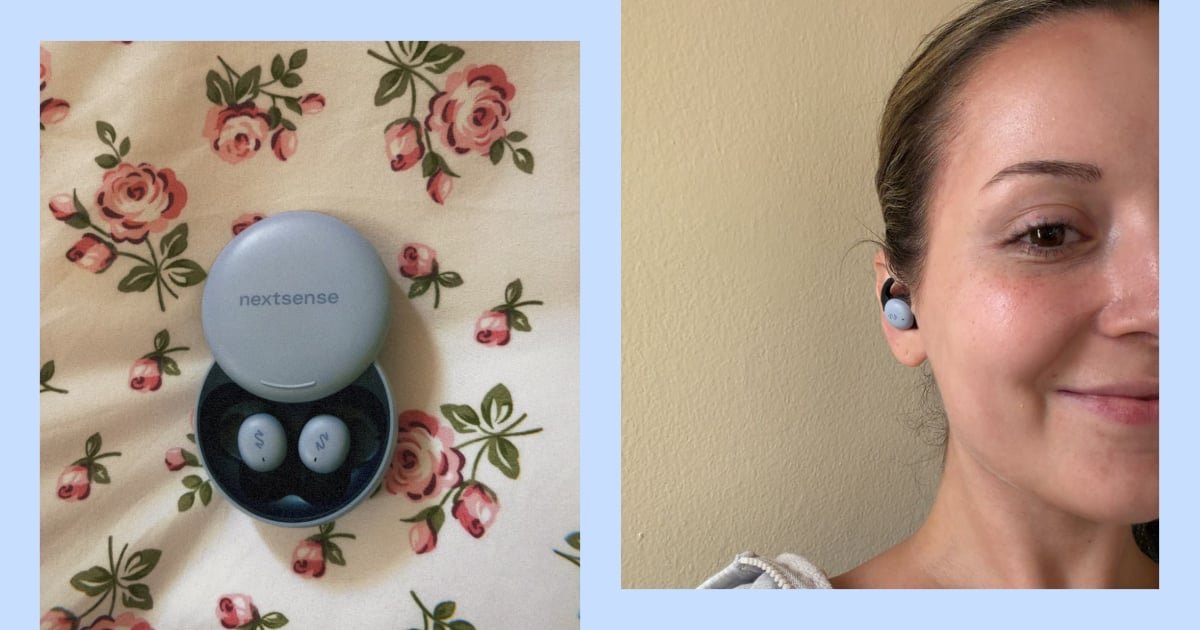
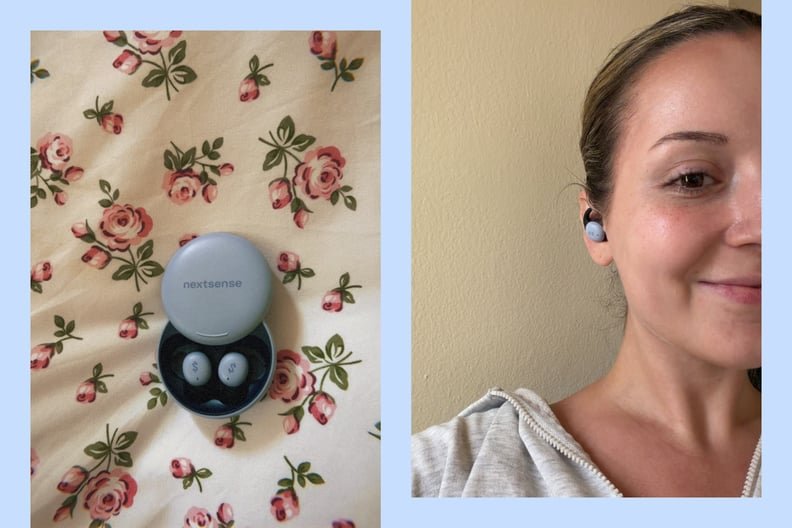
I don’t play about my sleep. My bedtime routine begins promptly at 9 p.m., at which point I make my way over to my red light mask, magnesium pillow spray, and a perfectly-curated playlist of ASMR. Up until now, I’ve solely relied on my Oura ring to see how well I slept the night before (don’t talk to me if my readiness score is below an 80). But when I heard about a pair of brain-adaptive earbuds that could actually improve my sleep quality, I knew I had to try them for myself.
Most similar wearable devices track sleep by measuring cardiovascular changes via light sensors. This method is known as photoplethysmography (PPG). NextSense Smartbuds ($299, originally $349), on the other hand, use electroencephalography (EEG) which records electrical activity in the brain. “As you calm down and eventually fall asleep, your dominant brainwaves literally get slower,” says NextSense’s head of product Caitlin Shure, MA, PhD. “We are tapping into those brain signals directly, which are also the same kind of signals that are being looked at if you get a sleep study in the lab.”
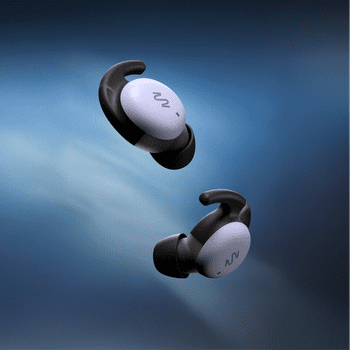
NextSense Smartbuds
From$299
$349Now 14% off
In NextSense’s case, this looks like earbuds with tiny sensors monitoring brainwaves. But the buds also claim to deliver real-time stimulation to enhance deep sleep (more on that later). Intrigued, I tested the Smartbuds to see if they really could improve my sleep . . . and possibly earn a permanent spot in my top-tier nighttime routine. Here’s how it went
My Smartbuds Experience
Initially, I had some reservations about wearing earbuds to sleep. Would they be uncomfortable and cause me to toss and turn? In my experience . . . not really. Although the earbuds are definitely more comfortable for back and belly sleepers, I also wore them on my side. (Pro tip: you can choose to wear only one earbud if it’s more comfortable for you.)
One of the first tips Dr. Shure gave me was to carve out time for onboarding. It’s imperative that the Smartbuds fit your ears properly (they come with different sized attachments) so that the sensors have a strong signal to your brain. Somehow, I still managed to mess this up. My first night with the earbuds, I wore a size too big, and the app promptly advised me to try a smaller size in the morning. After finding my right fit, I got a look into my slow waves — the deep pulses of electrical activity associated with restorative processes.
To break it down, a night with more slow-wave activity means increased feelings of restoration and better cognitive performance. So basically, “everything that you would associate with a really good night of rest,” Dr. Shure says. Truthfully, I had never considered this element of my sleep before. But as I thought back to all the times I felt unrefreshed despite getting eight hours of sleep, it started to click. The Smartbuds showed me my slow wave count, total wakes, and overall sleep efficiency every night, and as it turns out, I was getting way less restorative sleep than I previously thought.
“It’s very subtle, it doesn’t wake you up.”
As you prepare for sleep, you can use the Smartbuds to unwind with a meditation or box breathing exercise. Or, for those of us who are already sufficiently unwound (hi, it’s me), you can jump straight into a soft hum of pink noise or relaxing rain sounds. Once you drift off, the buds utilize a method called slow wave enhancement to actually upgrade your sleep. They do this by employing targeted pink noise while you’re unconscious, gently nudging your brain waves into a more restorative pattern.
“The wearables that have been popular for the past decade have really banked on the fact that your primary use of them is to look at the data . . . but then it comes back on you to improve your situation,” Dr. Shure says. With slow wave enhancement, your earbuds are doing some of the work for you. “This happens when you’re unconscious,” Dr. Shure explains. “It’s very subtle, it doesn’t wake you up.” And after wearing the earbuds for myself, I agree.
Smartbuds Takeaways
It’s still too early for me to say whether the slow-wave enhancement definitively improved my sleep. But knowledge is power, and the insights I gleaned from the Smartbuds certainly helped me iron out my routine, from giving myself permission to hit the hay a little earlier, to identifying factors that may have affected my deep sleep waves each night (for better or for worse)
“We’re seeing about half of our users reporting improvements in, yes, sleep quality, but also mood and energy,” Dr. Shure says. “So not just the sleep itself, but the next day benefits that you would hope to see if your sleep is better.” Indeed, in trying the Smartbuds for myself, I saw my Oura sleep score hit “above average” numbers, which was a huge win for me
If you’re not someone who can sleep with something in your ears, Smartbuds also have settings for restorative practices like meditation and focus. But all said, I’ll definitely be continuing my evening earbud experiment for smarter, sleepier nights
Chandler Plante (she/her) is a staff writer and PS Fit Producer. She has over six years of industry experience, previously working as an editorial assistant for People magazine, a social media manager for Millie magazine, and a contributor for Bustle Digital Group. She has a degree in magazine journalism from Syracuse University and is based in Los Angeles
